- Villages
Corteolona e Genzone
History, Art and Nature in the Heart of the Pavese

Discover Corteolona e Genzone, a municipality in the province of Pavia that preserves three thousand years of history: from the Romans to the Lombards, from the Carolingians to the Visconti. An authentic destination on the Po Plain, just a few kilometres from the River Po, surrounded by farmland, historic farmsteads and memories of kings.
Where is Corteolona e Genzone?
Corteolona e Genzone is a municipality in the province of Pavia, located on the Po Plain in the area known as the Basso Pavese (Lower Pavese). The territory lies on an alluvial terrace that drops approximately 15 metres to the south, where the mighty River Po flows just 4 kilometres from the municipality's southern boundary. To the east, the River Olona — which lent its name to the town since ancient times — marks the border for roughly 4 kilometres.
The landscape is quintessentially that of the lower Lombard plain: cultivated fields, historic farmsteads and a rural tranquillity that offers a pleasant contrast to the bustle of the provincial capital, Pavia, easily reachable in a short drive.
The History of Corteolona: From Roman Villa to Lombard Court
Roman Origins
The name Corteolona reveals its dual roots: Olona, from the river of the same name, and Curtis, a late Latin term derived from the popular word Chorte, simply meaning "court" or "courtyard". Yet the settlement is even older: the site already existed as a Roman villa before the arrival of the Lombards. Its dominant and strategic position was so evident that, with the fall of the Empire and the arrival of the barbarians, the rural population naturally gathered around it, transforming the villa into a medieval court.
King Alboin and the Lombards: Corteolona as a Second Capital
As early as the reign of the Lombard king Alboin (568 AD), the site was known as Curtis. The Lombard historian Paul the Deacon confirms the extraordinary role of Corteolona: the Curtis Olona became a rural residence and, in effect, the second capital of the Lombard kingdom — an honour reserved only for places of the greatest prestige and strategic importance.
According to the Codex diplomaticus Longobardorum, the Curtis Olona encompassed one thousand cultivated "mansi". Stretching along the left bank of the River Olona to the Po and northward to the territory of Inverno, each mansus corresponded to approximately four hectares — meaning the Court covered a surface area of around 60,000 Milanese perches, a considerable figure even by the standards of the time.
King Liutprand's Palace (712–744): Marble and Mosaics from Rome
Corteolona reached its greatest splendour under the reign of Liutprand (712–744), one of the most celebrated and powerful Lombard kings. It was here that he ordered the construction of a magnificent royal residence, adorned with marble, columns and precious mosaics brought specially from Rome. A bold act of political and cultural ambition, this transformed Corteolona into a centre of power worthy of the great courts of early medieval Europe.
The palace stood near the present-day Cascina Castellaro, a topographical landmark still identifiable in today's landscape. Unfortunately, despite centuries of research, no material evidence has yet been found within the buildings of the Cascina Castellara that conclusively attests to the ancient Roman villa or the later Benedictine monastery.
The Carolingians and the Kingdom of Italy
The fall of the Lombard kingdom did not mark the end of Corteolona's importance. The palace continued to be visited and prized by the Carolingian rulers and later by the kings of the Kingdom of Italy, a sign that its location, symbolic value and residential prestige endured well beyond the decline of the Lombards.
Genzone: History of a Medieval Village
Genzone appears in medieval historical sources as Genzonus or Gençonus from the 12th century onwards. Its first documented mention dates to the imperial diploma of 1164, by which Emperor Frederick I Barbarossa granted the city of Pavia jurisdiction over vast areas of the territory, including Lomellina, the Oltrepò Pavese and certain localities of the Pavese such as Genzone itself — suggesting that the village had not always been under Pavia's dominion from the earliest times.
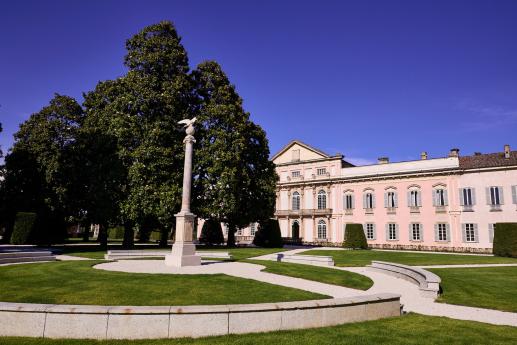
Throughout the late medieval and early modern periods, Genzone belonged to the Campagna Sottana of Pavia and, from the 15th century, to the podesteria of the Vicariate of Belgioioso, of which Corteolona was the chief town. From 1475, the territory was enfeoffed to a cadet branch of the Este family. In 1757, through marriage, it passed to the princes Barbiano di Belgioioso, one of the most influential aristocratic families of 18th-century Lombardy.
The Municipal Merger: Corteolona e Genzone is Born (2016)
On 25 October 2015, the citizens of Corteolona and Genzone were called to vote in a referendum on the merger of the two neighbouring municipalities. The result was in favour, and on 1 January 2016 the municipality of Corteolona e Genzone was officially established, uniting under a single administration two communities that have shared territory, history and identity for centuries.
The merger forms part of a broader administrative rationalisation process that has affected many small municipalities in the province of Pavia, aimed at optimising public services and more effectively promoting the resources of the local area.
The Territory: Nature and Landscape Between the Olona and the Po
The territory of Corteolona e Genzone forms part of the alluvial plain north of the Po and features the characteristic flat morphology of the area, consisting of deposits from the recent diluvium and alluvium. The eastern boundary follows the course of the River Olona for approximately 4 km, while the great Po flows just 4 km to the south.
The Basso Pavese agricultural region to which the municipality belongs has traditionally been devoted to farming: rice, maize, fodder crops and cereals shape the landscape with their seasonal geometry. Historic farmsteads — such as the already-mentioned Cascina Castellara — dot the plain like sentinels of a centuries-old rural civilisation.
What to See in Corteolona e Genzone: Tips for Your Visit
Despite its modest size, Corteolona e Genzone offers genuine points of interest for those wishing to explore authentic Pavese territory, well off the beaten tourist track.
Cascina Castellaro (formerly Castellara): the site where King Liutprand's royal palace once stood is today occupied by this historic farmstead. Walking its surroundings means treading in the footsteps of one of the most important courts of the Lombard kingdom.
The River Olona: the stretch bordering the municipality's eastern boundary is ideal for a nature walk. The riverside landscape, with its reed beds and banks, is home to a varied range of birdlife.
Rural Architecture: the farmsteads of the Po Plain are true monuments of Lombard rural architecture. An itinerary through the historic courts of the Basso Pavese reveals a heritage that is little-known but full of character.
Excursions to the River Po: just 4 km to the south, the great river offers sweeping, evocative views, especially at sunset. The banks of the Po are an ideal stopping point for those exploring the Pavese by bicycle along the plain's cycling routes.
How to Get to Corteolona e Genzone
Corteolona e Genzone is easily reached from Pavia, approximately 15 km to the south-east. By car, take the provincial road towards Belgioioso and continue into the Basso Pavese. The municipality is also well connected to Lodi to the east and Piacenza to the south-east. For those who prefer to travel by bicycle, the flat terrain of the Basso Pavese offers cycle-tourism routes perfectly suited to a day of exploration combining history and nature.
Corteolona e Genzone: A Hidden Gem of the Pavese Waiting to Be Discovered
At a time when travellers increasingly seek authentic experiences away from crowded itineraries, Corteolona e Genzone is a precious destination for enthusiasts of Lombard history, Po Valley landscapes and slow tourism. Here, among the rice fields and rows of the Pavese countryside, the echo of a glorious past still lingers: that of a royal court which, for nearly three centuries, stood as a centre of power and culture in the heart of the Po Plain.
Visiting Corteolona e Genzone means embarking on a journey through time, following in the footsteps of King Liutprand and the great rulers who chose this corner of the plain as their home. An unmissable experience for anyone exploring the province of Pavia beyond its best-known destinations.