- Art & Culture
- Food & Wine
- Active & Green
Breme
Discover the Abbey, the Red DeCo Onion and the Flavours of the Lomellina


Breme is one of the most fascinating villages in the Lomellina, in the heart of the province of Pavia.
A destination for cultural pilgrims and experiential travellers alike, it safeguards a historic and artistic heritage of European significance, surrounded by unspoilt nature along the Po and Sesia rivers. Whether you are passionate about Romanesque architecture, local gastronomic traditions or cycle tourism, Breme has something truly special to offer.
The Abbey of San Pietro: a Millennium of History in the Heart of the Lomellina
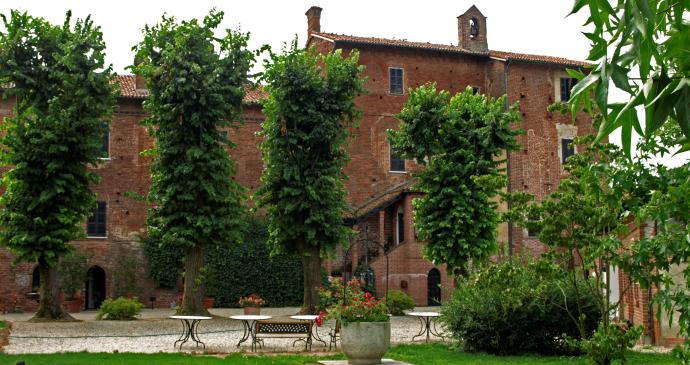
The iconic monument of Breme is undoubtedly the Abbey of San Pietro, founded in the early 10th century by the Benedictine abbot Donniverto, who came from the renowned Abbey of Novalesa in the upper Val di Susa. Between the 10th and 13th centuries, this abbey was one of the most influential in Europe — a spiritual, cultural and economic landmark for the entire Po Valley region.
The monastic complex includes several elements of extraordinary historical and architectural value that are absolutely not to be missed:
- Abbey of San Pietro (10th century) – the original core of the entire monastic complex
- Romanesque crypt (10th century) – preserving pre-Romanesque architectural elements of great distinction
- Early Christian baptistery (8th century) – one of the oldest baptisteries in Lombardy
- Kitchen and Refectory (16th century) – a testament to Renaissance monastic life
- Church of Santa Maria Assunta (10th–16th centuries) – historical layering from Romanesque to late Gothic
- Chapel of Santa Maria di Pollicino (10th–16th centuries) – a rural oratory of rare beauty
Tip: plan your visit in the early morning to experience the abbey in full atmosphere, before organised tour groups arrive.
The Early Christian Baptistery of Breme: an 8th-Century Jewel
Located on the right side of the abbey church, the Baptistery of Breme is considered one of the most precious examples of early Christian Romanesque architecture in the Lomellina. Its exterior is polygonal, featuring a distinctive masonry of bricks mixed with river pebbles, still visible where the plaster has crumbled over time, offering glimpses of extraordinary authenticity.
The vault is pierced by a small lantern added at a later date, while on the eastern side a small apse opens — now incorporated into the church — which likely served as the narthex entrance to the baptistery. The interior, currently used as the Chapel of Saint Barnabas, underwent significant restoration between 1896 and 1898, led by parish priest Don Giovanni Battista Amiotti (and, according to tradition, at the suggestion of Bishop Merizzi). At that time the floor was raised, covering the original immersion baptismal font — typical of early Christian baptisteries — and an opening was made to connect directly with the church, giving the ensemble a neoclassical character.
Worth knowing: the original immersion baptismal font still lies beneath the current floor — a hidden relic that speaks to the liturgical practices of the earliest Christians.
The Romanesque Crypt: Architecture and Mystery Beneath Breme Abbey
The abbey crypt is a place of rare intensity, oriented along the canonical east-west axis of pre-Romanesque and Romanesque churches. The interior is divided into three small naves by four cylindrical stone columns — one of which is in fine veined white marble — and four brick pillars of more recent construction.
The internal perimeter walls alternate bricks with river pebbles, creating a chromatic and material effect of great evocative power. The floor is cobbled, while the western wall facing the cloister, the brick columns and parts of the vaults above show reconstruction in brickwork dating to the late 18th century. According to scholars, the crypt originally extended for a further three bays, lost over the centuries.
Fascinating fact: the four stone columns may have originated — as salvaged material — from Roman buildings in nearby Lomello, bearing witness to the millennia-long historical layering of this territory.
The Breme Red DeCo Onion: the Authentic Flavour of the Lomellina
Breme is not only history and art — it is also a unique gastronomic experience. From June to September, the village offers the chance to taste the Breme Red Onion, a DeCo product (Denominazione Comunale di Origine — Municipal Designation of Origin) and part of the prestigious Paniere Pavese. Affectionately nicknamed la "Dolcissima" ("the Sweet One"), this onion stands out for its soft, mellow flavour with no harshness, perfect eaten raw, cooked or transformed into artisan preserves.
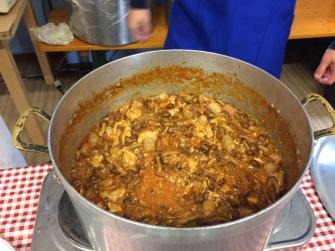
The Breme Red Onion takes centre stage in complete menus spanning from starter to dessert — including ice cream! — showcasing a local agricultural product of excellence in a modern and creative light.
The Breme Red DeCo Onion Festival
The unmissable event for food and wine enthusiasts is the Sagra della "Rossa DeCo" (Red DeCo Onion Festival), held every year on the second Sunday of June. The event draws thousands of visitors from across northern Italy, turning Breme into a lively stage of flavours, traditions and conviviality. The festival menu — entirely based on the red onion — is a gastronomic journey from appetiser to dessert, with surprising pairings and innovative creations by local chefs.
Book ahead! The festival is extremely popular and table seats fill up quickly. Check updated dates on the official website of the Municipality of Breme.
Nature and Outdoor Itineraries in Breme: the Po, the Sesia and the Lomellina Cycle Routes
The Breme area offers extraordinary opportunities for outdoor tourism, thanks to its privileged position at the confluence of the Po and Sesia rivers. From here, nature trails on foot and by bicycle wind through the Po plain, among riparian woodlands, stretches of water and agricultural landscapes of rare beauty.
- Walks along the embankments of the Po and Sesia rivers
- Cycle tourism routes on the Lomellina cycle path network
- Birdwatching and observation of riverside wildlife
- Nature photography in one of the most evocative landscapes of the Lombardy plain
The Po-Sesia confluence is one of the most photographed spots in the Lomellina: visit at sunrise or sunset for scenes of extraordinary beauty.
The Romanesque Itinerary in the Lomellina: Breme – Lomello – Velezzo
Breme is the ideal starting point for the Romanesque Itinerary in the Lomellina, one of the most captivating cultural routes in the province of Pavia. The tour takes in three extraordinary villages — Breme, Lomello and Velezzo — united by a Romanesque and pre-Romanesque architectural heritage of exceptional historical value.
Breme – Abbey of San Pietro, crypt and early Christian baptistery (10th century)
Lomello – Santa Maria Maggiore and the Baptistery of San Giovanni ad Fontes (5th–11th centuries), considered among the most important early Christian complexes in Italy
Velezzo – Romanesque church nestled in the Lomellina countryside
Perfect by bicycle! The itinerary can comfortably be completed in a day on an e-bike or touring bike, along quiet country roads with minimal traffic.
Practical Information for Visiting Breme
How to get there: Breme is located in the Lomellina, province of Pavia. By car: exit the A26 motorway (Alessandria–Gravellona Toce) at Casale Monferrato Sud, then follow signs for Vercelli and Breme. By train: the nearest station is Mortara (PV), then continue by bus or taxi.
When to visit: year-round. Spring and summer are ideal for combining history, nature and gastronomy. June is the highlight month for the Red DeCo Onion Festival.
Tastings: from June to September it is possible to taste the Breme Red Onion at local producers and farm restaurants (agriturismi) in the area.
For groups: contact the Municipality of Breme to arrange guided tours of the abbey complex.
Other links