- Villages
Castello d'Agogna


Nestled among the rice paddies of the Lomellina, just 5 kilometres from Mortara and a short distance from Milan, Castello d'Agogna is one of those villages in the Province of Pavia that never fails to surprise visitors with the richness of its history and the genuine tranquillity of a rural landscape that has remained virtually unchanged for centuries. The village's name is no coincidence: it derives from the Agogna stream, which flows 140 kilometres from the Pre-Alps to this very point, caressing the left bank on which the settlement has stood since antiquity.
This small municipality of around 1,080 inhabitants — known as Caste' dla Gogna in the local Lomellino dialect — preserves in its historic centre one of the architectural gems of northern Lomellina: the Castello Isimbardi, a medieval fortress dating to the 12th century, now open to the public following extensive restoration work.
The History of Castello d'Agogna: From Roman Origins to the Risorgimento
"Castrum ad Aconiam": the Ancient Roots of the Village
The origins of the settlement are ancient indeed. Already in Roman times the territory was known as "fundus aconianus", while the name "castro aconiano" bears witness to the presence of a defensive outpost in a strategic position. According to some historical sources, it may even have been Julius Caesar himself, in the 1st century BC, who stopped here during his campaigns towards Gaul.
In the Middle Ages, when the Lombards converted to Christianity, the castrum passed from royal administration to the bishops, becoming a structured inhabited nucleus. Its designation evolved from "Village of the Castle" to "Castle of the Village", eventually giving rise to the current place name.
Fiefdoms, Marquises and Dukes: the Castle's Medieval Period
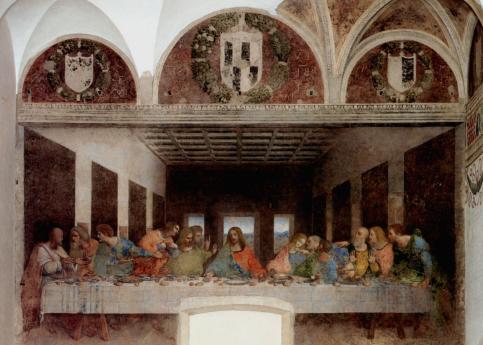
During the Middle Ages, Castello d'Agogna belonged to the Abbey of Santa Croce in Mortara. In 1387 it was granted as a fief to Antonio Porro, Count of Pollenzo and Lord of Robbio. Between 1467 and 1489 the county was ruled by Ludovico il Moro, Duke of Mortara — the celebrated Milanese patron of the arts who commissioned Leonardo da Vinci to paint the Last Supper. After his death, Milan and the Lomellina fell to the French, who occupied the castle and demolished its drawbridges.
Following French rule, the castle passed under Spanish protection. In the early eighteenth century the structure had been reduced to a storehouse for fodder and supplies, a sign of its long decline. With the Treaty of Vienna of 1738, the entire Lomellina region passed definitively to the Savoy-ruled Kingdom of Piedmont.
The Savoys, the Risorgimento and the Gregotti Family
During the First Italian War of Independence, Victor Emmanuel II camped at Castello d'Agogna with his reserves to plan strategy against the Austrians. It was here that, following the defeat of 21 March 1849, the war council was held before the retreat toward Novara. In 1859 the village became part of the Province of Pavia, contributing to the unification of Italy.
In 1908, Natale Gregotti and his brothers Luigi and Francesco purchased from the Isimbardi heirs the vast agricultural estate — some 10,000 Milanese pertiche — together with the castle and its outbuildings. The last heir of the family, Vera Coghi, bequeathed the entire patrimony upon her death in 2007 to the Foundation bearing her name, dedicated to social welfare. Today the castle is managed by the Fondazione Vera Coghi.
The Castello Isimbardi: Architecture, Archive and Park
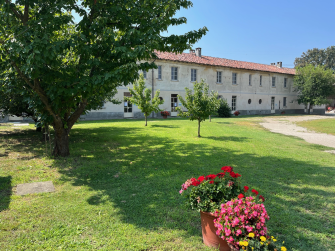
The beating heart of the village and its main visitor attraction, the Castello Isimbardi is a medieval complex dating to the 12th century, named after the Milanese family that owned it for the longest period. The structure stands on a Roman-era settlement and has undergone numerous transformations over the centuries, evolving from a military fortress into a Renaissance noble residence.
The Architecture: Towers, Courtyard and Moat
The castle has a square plan with four buildings enclosing an internal courtyard. A corner tower stands on the western side of the complex, while an entrance turret projects towards the moat on the south-eastern facade. An armorial fresco is still visible on the arch above the main gateway. Traces of an ancient drawbridge and arched windows can be found on the main tower facade, evidence of the original medieval defensive layout.
Following extensive restoration works completed in 2015, the castle reopened to the public, offering around one thousand square metres of visitable space, including the first-floor rooms that preserve the original furnishings and fine early-twentieth-century frescoes.
The "Terre d'Acque" Historical Archive
The archive of the Castello Isimbardi holds over 40,000 historical documents, including maps and cartographic records of the Lomellina region dating from the year 1100 to the 20th century.
One of the most extraordinary treasures housed within the castle is its historical archive, which gathers papers, letters and documents drawn up or received by the feudal lords and nobles who resided in the manor over the centuries. The meticulous work of cataloguing and digitising the entire collection was carried out by Luigi Pagetti.
Part of this documentary heritage is displayed in the permanent exhibition "Terre d'Acque" (Lands of Water), which guides visitors through the transformations of the Lomellina landscape via antique maps and drawings produced between the 17th and 20th centuries. A captivating journey that shows how the territory has changed face over the centuries, from the era of great feudal estates to the age of irrigation and rice cultivation.
The Park and the Stables
Enclosed within a walled perimeter, the castle park extends over approximately 10,000 square metres with tall trees, roses, geraniums and a charming bamboo grove. Within the park stand the elegant Stables — featuring a large fireplace, a vaulted ceiling with exposed brickwork and granite pillars — and a building housing a 1930s wooden rice mill, a remarkable testimony to the traditional rice processing method: from husking the paddy rice, to separating the husk, through to the final polishing stage.
What to See in Castello d'Agogna: Other Village Attractions
The Parish Church of the Nativity of the Virgin Mary
The main place of worship in the village, the Parish Church of the Nativity of the Virgin Mary strikes visitors with its curious contrast between a modern facade and the ancient body of the building behind it. The two-tone effect is striking: the yellowish front, slightly faded by time, contrasts with the historic structure concealed within. The interior preserves numerous works by local artists.
The Church of San Martino
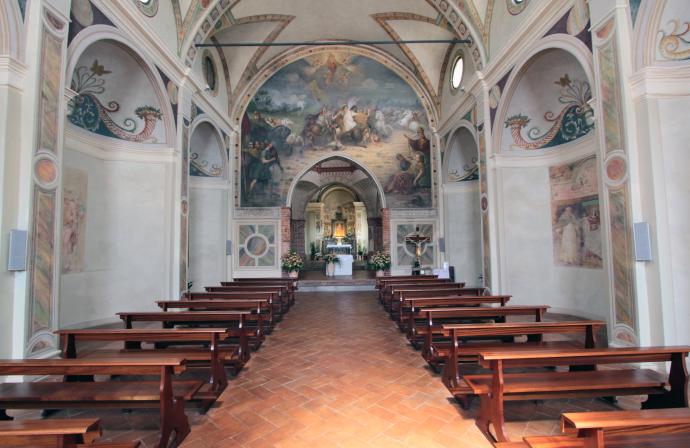
Beside the castle stands the church of San Martino, an example of local religious architecture enriched by frescoes and sacred works of art that merit a stop for lovers of art history.
The Rice Paddy Landscape
Surrounding the village stretches the agricultural landscape typical of the Lomellina: rice paddies that change colour with the seasons, sheets of water that mirror the colours of the sky at sunset, rural courtyards and historic farmsteads. A landscape of extraordinary charm, ideal for bicycle rides along the paths that cross the countryside.
Castello d'Agogna and the Ecomuseo del Paesaggio Lomellino
The village and the Castello Isimbardi are part of the Ecomuseo del Paesaggio Lomellino (Ecomuseum of the Lomellina Landscape), a cultural circuit linking numerous municipalities, historic sites and nature reserves across the Lomellina. This diffuse itinerary allows visitors to discover a territory that offers medieval castles, abbeys, natural heronries and outstanding agri-food products.
Incorporating a visit to Castello d'Agogna within a broader Lomellina itinerary makes it easy to reach, within just a few kilometres, the town of Mortara (with the Abbey of Sant'Albino and the National Rice Authority), Sartirana Lomellina (with its splendid castle and art museums), Vigevano (with its magnificent Piazza Ducale) and Breme (with its ancient abbey).
Tastes of the Lomellina: Rice and Culinary Tradition
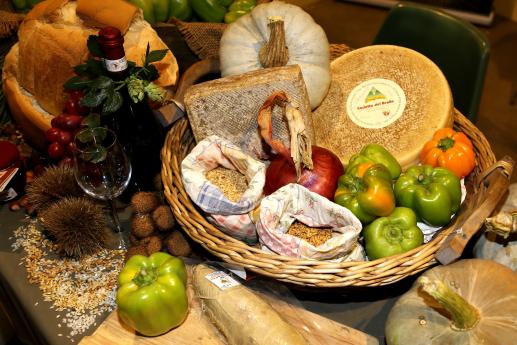
Castello d'Agogna lies at the heart of one of Europe's most important rice-growing areas. Risotto, made with rice grown in the surrounding paddies — above all the Carnaroli and Vialone Nano varieties — is the signature dish of the territory. Alongside rice, the local agricultural economy has traditionally depended on maize, wheat and tobacco as well.
Every year in September the village hosts the Sagra dello Spiedino, a popular food festival drawing visitors with quality local meat, dancing evenings and a genuinely festive atmosphere. The patronal feast of the Nativity of the Virgin Mary, celebrated on the second Sunday of September, brings the village squares to life with cultural, sporting and gastronomic events, craft markets and fireworks displays.
Practical Information for Visiting Castello d'Agogna
Getting There
- By car: from Pavia, take the SS 35, then the SS 596 towards Garlasco, then the SS 494 to Mortara, and finally 5 km to Castello d'Agogna
- By train: rail service with a station at Castello d'Agogna (please check current timetables)
- From Milan Malpensa Airport: only 57 km away
- From Milan: approximately 50 km via the A4 motorway, Vigevanese exit
Castello Isimbardi — Opening Hours and Access
- Open to the public: during scheduled events and by appointment for guided tours
- Admission: free on open days
- Park: open during the summer season for events
- Bookings and information: official website castelloisimbardi.it
When to Visit
Spring and summer are the best seasons to fully enjoy the park and the rice paddy landscape, with water reflecting the clouds and frogs enlivening the evenings. Autumn offers the charm of the rice harvest and the warm colours of the countryside. In September, the village festivals provide an extra incentive to plan your visit.
Suggested Itinerary: A Day in Castello d'Agogna and the Lomellina
Morning: explore the historic centre of Castello d'Agogna, including the Parish Church of the Nativity and the church of San Martino. Visit the Castello Isimbardi to tour the historic halls and the "Terre d'Acque" permanent exhibition.
Lunch: stop at one of the local restaurants for an authentic Lomellina risotto.
Afternoon: a bicycle ride through the surrounding rice paddies, or a visit to Mortara (5 km) for the Abbey of Sant'Albino and the Lomellina Museum, or to Sartirana Lomellina (15 km) for its extraordinary medieval castle.