- Art & Culture
FAI Autumn Days in the province of Pavia


On Saturday 10 and Sunday 11 October 2026, the FAI Autumn Days return, offering visitors the opportunity to explore places of outstanding historical and artistic interest, many of which are normally closed to the public.
In Pavia: a Counter-Reformation church and a villa-atelier
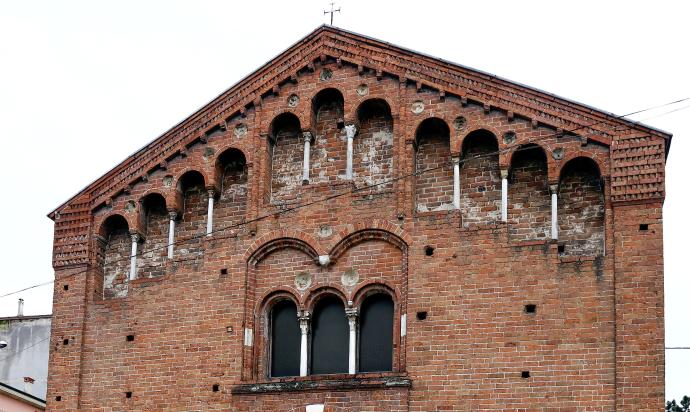
The FAI Young Group of Pavia will open the Church of Saints James and Philip (12 Via Luigi Porta), one of the city’s most significant examples of Counter-Reformation religious architecture. The church is normally closed to the public.
Info: https://fondoambiente.it/luoghi/chiesa-dei-ss-giacomo-e-filippo-121235
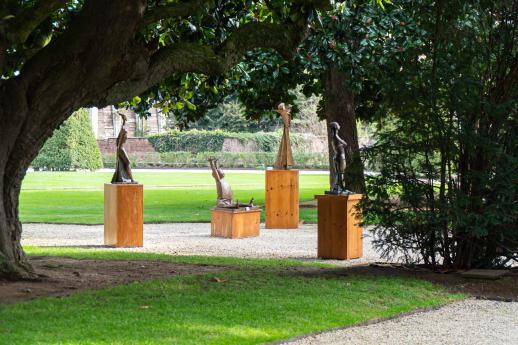
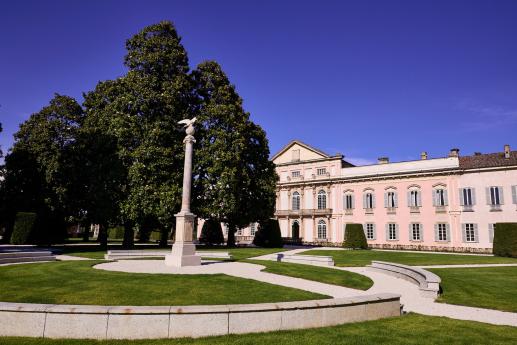
The second stop in the city is Villa Marabelli (5 Viale Nazario Sauro), built in 1923 by married couple Alfonso Marabelli, a sculptor, and Carolina “Lina” Sannazzaro, a painter, as both their home and studio. Today, it houses the Ar.Vi.Ma. Association and its Civic School of Art, which is committed to preserving and promoting the building.
Info: https://fondoambiente.it/luoghi/villa-marabelli
Along the Via Francigena in the Lower Pavia area
Outside Pavia, the FAI Delegation is opening three places connected by the history of the pilgrimage route to Rome. In the past, they provided assistance and shelter to pilgrims and travellers journeying along the Via Francigena.
The Church of San Giacomo della Cerreta, in the hamlet of the same name in the municipality of Belgioioso (13 San Giacomo della Cerreta), is normally closed to the public and is one of the most interesting opportunities offered during the FAI Autumn Days.
Info: https://fondoambiente.it/luoghi/chiesa-di-san-giacomo-della-cerreta
In Valle Salimbene, visitors can explore the Oratory of San Damiano (Via Valle, Cascina San Damiano), a Romanesque building once associated with the Knights Templar. The site is located within a private agricultural estate and is not normally open to visitors.
Info: https://fondoambiente.it/luoghi/oratorio-san-damiano
In Linarolo, the Church of San Leonardo Confessor (52 Via Nobili) will be open to visitors. Its origins date back to the early centuries of the second millennium, while the building was reconstructed in the Baroque style in the 18th century.
The “Christ” of Vaccarizza. A short distance from Linarolo, in the hamlet of Vaccarizza, the private chapel of the Moro Martinoli estate (Cascina Vaccarizza, 2 Via Po) houses the “Christ”, a precious medieval marble bas-relief depicting the Crucifixion.
Info: https://fondoambiente.it/luoghi/chiesa-di-san-leonardo-confessore-121225
In Lomellina: Frascarolo Castle and its Museum
A real hidden gem is Frascarolo Castle (1 Via Castello), which has always been privately owned.
The visit begins at the Farm Museum, accompanied by the owners and curators, and continues to the Carriage Hall and the residential wing, including the ground-floor rooms. The interior of the castle has never previously been open to the public and will be exceptionally accessible during the FAI Autumn Days.
Info: https://fondoambiente.it/luoghi/il-castello-ed-il-suo-museo
In Vigevano: the Church of San Carlo
The Church of San Carlo (6 Via Boldrini) will open only on Sunday 11 October.
Originally built as a Baroque church, it came back to life in the 21st century as the home of the Orthodox Parish of the Protection of the Mother of God, a Christian Orthodox community established here in 2023.
Info: https://fondoambiente.it/luoghi/chiesa-di-san-carlo-parrocchia-ortodossa
In Oltrepò Pavese: Montù Beccaria
The village of Montù Beccaria opens three historic sites to visitors.
Montù Beccaria Castle (36 Via Aureliano Beccaria) is an imposing structure overlooking the village. What remains of the former “Castellazzo” includes the perimeter walls and part of the complex once occupied by the Barnabite Fathers’ convent and college. Its vaulted corridors, refectory and rooms for the clergy were gradually adapted and later inhabited by the Vercesi family, who have owned the residence for two centuries.
Info: https://fondoambiente.it/luoghi/castello-di-montu-beccaria-121851
The Twin Churches and Teatro Dardano
This itinerary connects the Church of San Michele, also known as one of the “Twin Churches”, with Teatro Dardano, an important part of the local community’s heritage.
The church is believed to date back to 1303, when Manfredino Beccaria commissioned the construction of the first part of the building.
Restored in 2013 thanks to the determination of the local community, Teatro Dardano is a small Art Nouveau theatre that reflects the village’s desire to create a place dedicated to culture and community life.
Info: https://fondoambiente.it/luoghi/chiesa-di-san-michele-pv