- Art & Culture
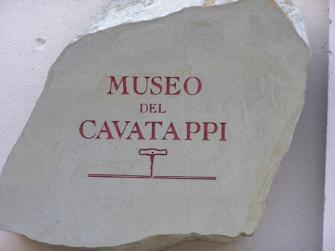
Corkscrew Museum
In the Pinot Noir valley of Montecalvo Versiggia, where corkscrews are as valuable as diamonds


Some places hold unexpected surprises. Montecalvo Versiggia, a tiny village in the Oltrepò Pavese clinging to the hills of the Valle Versa, is one of them. Amid vineyards that look like paintings, silent hamlets and air that smells of must and resin, hides a museum with the power to captivate anyone who visits: the Corkscrew Museum, the first and only in Italy to be promoted and run by a public body — the municipality itself — entirely devoted to this small, ingenious tool without which no bottle of wine could ever reveal its secrets.
Inaugurated in July 2006, the museum is housed in the former rectory of the parish church of Sant’Alessandro: a building that over the centuries has served as a rectory, a village primary school, and is today the keeper of a remarkable collection. The municipality oversaw the restoration works personally, transforming these spaces — spread across two rooms, one on the ground floor and one on the first floor — into an exhibition route that looks out over the medieval churchyard.
Why here? The answer lies in the surrounding landscape. Montecalvo Versiggia is the Italian capital of Pinot Nero: with around 28,000 quintals of annual production, it is the leading municipality in the Oltrepò Pavese for this noble grape variety — the same one that reigns supreme in Champagne. Some 95% of local families own a wine cellar and produce their own wine. In a village where wine has been part of daily life for generations, dedicating a museum to the very tool that opens every bottle is not a whim: it is an act of identity.
At a glance:
-
Over 200 items in the collection, spanning 300 years of history
-
Italy’s first and only public museum entirely dedicated to the corkscrew
-
Inaugurated in July 2006 in the restored rectory of Sant’Alessandro
-
Two exhibition rooms and a panoramic terrace overlooking the Oltrepò Pavese hills
“Drawing the cork” does not simply mean uncorking a bottle. It is not a mere gesture of opening: it is a precise and meticulous action, an art. You draw the cork to release the joy of living.
The Collection: 300 Years of Ingenuity in a Small Tool
The exhibition brings together over 200 specimens documenting the evolution of the corkscrew across three centuries, from the Baroque era to the twentieth century. It is a surprisingly rich journey, revealing how an everyday object can serve as an extraordinary mirror of technological, aesthetic and social history.
The origins of this tool are far from ordinary: the corkscrew descends from the spiral rod used to extract lead balls jammed inside cannon barrels. The first patent dates to 1680, granted to the English gunsmith Messrs Holtzapffel of London. From there, its spread was rapid: the corkscrew was adapted for beer, spirits, perfumes, medicines and ink bottles, becoming a household item across Europe.
Types on display
The collection includes the main historical categories of the corkscrew:
-
Single-lever: among the most classic and enduring models in the history of the corkscrew
-
Double-lever: refined mechanics, widely used across European countries
-
Butterfly handle: the most iconic and recognisable type, still in widespread use today
-
Bell-shaped: an elegant European form with a cover-style structure
-
Temple-shaped: architecturally inspired design of considerable aesthetic merit
-
Pantograph: an articulated and original mechanism, a refined example of miniature engineering
Each piece is a small work of pre-industrial design: precious materials, carefully considered forms, artisanal craftsmanship of great refinement. The stylistic evolution of the specimens on display faithfully reflects the changing tastes and wine-related habits of society, from the Ancien Régime through nineteenth-century industrialisation to the modern era.
The Views and the Landscape: A Destination Worth the Journey
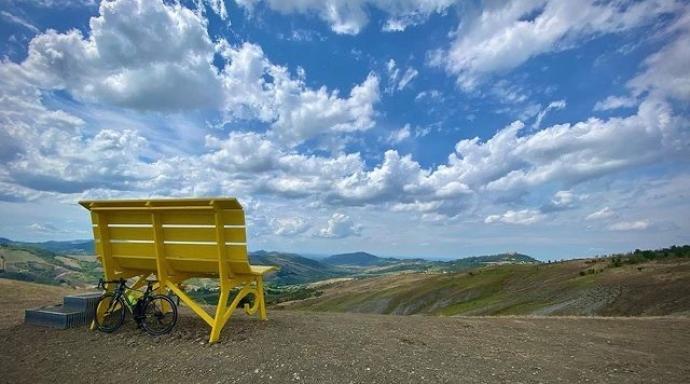
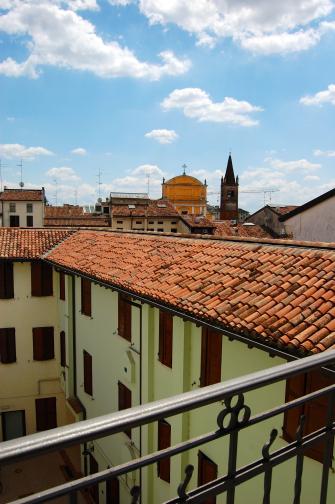
One of the most memorable moments of the visit is a pause on the Museum terrace: from here the eye takes in a panorama of rare beauty. The vineyards of the Valle Versa stretch out in every direction, neat and silent, broken only by villages, bell towers and the silhouette of the Apennines on the horizon. It is one of those views that make the Oltrepò Pavese a beloved territory not only among wine producers, but among all who seek an authentic landscape as yet untouched by mass tourism.
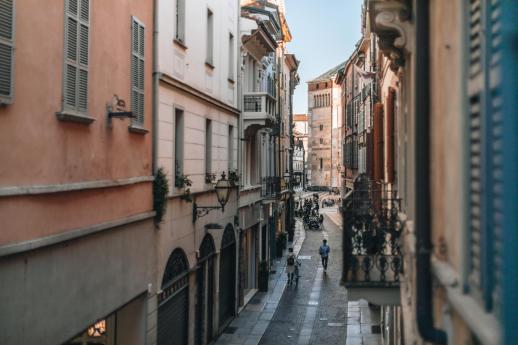
Montecalvo Versiggia is a most unusual municipality: it has no single centre, but is instead a constellation of sixty hamlets scattered across three valleys, each home to just a few dozen people. A place suspended in time, where the human scale is still that of farming, the wine cellar and the silence of the fields.
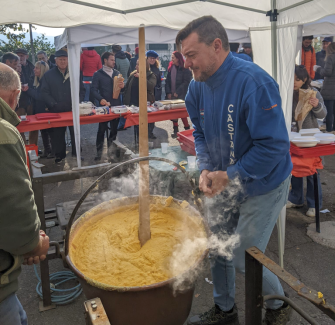
Just a few steps from the Museum stand other historic treasures: the parish church of Sant’Alessandro (14th century), the medieval castle dating to the 12th century (rebuilt in the 13th and altered in the 15th), and the 14th-century church of the Madonna dell’Uva, which every year marks the grape harvest with a popular folk celebration.
Where to Eat: The Oltrepò Pavese at the Table
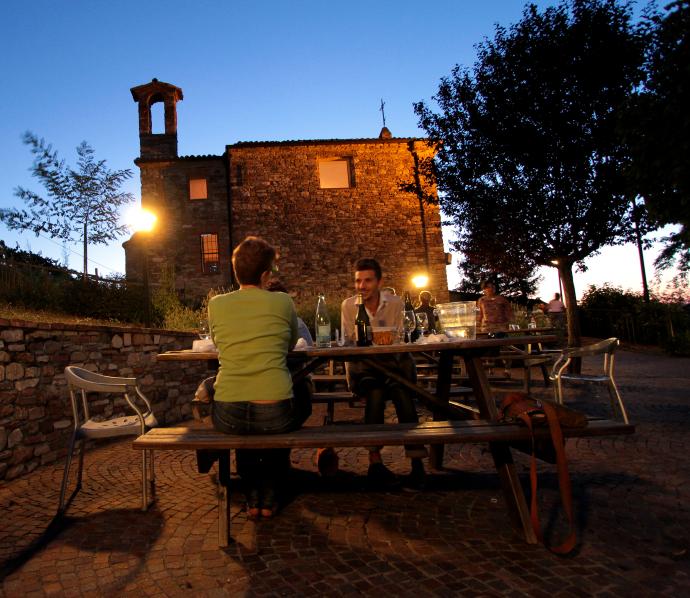
A visit to the Corkscrew Museum pairs naturally with a meal. The Oltrepò Pavese is a generous land, and in the area around Montecalvo Versiggia — between Santa Maria della Versa, Stradella and the hilltop villages of the Valle Versa — there is no shortage of traditional trattorias and restaurants where the local cuisine can be enjoyed in its most authentic form.
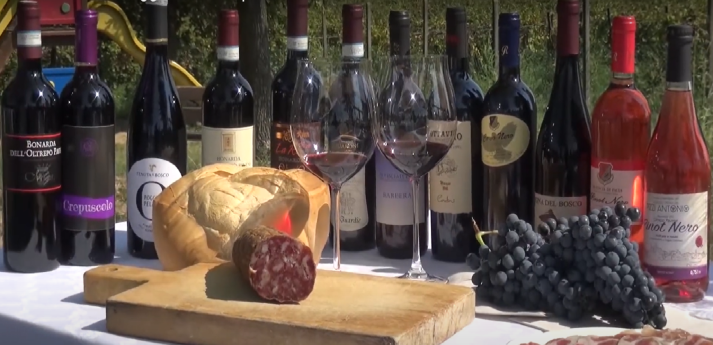
Menus frequently feature the great classics of Pavese and Oltrepadana cooking: artisan cured meats (coppa, salami, aged pancetta), hand-made fresh pastas such as plin and ravioli in roast meat sauce, risottos with porcini mushrooms from the Apennine woods, grilled meats and local cheeses. All accompanied, naturally, by wines of the territory: single-varietal Pinot Nero, sparkling Bonarda, Buttafuoco and Barbera are the most representative labels that every restaurant in the area serves with pride.
Many local restaurants also offer paired tasting menus, where each dish is chosen to enhance a specific wine from the territory — an experience that transforms lunch into a sensory journey, the perfect way to round off a visit to the museum and immerse oneself fully in the wine culture of this land.
Practical Information
Address: Churchyard of Sant’Alessandro, Montecalvo Versiggia (PV)
Summer opening hours: June to September, Sundays 3:00 pm – 6:30 pm
Rest of the year: By appointment
Phone: +39 0385 951008 / +39 0385 99712
Management: Municipality of Montecalvo Versiggia
Getting there
By car: from Stradella, follow towards Santa Maria della Versa, then continue along the Valle Versa (SP201) to Montecalvo Versiggia. The municipal offices are in the hamlet of Crocetta, at the foot of the castle.
-
From Pavia: approx. 35 km by road, 35–40 minutes
-
From Milan: approx. 75 km by road, about 1 hour 15 minutes
-
From Voghera: approx. 20 km, 25 minutes
-
From Stradella: approx. 20 km up the Valle Versa
What to do nearby
The Corkscrew Museum is an ideal stop within a wider itinerary through the Oltrepò Pavese, the world’s leading area for Pinot Nero production outside Champagne. A few highlights to combine with your visit:
-
Strada del Vino e dei Sapori dell’Oltrepò Pavese: a scenic route through wineries, local producers and outstanding wine landscapes
-
Canevino: an ancient village along the age-old trail of San Colombano, where history meets nature
-
Castello Dal Verme, Zavattarello: approximately 12 km away, home to a contemporary art collection and one of Italy’s most beautiful medieval villages
-
Valle Versa: vineyard trails ideal for walking or cycling excursions
-
Museum of Rural Civilisation, Montalto Pavese: founded in 1981 in the hamlet of Villa Illibardi, it brings together farming and winemaking tools, kitchen implements and the instruments of traditional crafts (blacksmiths, carpenters, cobblers, tailors); every item is catalogued with both its dialect and Italian name
Tel: 0385/99712
E-mail: protocollo@comune.montecalvo.pv.it
Opening hours
Opening: From May to September, every Sunday from 3:30 PM to 7:30 PM.
Rest of the year by appointment.
Attachments
Other links