- Active & Green
- Art & Culture
Sporting Landmarks in Lombardy
A selection of iconic sporting venues to take us through the history of sport in the Region as we move towards the Milano Cortina games.
Lombardy's sporting heritage can be seen throughout the region, with iconic venues that have hosted historic moments, continuing to show us thrills, challenges and remarkable achievements.
Just a few days away from the opening of the Milano Cortina 2026 Winter Olympics, these venues are the ideal stages in a journey to look at the region through sport. From the race tracks and vehicle museums that celebrate speed to the arenas and stadiums where fans experience the shared thrill of sport, and on to the unique scenery of the rivers and lakes for water sports, this route looks at locations and cultural memories, ending along the final stages of the Olympic Torch Relay.
Echoes of roaring engines (MB, BS, MN)
A passion for motorsport echoes through Lombardy’s towns and cities, where the tradition for speed can be felt everywhere, from the tracks to the museum collections.
Set in one of Europe’s largest enclosed parks, is the Autodromo Nazionale di Monza racetrack, also known as the Temple of Speed. With its straights and bends, the track has welcomed and continues to host important motorsport events, including Formula 1 Grand Prix races. It is an adrenaline-fuelled location, and this atmosphere is already palpable from strolling in the park, along the outside of the circuit. Those seeking to get a closer look can take tours and guided visits to see some areas of the track and find out more about its history, following specific itineraries.
In the heart of Brescia, the city linked to the historic Mille Miglia car race, the Museo Auto Storiche Brescia 1927-1957 (Brescia Vintage Car Museum, ex Museo Mille Miglia) takes its visitors on a journey of elegance and a sense of adventure. Housed in the monastery of Sant’Eufemia della Fonte, the museum contains historic vintage cars, photographs and stories of the open-road race from 1927 to 1957, when Italy’s roads and towns became a unique stage for motorsport.
Mantua pays tribute to one of the greatest drivers of all time with a dedicated museum. The Museo Tazio Nuvolari celebrates the “Flying Mantuan” with memorabilia, images and evidence that showcase the charisma of one of motor racing’s icons, who remained deeply linked to his homeland over time.
Memory, culture and community (CO, VA)
In Lombardy, there are certain sports with a history that has been passed down over the years, continuing to thrive in the area and its communities.
Located in the hills around Lake Como, the Sanctuary of Madonna del Ghisallo is a point of reference for cycling with its collection of bicycles, jerseys and votive items left there over the years by champions and enthusiasts alike. It looks out over the Colle del Ghisallo, a climb made famous by the Giro di Lombardia and more than once by the Giro d’Italia, joining sport and spiritual belief in a unique setting. Just a stone’s throw away is the Museo del Ciclismo Madonna del Ghisallo, a cycling museum that opens on a seasonal basis, where visitors can find out more about cycling history and see memorabilia of the great champions.
The province of Varese has centuries of tradition linked to fencing, now consolidated in local sport and culture. In Busto Arsizio it is possible to visit the Agorà della Scherma, a place dedicated to the history and development of fencing. The story of the sport comes to life with fencing pistes, equipment and archive material, and offers visitors the opportunity to experience the sport through activities, matches and initiatives that are open to the public.


Inside the atmosphere of arenas and stadiums (MI, BG, LO)
Arenas and stadiums are locations where sport is celebrated en masse, where the thrills are shared live, with fans, lights and adrenaline rush.
In Milan, the Stadio Giuseppe Meazza, known the world over as San Siro, is so much more than a stadium: it is an icon where a passion for football is transformed into shared emotions. The grand Championship and Cup challenges experienced from the stands make San Siro a popular setting in which the city identifies itself, and the stadium’s sheer visual staging potential also allows it to host other important events. The same applies to the Unipol Forum, or Forum di Assago, another iconic venue in Milan, where basketball is usually the protagonist.
In the modern neighbourhood of Santa Giulia, the new Ice Hockey Arena is getting ready to host the ice hockey matches of Milano Cortina 2026 in its high-tech elegant architecture. With seating for around 14000, this venue is preparing to become a sporting symbol of the future.
In Bergamo, the modern ChorusLife Arena is a perfect example of a multipurpose space used for both sports and culture. Designed to host top-level sporting events, it can easily be transformed into a theatre for shows, concerts, musicals, and other artistic performances. But it remains an arena at heart: a home for sports fans and for enjoying the energy that is created when a city takes its sport to heart.
The Palacastellotti in Lodi is home to rink hockey and other competitions, where sport is identity and a sense of belonging. Here, hockey is a tradition that is handed down through its fans and the shared rituals on the stands. And when the matches are over, the space can be opened up to cultural and social initiatives for the city.
Along medal-winning rivers and lakes (PV, MN, CR, CO, LC, VA, BG)
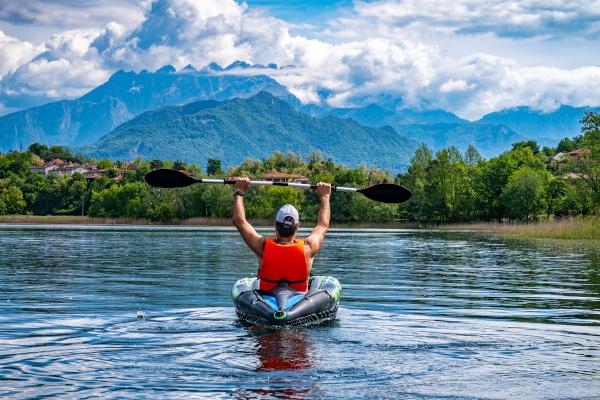
Lombardy’s lakes and rivers have led to a long tradition of water sport. Among these, an important protagonist, including at Olympic level, is canoeing, an invitation to row along the waters of Lombardy, even in winter.
In Pavia, the River Ticino accompanies training and regattas thanks to large, safe sections that welcome both local rowers and national teams. The Mincio flows through Mantua, between the lakes and canals, creating charming routes, where oars and panoramic views seem to travel hand in hand. In Cremona, the Po offers the experience of the great river, with its wide expanses and regular current that make it perfect for training.
Lombardy’s lakes are used by sports clubs and rowing schools, with dedicated facilities and routes for beginners and professionals alike, plus a calendar of international rowing events. On Lake Como, the link to rowing is an historic one that is renewed with regattas that animate its shores. In the Lecco area of the lake, this vocation is even more at home: sports on the lake are central in Mandello del Lario, with recent investments in a new rowing centre.
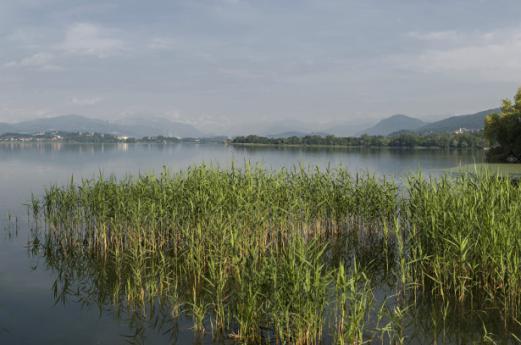
As well as Lake Como, there is also Lake Pusiano, a certainty for rowing, with national regattas that attract athletes from all over Italy, while Lake Varese takes Lombardy onto the international scene, hosting stages in the World Cup. And towards the east, Lovere, on Lake Iseo completes our journey with sport, towns and mountains in a single glance.
Towards the Olympics, with the stages of the Olympic Torch Relay (SO, LC, BG, CO, MB, MI)
Due to the Milano Cortina 2026 Winter Olympics, the shared passion for sports is also an invitation to rediscover the areas that will be welcoming the final stages of the Olympic Torch Relay.
From 30 January to 6 February 2026, on its journey to the Opening Ceremony, the Olympic Torch will be crossing streets, piazzas and symbolic locations in some areas of Lombardy: Livigno (30/1), Sondrio (31/1), Lecco (1/2), Bergamo (2/2), Como (3/2), Monza (4/2) and lastly, Milan, Piazza Duomo (5/2), involving communities and fans at every stage. Every day ends with a local celebration and the lighting of a town brazier, a shared moment of festivity and participation in the love of sport. This journey will culminate in the Stadium of San Siro, Milan on 6 February, where the torch will be used to light the brazier for the Opening Ceremony, officially inaugurating the Milano Cortina 2026 Winter Olympics.