- Art & Culture
Crema

Crema is located 40 km west of the provincial capital. Although written sources date back only to the 11th century, recent studies suggest that a civilian settlement—Crema, to be precise—likely arose near and in conjunction with a Roman military outpost, now known as Borgo S. Pietro.
The city’s significant role provoked a reaction from neighboring rulers and led to the brutal events of 1160, when it suffered a dramatic siege by Emperor Frederick Barbarossa and was subsequently destroyed.
Recovery occurred relatively quickly, and by the end of the 12th century Crema was already able to equip itself with new, suitable, and modern defenses that underwent formidable development in the following centuries, when the city came under Venetian rule.
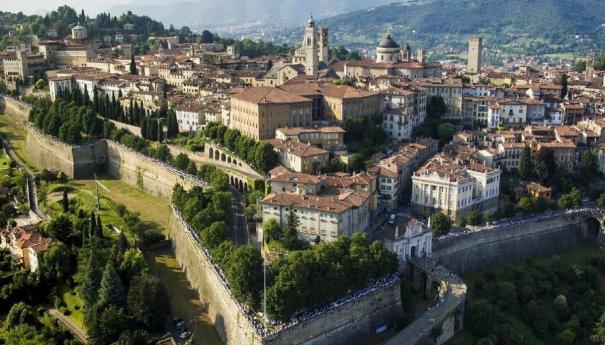
Between 1488 and 1508, a solid defensive enclosure was built, which also incorporated the old medieval walls. The city walls, nearly three kilometers long and over a meter thick in some places, began to show signs of deterioration in the early 1800s.
Today, some sections of the walls are still visible from the gardens of Porta Serio, from the S. Pietro neighborhood all the way to the Foscolo Tower, from Via Stazione, Via Magri, and Campo di Marte, while the only defensive structure that has survived intact to the present day is the 13th-century municipal tower, which was modified and later incorporated into the 16th-century Town Hall.
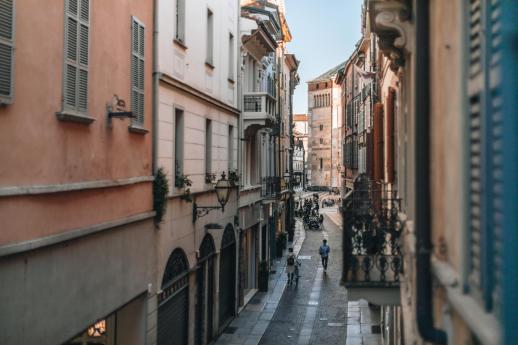
The city is also characterized by its religious and civil buildings, which are distributed throughout an urban fabric largely preserved in its medieval and Renaissance form.
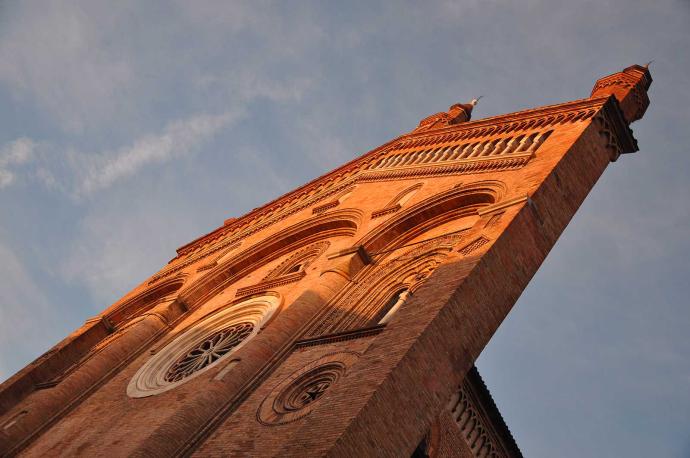
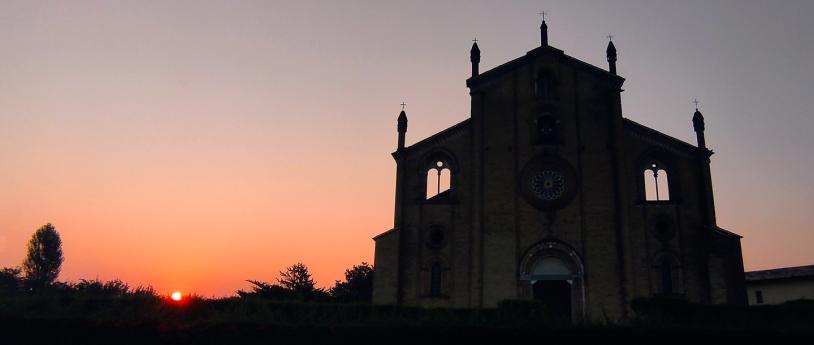
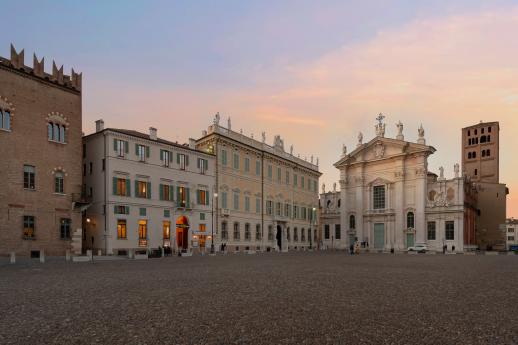
The wealth of artistic works housed within them, the scenic elegance of Piazza Duomo—onto which the city’s main monuments face—and the outlying Basilica of S. Maria della Croce all contribute to making Crema a worthwhile tourist destination.