- Food & Wine
The Province of Pavia, Italian Capital of Rice
Pavia, with its 85,000 hectares of rice fields and a total production of 4,865,000 quintals, is the Italian province with the highest percentage of rice cultivation — the leading producer at both the national and European levels.
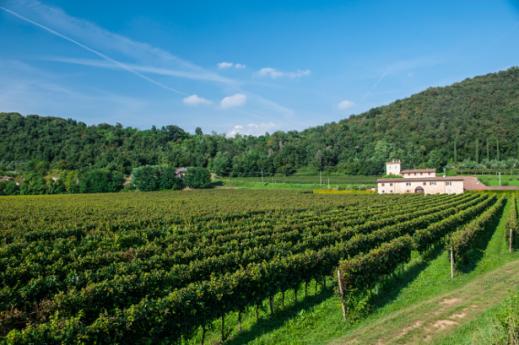
The plain that includes Lomellina and the Bassa Pavese (or simply the Pavese) — located in the northern part of the province, divided by the Ticino River and both bounded to the south by the Po — is a charming and fascinating region dotted with beautiful towns rich in history and traditions. It is, in every sense, the true “land of rice.”
The peaceful landscape and the wide expanses of water that appear when the rice fields are flooded are not “natural”: everything has been built, shaped, and organized by human hands with infinite patience. By nature, this land, rich in waterways and springs, was for centuries partly marshy and partly arid due to numerous sandy ridges of aeolian origin. But the monastic communities of the Middle Ages, the feudal colonization, and the great agronomic reforms introduced by the Sforza family — who first experimented with rice cultivation — turned the area into a mosaic of fertile fields.
Serving this vast agricultural expanse is a complex system of irrigation ditches and canals, around which rose the cascine (farmsteads) — at first fortified with defensive castles, later evolving into closed courtyards typical of the industrialized agriculture of the Po Valley. Rice was introduced to Italy by the Arabs, who brought it to Sicily in the 8th century; from there, it reached Lombardy in the 15th century, thanks to Galeazzo Maria Sforza.
Documents record that, in 1475, the Sforza family gifted six sacks of rice to the Dukes of Este to encourage its cultivation in the Po Delta.
Rice cultivation unfolds in four main stages:
The first, in spring, involves preparing the soil through plowing, harrowing, and fertilizing. The second is the flooding of the fields via a sophisticated canal system. Then, in the third phase, sowing is carried out by broadcasting the seed.
In recent years, the dry seeding technique has become increasingly common — seeds are sown in rows and buried with precision machinery, using an average of 200–250 kg of seed per hectare.
In early June, farmers begin the process of removing weeds, using herbicides that are increasingly respectful of the environment and food safety.
The final stage, between September and October, is the harvest. Combine harvesters separate the grain from the straw, after which the rice is dried for storage and later processing.
Processing begins with cleaning the paddy rice (caryopses) to remove dust, soil, and metallic fragments. Next comes dehusking, which removes the husk and produces brown (wholegrain) rice. This is followed by whitening, which removes the germ and the outer layers surrounding the brown rice grain.
In Italy, the most common varieties are classified into four commercial categories — tondo (round), fino, semifino, and superfino — based on certain grain characteristics (length, width, thickness, shape, and weight). Round rice has small, plump grains; fino varieties have long, slender grains; semifino types are medium-sized and slightly elongated; superfino rice features large, very long grains.
There are about 1,700 rice farms in the Province of Pavia. The main cultivated varieties include Carnaroli, Vialone Nano, Arborio, Baldo, Balilla, Gladio, Loto, Roma, Sant’Andrea, and Selenio.
In recent years, there has been a gradual shift from traditional varieties to those with higher qualitative standards.
(SOURCE: CHAMBER OF COMMERCE OF PAVIA)
Attachments