• Food & Wine
    • Active & Green

The Province of Pavia, the Italian and European Capital of Rice

The Province of Pavia is universally recognised as the capital of rice in Italy and one of the leading rice-growing districts in Europe. According to the most recent data from the National Rice Authority (Ente Nazionale Risi), the Pavia area accounts for more than 85,000 hectares of rice fields, with an annual production exceeding 4.8 million quintals. These figures make Pavia the leading Italian province in terms of both cultivated area and rice production.

Lomellina and the Bassa Pavese: the true “land of rice”

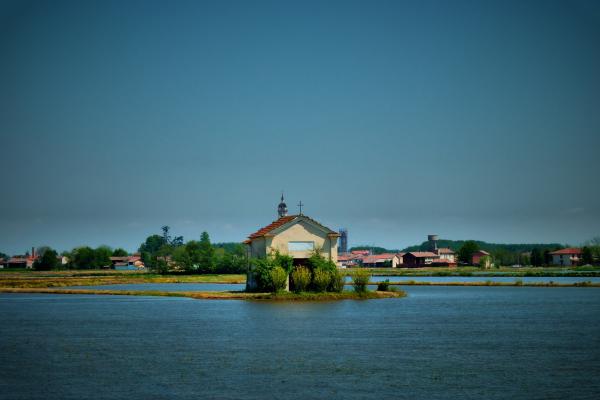
The heart of rice cultivation in the Pavia area lies in Lomellina and the Bassa Pavese, the vast plain in the northern part of the province, stretching between the Ticino and Po rivers. This fascinating landscape is dotted with historic villages, abbeys, farmsteads and wide agricultural expanses that, in springtime, turn into spectacular mirrors of water.

What today appears as a harmonious and natural landscape is in fact the result of centuries of human intervention. Originally, these lands were partly marshy and partly arid. It was the work of medieval monks, later feudal organisation, and above all the agronomic reforms introduced by the Sforza during the Renaissance, that transformed the area into one of the most advanced agricultural systems in Europe.

Canals, irrigation channels and farmsteads: a man-made landscape

To support rice cultivation, a complex system of irrigation canals, channels and locks was created, many of which are still in use today, allowing precise water management. At the same time, the characteristic cascine developed, first as fortified settlements and later as closed courtyard farmsteads, becoming a symbol of agriculture in the Po Valley.

Rice was introduced to Italy by the Arabs in the 8th century, reaching the Po Valley in the 15th century via Sicily. Historical documents record that in 1475 the Sforza family donated sacks of rice to the Dukes of Este, encouraging its cultivation in the Po Delta as well.

How rice is grown in the Pavia area

Rice cultivation follows a well-defined and fascinating agricultural cycle:

  • Spring: preparation of the soil through ploughing, refining and fertilisation.

  • Flooding of the fields through the network of irrigation canals.

  • Sowing, traditionally broadcast by hand; in recent years, dry sowing in buried rows using precision machinery has become increasingly common.

  • Weed control in early summer, using techniques and products that are ever more environmentally friendly.

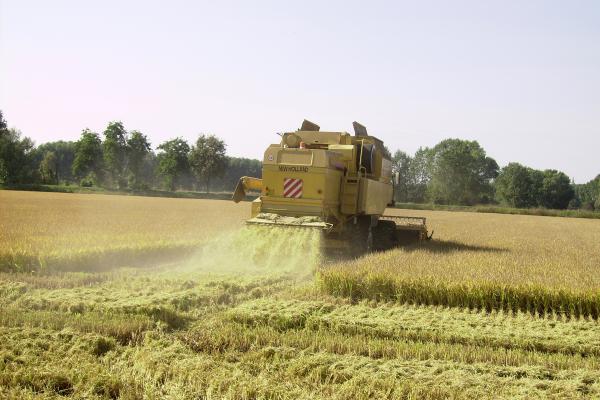
  • Harvesting between September and October with combine harvesters, followed by drying and processing of the rice.

Processing includes cleaning, husking (to obtain wholegrain rice) and whitening, which produces the white rice intended for consumption.

Rice varieties and farming enterprises

Around 1,700 rice farms operate in the Province of Pavia, preserving a centuries-old tradition while also embracing agricultural innovation. The varieties grown fall into four main commercial categories - round, long, medium and superfine - and include some of the most famous types used in Italian cuisine:

Carnaroli, Arborio, Vialone Nano, Baldo, Balilla, Sant’Andrea, Roma, Gladio, Loto and Selenio.

In recent years there has been a growing focus on quality, with increasing emphasis on premium varieties, particularly appreciated in high-end gastronomy.

Pavia and rice: a heritage to be discovered

Visiting the Province of Pavia means entering a unique agricultural landscape in Europe, where history, water, tradition and innovation have coexisted for centuries. A territory that tells the story of rice not only as an agricultural product, but also as a defining element of local identity, culture and landscape.


Attachments
Scarica la Guida: Buono a sapersi - capitolo Riso edito dalla CCIAA di Pavia

On the same topic

Eating Lombardy

Lombardy shows its excellence with the unique and traditional flavors of each single territory, but it is also international cuisine
  • Food & Wine
Suggestions for eating in Lombardy: restaurants, international and local dishes

Franciacorta Wine

An ancient art that unites, in perfect union, with the most modern technologies and the mastery of the winemakers of the territory
  • Food & Wine
Franciacorta wine, an international success

Crotti in Valchiavenna

Discovering the natural cellars formed under the boulders of ancient landslides from which the "sorel" blows
  • Food & Wine
Valchiavenna@inLombardia_Adobestock

A gastronomic tour of Lake Iseo

Lake Iseo is rich in nature, history, culture, and unique flavours. Start your taste adventure here.
  • Food & Wine
A gastronomic tour of Lake Iseo

A toast to the vineyards and wineries of Lombardy

Lombard vineyards and wineries are eager to welcome tourists and visitors to enjoy the last phases of the harvest. 
  • Food & Wine
Calici alzati nei vigneti e nelle cantine della Lombardia - San Colombano

Tasting your way around Monza and Brianza

Wild garlic pesto, pink asparagus from Mezzago, white potatoes from Oreno: discover all the local flavours of Monza e Brianza.
  • Food & Wine
Tasting your way around Monza and Brianza

Consortium Salami Cremona IGP

An institution to identify, safeguard and promote on the market a typical product of the Po valley
  • Food & Wine
Consorzio Salame Cremona IGP

Hunting for truffles, the diamonds of the Lombardy table

From the most prized - the white truffle, to the black summer truffle or Scorzone, the marzuolo, the black Trifola and the black uncinato: also in Lombardy you can find delicious truffles, which are appreciated in restaurants all over the world
  • Food & Wine
Hunting for truffles, the diamonds of the Lombardy table

Salame di Varzi D.O.P.

The origins of Varzi Salame are to be found in the dawn of time
  • Food & Wine
Salame di Varzi

Wine Cellars in Casteggio

An ancient village in the Oltrepò Pavese, rich in high quality vineyards
  • Food & Wine
Wine cellars in Casteggio, a hidden treasure

A sweet autumn in Lombardy

As the chilly weather approaches, we have the perfect excuse to spend some cosy afternoons at home, keeping ourselves warm with desserts imbued with the traditional flavours of our childhood in Lombardy
  • Food & Wine
A sweet autumn in Lombardy

Cremona Local Products Guide

meats and cheeses characterize the Cremonese gastronomy
  • Food & Wine
Cremona local products guide, gourmet experiences

East Lombardy

East Lombardy, the European Region of Gastronomy 2017
  • Food & Wine
East Lombardy

Eating in Val Sabbia

The authentic taste of Val Sabbian cuisine
  • Food & Wine
Spiedo bresciano

Zucca Berrettina di Lungavilla

In Lungavilla, a pumpkin known as “Capé da prèvi” (priest’s hat) is cultivated, named for its shape, which resembles the headgear worn by priests.
  • Food & Wine
Zucca Berrettina di Lungavilla

The cheese

Ben sei formaggi prodotti nel Cremonese hanno ottenuto il riconoscimento DOP (Denominazione di Origine Protetta): grana padano, provolone valpadana, taleggio, quartirolo lombardo, gorgonzola e salva cremasco.
  • Food & Wine
The cheese

Taste and relaxation in the vineyards

From hills to wineries, welcoming the autumn on a journey through tasting, culture, and relaxation.
  • Food & Wine
Vigneti in Lombardia@inLombardia

The Truffle of Oltrepò Pavese

  • Food & Wine
The Truffle of Oltrepò Pavese

Il Butalà

A dish from the Pavia Apennines featuring Deco Brallo potato gnocchi and Menconico black truffle.
  • Food & Wine
Il Butalà

Wine and Flavor Trail Franciacorta

Among rows of vines with perfect geometries that cross small villages rich in history, traditions, farms, cellars and signs of human activity: discover Franciacorta
  • Food & Wine
Wine and Flavor Trail Franciacorta,