- Villages
Montesegale
Oltrepò Pavese’s medieval charm: authentic sights and flavors


In the Heart of Valle Ardivestra: Discover Montesegale
Nestled among the green hills of the Oltrepò Pavese, Montesegale is an authentic village in the province of Pavia where time seems to have stood still. Dominated by the imposing medieval castle and custodian of centuries-old gastronomic traditions, Montesegale is an unmissable destination for anyone wishing to explore the true rural and historical soul of the Pavia countryside.
The Castle of Montesegale: A Thousand Years of History in Oltrepò Pavese
A visit to Montesegale would be incomplete without looking up at the Castle that overlooks the entire village and the Valle Ardivestra. This impressive architectural complex—one of the best-preserved in Oltrepò Pavese—has witnessed over a thousand years of historical, military, and artistic events, making it one of the most fascinating symbols of the province of Pavia.
Medieval Origins: From the 12th to the 14th Century
The village’s very name reflects its deep roots: Montesegale comes from the Latin Montesicalis, meaning “Rye Mountain,” a direct reference to the cereal crops that once covered these hills. The 14th-century castle stands on the site of a 12th-century fortress, documented since the 11th century as an ancient possession of the Tortona bishopric. In 1164, Emperor Frederick Barbarossa ceded it to Pavia; in 1311, the fief passed to the Gambarana branch of the Palatine Counts, who profoundly shaped the territory’s history.
Between the 1200s and 1300s, the fortress was fortified with a robust defensive structure. Historical chronicles report that in 1322, the fortress of Montesegale was garrisoned by 200 knights and 400 infantrymen, highlighting its strategic importance in controlling the Coppa, Schizzola, and Ardivestra valleys.
Destruction in 1415 and Rebirth as a Noble Residence
In September 1415, during a conflict between the Gambarana and Visconti families, the castle was conquered and razed to the ground by the condottiero Carmagnola. What we see today is the result of centuries of evolution: in the 17th century, the complex was transformed into a noble residence, and subsequent owners carried out further restorations and expansions.
Since 1971, the castle has been owned by the Jannuzzelli family, who invested significantly in its restoration: walls, courtyard paving, and a terrace converted into a charming open-air amphitheater. The result is a stately complex of courtyards and buildings, surrounded by battlemented walls and massive square towers, with a moat still encircling it today.
The Museum of Contemporary Art: Art and Culture in the Castle
Today, the Castle of Montesegale is a lively cultural hub. Since 1975 (with a permanent gallery set up in 1985), it has hosted a Museum of Contemporary Art divided into three large galleries, featuring works by nationally renowned artists such as Bartolini, Brindisi, Crippa, Gattuso, Schifano, and Treccani. The castle opens to the public from June to September during events and exhibitions: concerts, opera performances, exhibitions, and guided tours with local food tastings.
Visitor Information
-
The castle is privately owned and not open for free visits.
-
Public opening: June to September during cultural events and exhibitions.
-
Event calendar: available on the Montesegale municipal website.
-
Special occasions: FAI Days and guided tours with tastings organized by the Lombard Union of Municipalities “Borghi e Valli d’Oltrepò.”
Valle Ardivestra and the Oltrepò Pavese Landscape
Montesegale is located in Valle Ardivestra, crossed by the homonymous stream and characterized by gently rolling landscapes of exceptional natural beauty. Unlike the vineyard-covered areas of Oltrepò, here vines are scarce; the hills are covered by deciduous forests, vast cereal fields, almond groves, and chestnut trees. Colorful beehives are common among the crops, as the valley is a privileged area for beekeepers, producing high-quality single-flower honey.
The municipality has 21 hamlets—including Sanguignano, Languzzano, Zuccarello, and Case del Molino—small rural villages that retain their traditional character. Together with the Castles of Stefanago and Montalto Pavese, the Montesegale Castle forms a horseshoe-shaped defensive system that has protected the valleys of Oltrepò for over a thousand years.
Trekking and Hiking: Discover Montesegale on Foot
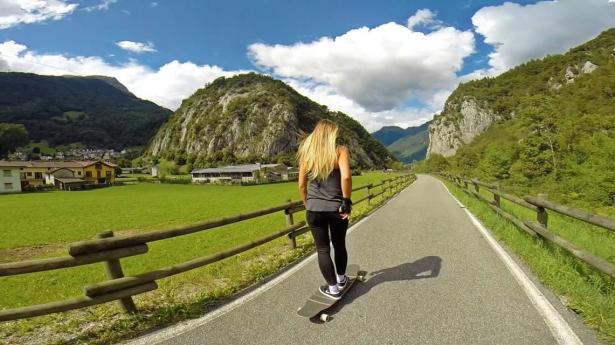
Valle Ardivestra is ideal for hiking enthusiasts. Numerous circular trails pass through forests, clearings, and rural villages, offering stunning views of the castle and the Upper Pavese Apennines. One popular starting point is Case del Molino, providing access to routes through Languzzano and Pogiolo. The area is rich in biodiversity, with plant and animal species typical of the Lombard Apennines.
Montesegale’s Culinary Specialties: Oltrepò Pavese Excellence
Montesegale’s culinary tradition is rooted in the village’s agricultural and pastoral economy. The territory produces certified local specialties that represent the most authentic identity of this corner of Lombardy.
Salame di Varzi PDO: A Lombard Heritage
Among the local products, Salame di Varzi PDO holds a place of honor. With ancient—possibly Lombard—origins, it is made exclusively from lean cuts of pork, with fat never exceeding 30%. Montesegale is one of fifteen municipalities authorized to produce it. Visiting the local salumificio in Fornace offers a unique experience that combines taste and local culture.
Pansegale De.Co.: The Village’s Ancient Bread
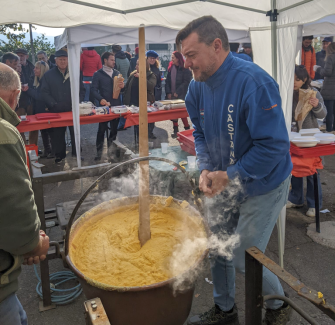
Pansegale is Montesegale’s signature bread, recognized as a Municipal Denomination (De.Co.) for its exceptional qualities and historic tradition. Enriched with dried fruits—walnuts, almonds, hazelnuts, and figs—and made with sourdough, this rustic bread pairs perfectly with Salame di Varzi PDO, creating an unforgettable taste experience.
Other De.Co. Specialties
The Municipal Denominations of Montesegale include three more gastronomic highlights:
-
Mundiöla – A cured pork shoulder with a bright red color and pinkish-white fat streaks, seasoned with Oltrepò Bonarda DOC wine and aged at least six months. Best enjoyed with a glass of lively Bonarda from Oltrepò Pavese.
-
Salàam da cöta – A traditional winter pot-cooked salami made from a hand-mixed combination of lean and fatty pork, rind, salt, and spices. Served hot after slow cooking.
-
Torta di Montesegale – An ancient almond-based cake, revived by Pini pastry using a recipe over a century old. A sweet and fragrant ending to any visit.
What to See and Do in Montesegale
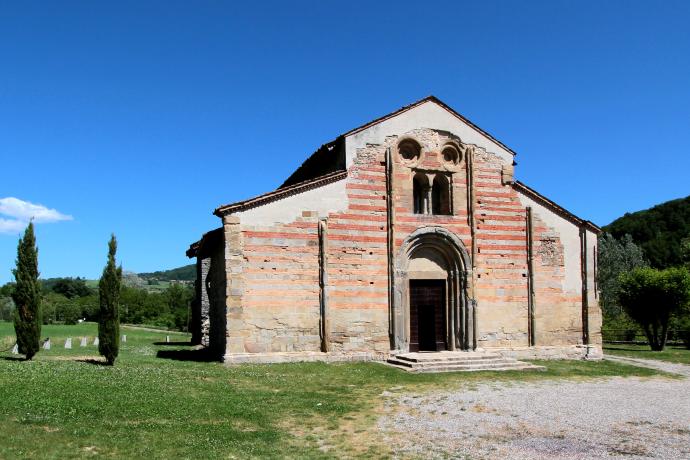
Beyond the castle, the village offers many points of interest. The visit ideally starts at the square dedicated to the Fallen of Nassiriya, from which a path follows the medieval walls and leads up to the castle, passing the Oratory of Sant’Andrea. The Parish Church of Saints Cosmas and Damian is also unmissable, housing a remarkable wooden statue of the Madonna of the Rosary.
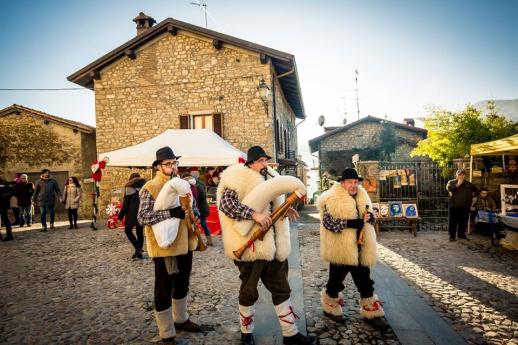
Montesegale is also a sporty village: Olympic archery champion Mauro Nespoli is an honorary citizen. On April 25, the 70 Mt Olympic Round Interregional Archery Competition is held, open to all categories. In September, the traditional San Damiano Fair returns (22nd edition), featuring historical reenactments, tastings, exhibitions, and tournaments. The Ca’ del Monte Planetarium and Astronomical Observatory hosts cultural events and music evenings.
How to Get to Montesegale
Montesegale is located in the province of Pavia, in the Lower Apennines of Oltrepò Pavese, near Valle Staffora. The village is easily reached by car from Godiasco (approx. 2 km), Voghera, or Pavia. The nearest train stations are Casteggio or Voghera, with onward travel by car along scenic provincial roads of Oltrepò.
Montesegale is a rare place that surprises: a village where medieval history meets contemporary art, pristine nature meets centuries-old flavors. An authentic stop in the heart of Oltrepò Pavese, to be discovered slowly, with all your senses.
Other links