- Villages
- Art & Culture
Grazie di Curtatone

NIn 1037, on a small promontory rising from a tangle of marshes, waterways, and reeds near Mantua, there stands a shrine or oratory where farmers and boatmen venerate the miraculous image of the Virgin Mary with the Child in her lap.
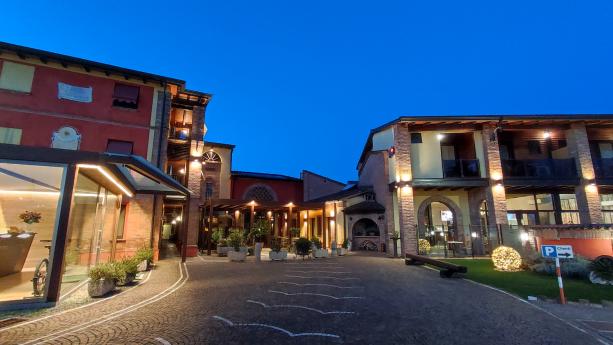
Thus was born the village of Grazie (MN), whose historic center is the sanctuary of the Blessed Virgin Mary of Grazie, built in an elegant Lombard Gothic style, begun in 1399 and consecrated in 1406. It stands on a hill overlooking the reeds of the Mincio River, which flows behind it, with its façade facing the village; the other buildings in front are old fishermen’s houses and homes built where the arcades once stood, which had housed shops and shelters for pilgrims.
Upon entering the church, one still finds, above the tabernacle, the miraculous icon of the Madonna delle Grazie, venerated by the fishermen; but the greatest wonder comes from the multitude of votive statues—testaments to popular devotion—that seem to reach out toward the visitor from the niches in which they are placed, as if it were a 16th-century Baroque theater of miracles.
The church’s chapels house extraordinary funerary monuments, such as the one—designed by Giulio Romano—where Baldassarre Castiglioni, author of *Il Cortegiano*, is buried.
In the sultry summer light as well as in the winter mists, the place exudes a strange charm.
Our Lady of Miracles still spreads her mantle over the Piazza di Grazie, where itinerant artists known as “madonnari” draw her image on the asphalt with colored chalk.
In this humid landscape, one need only head down toward the Mincio and slowly navigate the river and its canals to discover Virgilian landscapes with reeds and water lilies, rare bird species, and, in summer, exotic lotus flowers. And in the distance, the Mantua skyline appears magnificent.
From Grazie to Mantua: river landscapes by bike
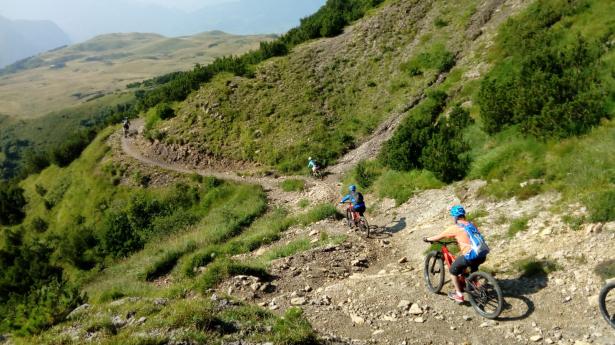
From Grazie, you can reach Mantua along a cycle and footpath of around 12 kilometres which winds through the countryside of the Mincio Park. The route, which is flat and entirely separate from motor traffic, runs alongside the Valli del Mincio Nature Reserve, amid vegetation, bodies of water and views that gradually open out onto Lake Superiore.
After about an hour’s cycle, you pass between two places deeply linked to the Mincio: on the one side, Grazie, overlooking the river’s wetlands; on the other, Mantua, surrounded by its lakes. Cycling allows you to take in this change gradually, with plenty of opportunities to stop and admire the scenery along the route.
This cycle and footpath is not a stand-alone route; it is part of a wider cycle network covering the Mincio Valleys and the city’s three lakes, linking various parts of the area along routes designed for people travelling on foot or by bicycle. This route can therefore serve either as the main activity of the day or as part of a longer cycle ride exploring the Mincio Park.
MOST BEAUTIFUL VILLAGES IN ITALY #INLOMBARDY