- Villages
- Active & Green
Brallo di Pregola
Pavia Apennines, the Four Provinces Area, Trekking and Lombard History


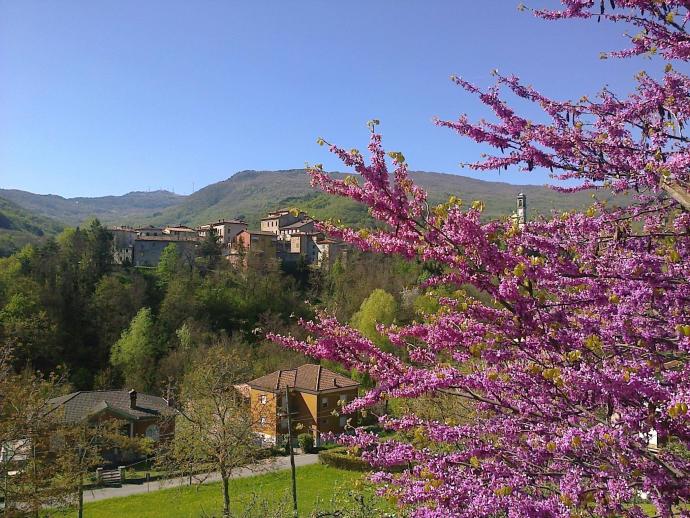
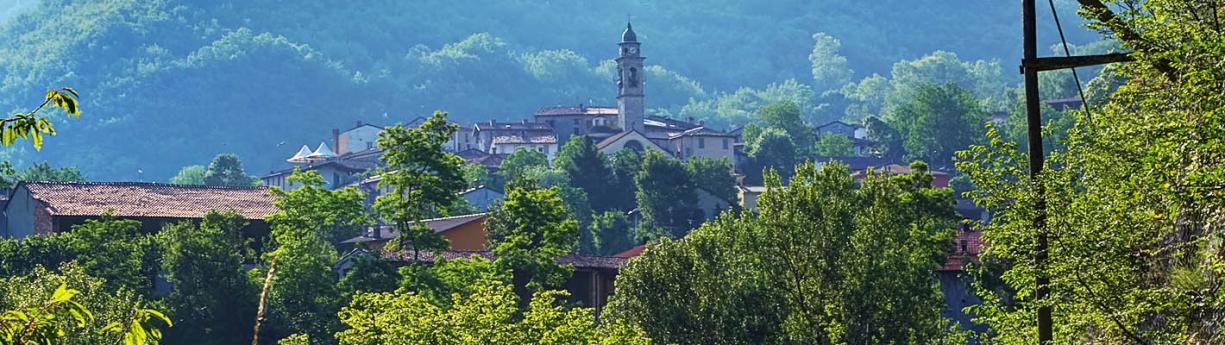
Nestled among beech forests, windswept ridges and ancient silences, Brallo di Pregola is one of the most authentic destinations in the Pavia Apennines.
This small municipality in the Oltrepò Pavese occupies a truly unique geographical position: it lies at the border between four provinces — Pavia, Piacenza, Genoa and Alessandria. For this reason, the entire area has long been known as the “Land of the Four Provinces”, a crossroads of traditions, cultures, dialects and culinary heritage that have coexisted for centuries in remarkable harmony.
Choosing Brallo di Pregola as a travel destination means immersing yourself in an unspoiled Apennine landscape, walking trails that lead to panoramic peaks above 1,700 metres, discovering stone villages that have remained almost unchanged for centuries, and experiencing a history that dates back to the time of the Lombard kings and the great Irish monk Saint Columbanus.
How to get there
Brallo di Pregola is located in the Oltrepò Pavese and can be reached from Pavia in about 1 hour and 30 minutes via Voghera and Varzi, or from Genoa and Piacenza through the Apennine mountain passes.
The main access route is the SS461 road through the Staffora Valley to Varzi, followed by the SP186 provincial road.
A thousand-year history: from Saint Columbanus to the Lombard Kings
One of the most historically significant and evocative places in the area is the Chapel of Saint Agatha, located in a panoramic position above the village of Brallo. Today only the outline of the ancient sacred building remains, yet the site preserves a remarkable historical memory.
The chapel once belonged to the renowned Monastery of Saint Columbanus in Bobbio, the great abbey founded in 614 AD by the Irish monk who travelled across medieval Europe spreading culture, faith and learning. The documented link with Bobbio certainly dates back to the 9th century, but archaeological finds discovered in the area suggest an even earlier presence, at least from the 7th century, the very time of Saint Columbanus and the Lombard rulers who governed these Apennine lands.
This detail is significant: Brallo di Pregola is not only a place of natural beauty but also a historically important site within the monastic and cultural network that helped shape northern Italy during the Middle Ages. It is therefore an ideal destination for travellers who wish to combine hiking with cultural discovery.
What to see in Brallo di Pregola and nearby
Pregola: the Castle and the Church of Saints Agatha and Roch
A short distance from Brallo, the hamlet of Pregola preserves two historical landmarks worth visiting: the medieval castle, which silently dominates the surrounding landscape, and the Church of Saints Agatha and Roch, a fine example of rural religious architecture deeply rooted in local traditions. Both sites tell the story of centuries of community life in these Apennine territories.
Somegli: a 13th-century Romanesque-Lombard church
In the small village of Somegli stands a church characterised by elegant Romanesque-Lombard architectural forms, dating back to the 13th century. The purity of its lines, the quality of the local stone and its perfect integration with the surrounding landscape make it an essential stop for lovers of medieval art and Romanesque architecture.
Colleri and Corbesassi: the stone villages
One of the most evocative experiences in the area is a walk through the stone houses of Colleri and Corbesassi. These small villages, where time seems to have stood still, represent the most authentic expression of traditional Apennine rural architecture: compact buildings, narrow alleys and materials quarried directly from the surrounding mountains. It is a heritage of great ethnographic and landscape value.
Rovaiolo Vecchio: the ghost village of the Oltrepò Pavese
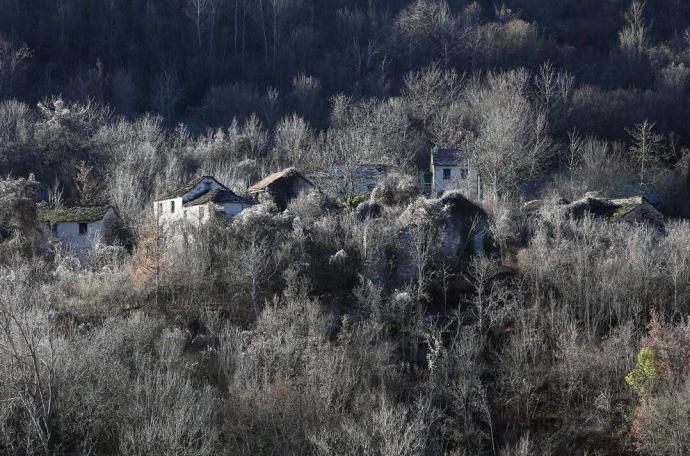
Among the most fascinating and mysterious destinations in the territory of Brallo di Pregola is Rovaiolo Vecchio, the only ghost village in the entire Province of Pavia and one of the most evocative places in the Lombard Apennines.
Perched on the slopes of Mount Lesima at about 500 metres above sea level, along the valley of the Avagnone stream — a tributary of the Trebbia River — the village preserves a remarkable story that leaves a lasting impression on visitors.
The name has Celtic-Ligurians origins: the original toponym Arvaiora reveals an ancient settlement, probably already inhabited during the Early Middle Ages, when Rovaiolo was a stop along the Salt Road, the network of paths connecting Varzi with the Genoese ports, travelled by pilgrims, merchants and travellers crossing the Apennines.
For centuries life continued here quietly until 1960, when the Prefecture of Pavia ordered the immediate evacuation of the entire village. The erosion of the Avagnone stream threatened to trigger a landslide from Mount Lesima, putting at risk the roughly ten families — about one hundred people — who had lived here for generations.
Within a few days, thanks to state support, the inhabitants left their homes, barns and farms and moved to the opposite side of the stream, where Rovaiolo Nuova was built. Ironically, the feared landslide never struck the old village, while in later years it was the new settlement that faced a landslide movement — fortunately without serious consequences. Some elderly residents chose never to leave completely and remained until the early 1980s, becoming the last guardians of the village.
Today Rovaiolo Vecchio is an open-air museum frozen in time in 1960. Among the fifteen stone houses with their characteristic dark roofs, vegetation has slowly reclaimed its space, yet traces of everyday life remain: plates and cutlery in cupboards, blankets on beds, kitchen tools, a fountain with a drinking trough and washing basin, a barn and an old communal oven. Everything remains as it was left on the day of departure. The atmosphere is silent, suspended and deeply evocative, attracting hundreds of hikers and local history enthusiasts every year.
How to reach Rovaiolo Vecchio
From Rovaiolo Nuova, follow the descending dirt road to the Avagnone stream, which can be crossed via a small pedestrian bridge (trail marker 125). From here a simple uphill path leads directly to the village in about 15 minutes.
Along the way visitors can admire the Sant’Ettore Waterfalls, one of the very few river waterfalls in the entire Pavia territory. Entering the abandoned houses is not recommended due to structural instability.
Hiking and trekking: the peaks of the Pavia Apennines
Brallo di Pregola is an excellent starting point for trekking in the Pavia Apennines. The network of trails that radiates from the area is rich and varied, suitable both for experienced hikers and for families with children.
Many routes lead to panoramic peaks that, on clear days, offer extraordinary views stretching from the Po Valley plains to the Ligurian Sea.
Main routes
- Cima Colletta (1,493 m) — accessible hike with panoramic views
- Monte Lesima (1,724 m) — the symbolic peak of the Pavia Apennines
Peaks reachable from connecting trails
- Monte Chiappo (1,699 m)
- Monte Ebro (1,701 m)
- Boglelio (1,490 m)
- Monte Carmo (1,547 m)
- Monte Giarolo (1,473 m)
- Monte Penna (1,735 m)
- Monte Bue (1,780 m)
- Monte Maggiorasca (1,810 m) — the highest peak of the Ligurian-Piedmontese Apennines
Advice for hikers
The trails are well marked by the Italian Alpine Club (CAI). Sturdy hiking boots, layered clothing and checking weather forecasts before departure are strongly recommended, especially for excursions to higher peaks. The best period for hiking runs from May to October.
The “Land of the Four Provinces”: a crossroads of cultures
Few places in Italy combine such a small geographical area with such a strong diversity of identities. The “Four Provinces Area” — Pavia, Piacenza, Genoa and Alessandria — centred around Brallo di Pregola, represents a unique cultural and linguistic landscape.
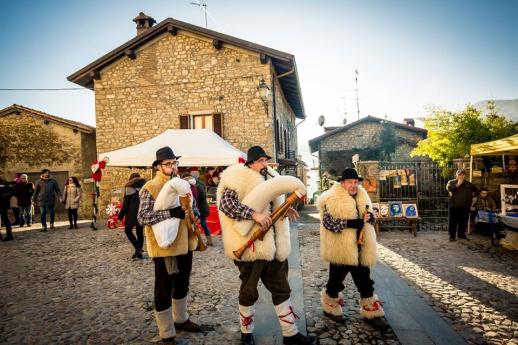
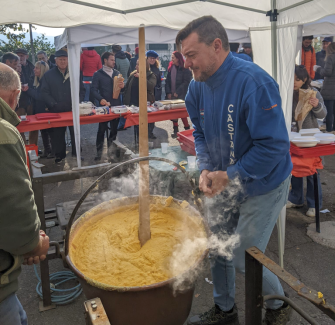
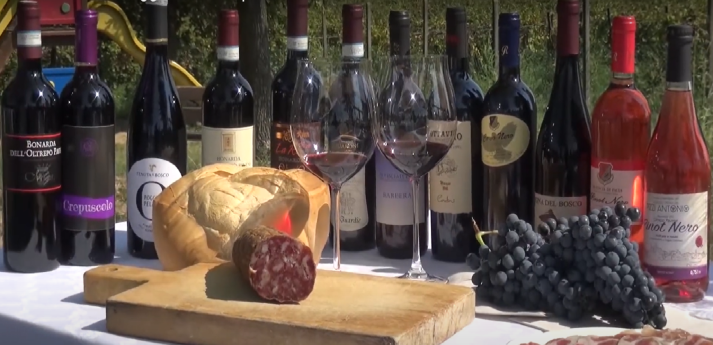
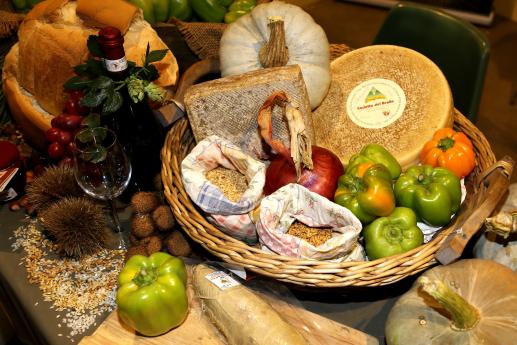
Here different culinary traditions meet and blend: stuffed pasta from Piacenza, Ligurian focaccia, cured meats from the Oltrepò and Ligurian trofie. Dialects vary from valley to valley, and traditional festivals are animated by the distinctive diatonic accordion music typical of the area.
The “Music of the Four Provinces” is recognised as an important element of intangible cultural heritage and still accompanies local festivals and gatherings today.
For curious travellers, exploring the villages of this region becomes a fascinating ethnographic journey, where each community preserves its own identity while sharing the same Apennine landscape.
When to visit Brallo di Pregola
Each season offers something special:
- Spring (April–June): blooming meadows and lush green forests, ideal for hiking and nature photography
- Summer (July–August): cooler temperatures than the Po Valley, perfect for mountain walks
- Autumn (September–November): spectacular foliage colours, with mushrooms and chestnuts enriching local traditions
- Winter (December–March): snow-covered peaks and picturesque villages for winter mountain scenery
Sport and nature: Il Brallo, the FITP Federal Tennis Centre
In Brallo di Pregola stands Il Brallo, a sports and tourism centre with more than thirty years of tradition, considered an important reference point for youth sport and holiday camps in Italy.
Located in the hamlet of Pregola at 1,050 metres above sea level, surrounded by beech forests and pine woods, it hosts the official Federal Tennis Centre of the Italian Tennis and Padel Federation (FITP) and every summer welcomes the well-known Milan Junior Camp.
The tennis centre is designed for young people aged 6 to 16, beginners and experienced players alike, with daily training sessions led by highly qualified FITP federal coaches. The programme includes tournaments, awards ceremonies and occasional meetings with Italian tennis champions.
Additional activities include volleyball, basketball, handball, five-a-side football, beach volleyball, padel, orienteering and guided excursions, as well as evening entertainment with music, parties and bonfires under the stars. Medical assistance is available 24 hours a day.
For adult tennis enthusiasts, Il Brallo also offers advanced Tennis Training stages, while padel lovers can join the Brallo Padel Camp, designed both for beginners and advanced players. The centre also hosts training camps for football, volleyball and basketball teams, with grass fields, a covered multi-purpose court and beach volleyball courts.
Practical information for visitors
How to get there
- From Pavia: SS35 to Voghera, then SS461 through Varzi towards Brallo di Pregola (about 90 km, 1h30)
- From Genoa: A7 motorway to Isola del Cantone, then provincial roads towards the Crocetta Pass
- From Piacenza: SS45 to Bobbio, then provincial roads across the Apennine passes
Where to stay
The area offers hotels, farm stays, bed & breakfasts and mountain lodges providing authentic hospitality and traditional local cuisine. Advance booking is recommended during the summer season and autumn holidays.
Why visit Brallo di Pregola
Brallo di Pregola is the perfect destination for travellers seeking an authentic place far from mass tourism, rich in millenary history, pristine nature and diverse cultural traditions.
A corner of the Apennines that surprises visitors and remains in their hearts.