- Villages
- Art & Culture
A journey through time (in one weekend)
In Lombardy, a weekend is all it takes to journey through centuries of history.
From castles overlooking lakes to medieval villages, stately homes and renaissance palaces, every location bears witness to a different era. Fortresses dominating the landscape, ancient courtyards, imposing ramparts and historic houses retain the charm of bygone times, inviting visitors to explore them on walks, cycle routes, boat trips, and by tasting local specialities. Through five themed tours, the Region invites you to rediscover its history – not merely by observing it, but also by experiencing it first-hand through the scenery, flavours and traditions that still today make every province in Lombardy unique.
Castles on the prealpine lakes (VA, CO, LC, BS)
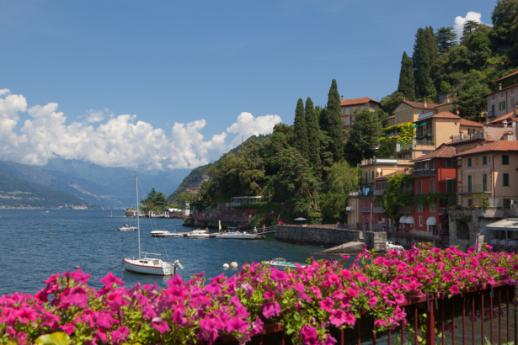
Mediaeval towers and fortresses dot the prealpine lakes, providing the perfect starting point for a day spent exploring history and nature. On the Varese side of Lake Maggiore, Rocca Borromeo in Angera stands atop a rocky outcrop, offering sweeping views over the lake and the surrounding hills. After the visit, it’s just a short walk to the Bruschera Nature Reserve, where you can continue through woods, past ponds and along footbridges over the irrigation channels. On the Como side of Lake Lario, Rezzonico has preserved its fortified centre intact. It can be reached following a stretch of the Antica Strada Regina, winding along mule tracks and offering panoramic views. In the province of Lecco, above Varenna, the Castle of Vezio nestles amongst the olive trees: a stroll amongst the trees can be rounded off with a tasting of local olive oil. A little further south, in Vercurago, the ruins of the Castello dell’Innominato stand out against Lake Garlate, which you can cycle around on the route that will also take you to Lake Olginate. On the Brescia side of Lake Garda, Padenghe Castle preserves the towers and walls of the ancient fortified village, offering views over the hills of Valtènesi, where you can round off your trip with a tasting of local wines.
Mediaeval villages in the plain area (CR, MI, LO)
Across the Lombardy plain, fortresses and castles tell the story of villages that sprang up along rivers and ancient border routes. In Soncino, in the province of Cremona, Rocca Sforzesca towers over the village with its crenellated towers, moat, and walkways that run along the walls. After visiting the fortress, you can go for a cycle along the River Oglio, through the farmland of the Lower Po Valley. In Trezzo sull’Adda, along the river to the north-east of Milan, from the Visconteo Castle the view takes in the village, the double bend of the Adda and the Taccani Power Station, a historic early 20th-century hydroelectric plant built in Art Nouveau style, but with medieval-inspired features. From the nearby jetty, you can take a boat trip along the river and enjoy an aperitif on board while admiring the fortress from the water. In the Lodi area, Castello Bolognini di Sant’Angelo stands between two branches of the River Lambro and is home to three museums dedicated to the manor house, agriculture and bread. After a visit to the castle, you can stop off in the village to sample some amaretti biscuits, a local speciality that originated in the 19th century.


The vineyards and hills of Oltrepò Pavese (PV)
In the Oltrepò Pavese region, stone villages and medieval fortresses dot hillsides that are criss-crossed by woods and rows of vines. In Zavattarello, in the Tidone Valley, the Castello Dal Verme towers above the village and the valley with its imposing quadrangular structure. From the town centre, a cycle and footpath leads to the Giant Bench #263, a vantage point overlooking the rolling countryside. Further east, Fortunago nestles between the Coppa and Ardivestra valleys, with porphyry-paved alleyways and buildings in stone and terracotta. The Sentiero della Crosia trail offers a gentle 40-minute walk to explore the surrounding area, which you can round off by sampling some ‘malfatti’, traditional little gnocchi made with bread and herbs. In Valle Staffora, Varzi is home to eight centuries of history, with its towers, stone houses and the porticoes of the Via del Mercato, built between the 14th and 16th centuries. To round off the stop, you can enjoy a tasting of Salame di Varzi PDO, a product that epitomises both the artisan traditions and the local cuisine of the valley.
A tour of historic villas and residences (MN, MB)
In the provinces of Mantua and Monza and Brianza, ducal palaces and noble residences offer a glimpse into court life through their frescoed rooms, gardens and extensive parks. In the centre of Mantua, the Ducal Palace forms a veritable city within a city, consisting of buildings, courtyards and internal squares, built by the Gonzaga family over the centuries. One of the most famous rooms is the Camera degli Sposi, frescoed by Andrea Mantegna. After the tour, a boat trip across the three lakes offers a view of the city’s skyline from the water. The Royal Palace of Monza, built in the 18th century as a summer residence for the Habsburgs, is set within a park covering almost 700 hectares, which you can cycle through along tree-lined avenues, past farmhouses and mills. Also in Brianza, in Desio, Villa Cusani Traversi Tittoni retains the elegance of Brianza’s country villas. A stroll through the historic park offers visitors the chance to discover the botanical legacy of Giovanni Casoretti, who, in the 19th century, cultivated species from all over the world here, including azaleas, camellias, magnolias, peonies and roses.
From the Orobie Alps to Valtellina (BG, SO)
From the valleys of Bergamo to Valtellina, castles and historic residences dot the landscape amid lakes, mountains and terraced fields. In Bianzano, in Val Cavallina, the Suardi Castle overlooks Lake Endine. The 13th-century manor house, with its square floor plan aligned with the cardinal points, features symbols and architectural details that have fuelled legends about a possible link with the Knights Templar. After exploring the fortress, you can head down to the lake for a stroll along the shore. In Montagna, in Valtellina, a few kilometres above Sondrio, Castel Grumello stands on a rocky hill overlooking the valley. The fortification consists of two sections, one residential and one defensive, now surrounded by terraced vineyards. From the castle, you can continue along a stretch of the Via dei Terrazzamenti, amongst rows of vines, dry-stone walls and views over the valley floor. Further east, in Teglio, Palazzo Besta illustrates the Valtellina Renaissance through its porticoed courtyard, loggia, and frescoes inspired by the Aeneid. A stroll through the vineyards surrounding the village rounds off this journey through history and the countryside.