- Food & Wine
Brasadè di Staghiglione
Traditional Doughnuts from Borgo Priolo and Broni


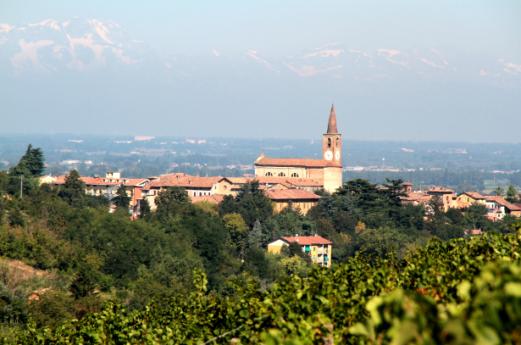
In the hills of Oltrepò Pavese, in the province of Pavia, an ancient culinary tradition is still alive: the Brasadè, small ring-shaped pastries that tell the story of local rural culture and traditional food-making techniques.
Today, Brasadè are particularly associated with Staghiglione, a hamlet of Borgo Priolo, and the town of Broni, where two different versions of this traditional product have developed.
What are Brasadè?
The dialect word “Brasadè” refers to ring-shaped doughnuts, one of the most distinctive traditional foods of the Pavia area.
The preparation is particularly interesting. The Staghiglione version is made with a non-leavened sweet dough, while the traditional Broni version is prepared with a lightly sweetened bread dough which, once cooked, is shaped into rings.
Another distinctive feature is the double cooking process: the doughnuts are first boiled in water and then baked in the oven until golden. This traditional method gives the Brasadè their characteristic texture and also helped them keep for several days.
The traditional recipe was passed down through families rather than being defined by a single standardized formula. Ingredients may vary according to local traditions, but traditional preparations include flour, sugar, butter and oil or lard, together with salt and, in more recent recipes, raising agents.
The Brasadè of Staghiglione and the traditional “necklace”
One of the most fascinating aspects of the Brasadè tradition is the way they were traditionally sold and presented in Staghiglione.
The doughnuts are traditionally arranged in “necklaces” of eleven Brasadè, threaded through their central hole using a cotton cord. Five doughnuts are positioned facing one direction and five in the opposite direction, while the eleventh is used to close the necklace.
This was not simply an attractive way of displaying the product. According to local tradition, the necklaces made it easier to transport and store the doughnuts.
There is also a charming tradition associated with these edible necklaces: in the past, girls would wear the Brasadè around their necks, turning the traditional food into a temporary edible ornament.
Brasadè were also given as gifts on special occasions, particularly in connection with religious celebrations such as Confirmation.
A tradition dating back to the 19th century
The Brasadè of Staghiglione have documented roots going back at least to the 19th century.
Local historical sources report that by the mid-1800s their production had become sufficiently established for the occupation of “ciambellaio” – doughnut maker – to appear in tax records.
This provides an interesting glimpse into the economic and social history of the hill communities of Oltrepò Pavese, where traditional food production could become an important local activity.
Why are Brasadè boiled before being baked?
The double cooking process is one of the most distinctive characteristics of Brasadè.
The doughnuts are first immersed in boiling water and then transferred to the oven. This technique helps create their particular consistency and was also useful for extending their shelf life.
The method reflects an important principle of traditional rural cuisine: food was often prepared not only for immediate consumption, but also with the aim of making it last as long as possible using simple techniques and readily available ingredients.
Staghiglione and Broni: two versions of the same tradition
Although they share the same name and basic concept, the Brasadè of Staghiglione and those of Broni are not identical.
The Staghiglione version, associated with Borgo Priolo, is particularly famous for its traditional necklace of eleven doughnuts and for its characteristic preparation.
The Broni Brasadè, on the other hand, are made from a lightly sweetened bread dough and shaped into rings during preparation. This version was awarded the Denominazione Comunale di Origine (De.C.O.) in 2006, recognizing its strong connection with the local tradition.
The differences between the two versions are a fascinating example of how a shared culinary tradition can develop distinctive characteristics from one village to another.
The Brasadè Festival in Staghiglione
The tradition is still celebrated at the Sagra del Brasadè di Staghiglione, a festival dedicated to this traditional food and to the local culture.
The event traditionally takes place around Easter and is one of the characteristic celebrations of Borgo Priolo. Visitors can discover the traditional preparation of the Brasadè and see them being cooked using traditional methods.
The festival also provides an opportunity to discover local food, traditional products, crafts and aspects of the rural heritage of Oltrepò Pavese.
Five fascinating facts about Brasadè
Eleven doughnuts make up a traditional necklace. In Staghiglione, the traditional arrangement consists of eleven Brasadè, with the final one used to close the necklace.
They could actually be worn. Historical accounts of the tradition describe girls wearing the necklaces around their necks before eventually eating the doughnuts.
They were also given as gifts. Brasadè were traditionally exchanged on important occasions, including religious celebrations such as Confirmation.
There is no single traditional recipe. The Brasadè belong to a popular culinary tradition that developed within families and communities, which explains the differences between the versions found in Staghiglione and Broni.
Their history goes back to the 19th century. Historical records referring to local “doughnut makers” provide evidence that Brasadè production was already an established activity in Staghiglione during that period.
Discovering Oltrepò Pavese through its traditional flavours
Tasting a Brasadè means discovering a small but fascinating part of the history of Oltrepò Pavese.
Behind this simple ring-shaped pastry are traditional rural cuisine, ancient food-preservation techniques, religious celebrations, local festivals and the everyday life of small communities.
Between Staghiglione and Broni, Brasadè remain one of the most distinctive culinary traditions of the province of Pavia: a simple product whose unusual shape, preparation and traditional necklace of eleven pieces tell the story of a territory and its people.