I found 200 results for Nei borghi dell’Oltrepò

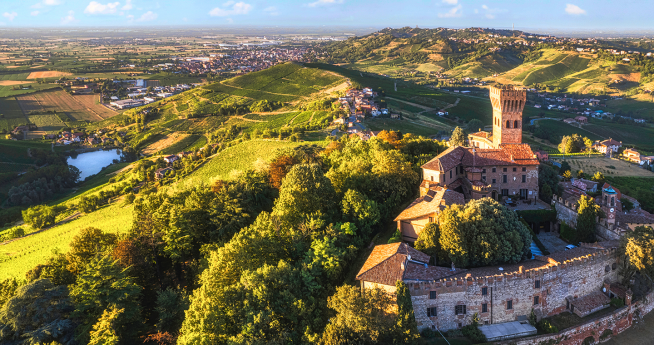
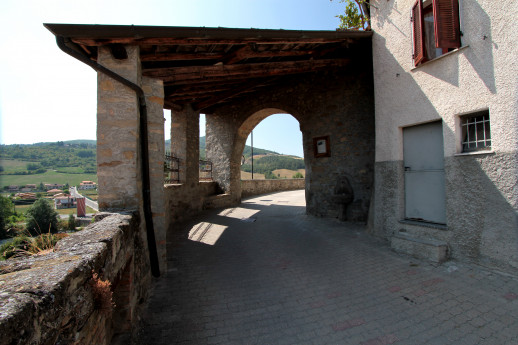
Village of Fortunago

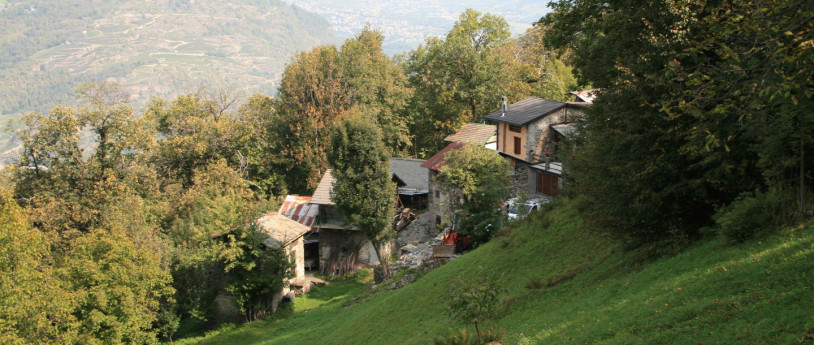
In the green Oltrepò Pavese, Fortunago is the perfect example of recovering the atmosphere of the past, of the beauty of simple things.
Fortunago

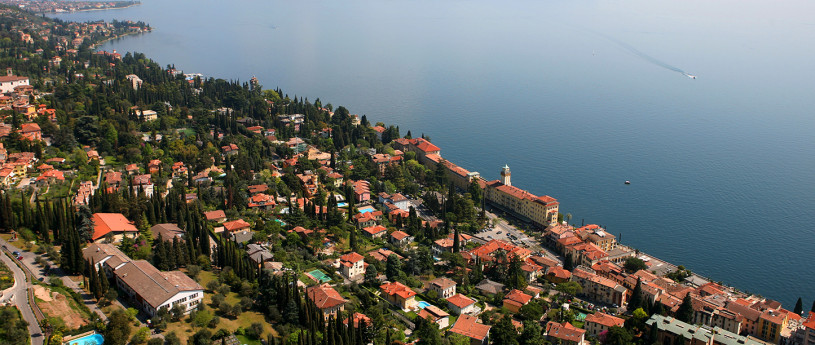
Gardone Riviera

Gardone Riviera is an elegant spot on Lake Garda where you can enjoy the beauty of villas and gardens
Gardone Riviera

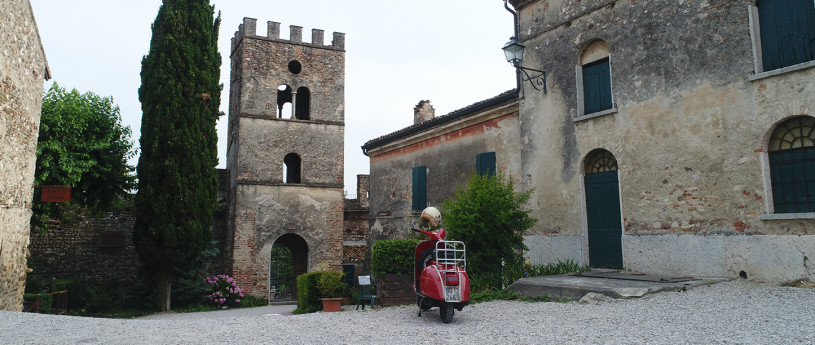
Castellaro Lagusello

Castellaro Lagusello: a fortified village that is reflected in its heart-shaped pond, where you can enjoy tranquillity and nature.
credits:@linoolmostudio

Flavours of the Oltrepò Pavese: Autumnal weekends away within a stone’s throw of Milan

Discover Pavese – Enjoy an autumn weekend of tradition, culture and flavour among the most charming villages of the Oltrepò Pavese. Take a look at this list of ideas and get inspired.

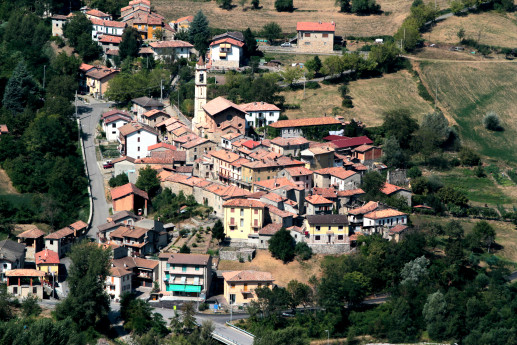
Santa Margherita Di Staffora

Nestled in the heart of the Upper Staffora Valley, Santa Margherita di Staffora is a charming village in the Oltrepò Pavese that preserves the authentic character of the Lombard Apennines. Located just a few kilometers from Varzi, the village lies along the course of the Staffora stream, surrounded by forests, meadows, and sweeping landscapes that invite visitors to explore and unwind. The municipal territory stretches to the point where four provinces meet — Pavia, Alessandria, Genoa, and Piacenza — making it a natural crossroads between Lombardy, Piedmont, Emilia, and Liguria. Its strategic location favored the passage of ancient trade and communication routes, such as the Via del Sale (Salt Route), which connected the Po Valley to the Ligurian ports through the Apennine passes. Among the most renowned localities in the area is Pian del Poggio, a well-known tourist and ski resort located at over 1,300 meters above sea level. In winter it’s the perfect destination for skiing and snow sports, while in summer it offers panoramic trails ideal for hiking, mountain biking, and trekking in pristine natural surroundings. Why Visit Mountain landscapes and nature:Santa Margherita di Staffora overlooks the Staffora Valley, surrounded by mountains that invite leisurely walks, scenic hikes, and relaxing breaks. History and culture:The area was a fief of the Malaspina family in the Middle Ages, as documented in a charter dating back to 1164. Authentic flavors:The village lies within the production area of the Salame di Varzi DOP, one of the culinary treasures of the Upper Staffora Valley. Lively traditions:The hamlet of Cegni hosts the Cegni Carnival, a popular folk festival held twice a year that brings together locals and visitors in a celebration of community and culture. What to See and Do The village and its hamletsA stroll through Santa Margherita di Staffora reveals traditional houses, views over the valley slopes, and numerous mountain hamlets — such as Negruzzo and Pian del Poggio — that tell the story of high-altitude life. Food and Wine: Salame di Varzi DOPNo visit would be complete without tasting the Salame di Varzi DOP, a symbolic product of the Upper Staffora Valley. Made according to traditional methods using selected meats, simple seasonings, and natural aging, it represents one of the most authentic flavors of the area. Santa Margherita di Staffora is one of the 15 municipalities officially recognized in the DOP production zone. Tradition and Folklore: The Cegni CarnivalThe hamlet of Cegni celebrates its Carnival twice a year — in winter and again on August 16, with the summer version known as the “White Carnival.” The festivities open with a parade, followed by traditional dances typical of the “Four Provinces,” and culminate in the symbolic marriage of the ‘Ugly Man’ and the ‘Poor Woman’. It’s a genuine experience of local heritage and community spirit. How to Get There Located in the upper Staffora Valley, Santa Margherita di Staffora can be reached from Voghera or Varzi along the valley road that follows the Staffora stream. Due to its mountain location, traveling by car is the most convenient option. Travel Tips The best time to visit is in spring, summer, or early autumn, when the weather is mild and trails are most accessible. To enjoy the Salame di Varzi, check with local delis or producers — some offer visits by appointment. If possible, attend the Cegni Carnival to experience a true immersion in local culture. Bring trekking shoes or comfortable footwear, as many hamlets and trails are in hilly or mountainous terrain. Combine your visit with a tour of the Oltrepò Pavese, exploring its mountain villages, natural beauty, flavors, and traditions. In Conclusion Santa Margherita di Staffora is an ideal destination for travelers seeking a slow and authentic tourism experience in the Oltrepò Pavese. Untouched nature, ancient traditions, and genuine flavors come together to create a truly memorable journey through the heart of the Lombard Apennines.
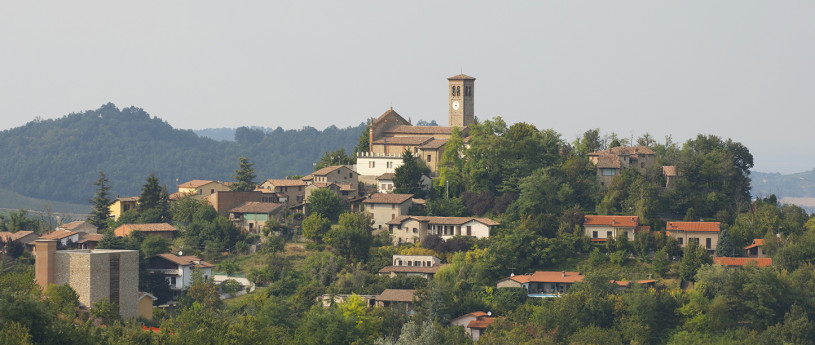
Santa Margherita Staffora

The other way of Aprica: from Morbegno to Colico

This itinerary, which starts in the province of Brescia, Valcamonica, reaches as far as the beauties of Valtellina.   Its landscapes are representative of the landscape types found in the Alps. One can discover here, among ancient Valtellina villages and flavors, its history and food and wine culture, tasting a nice plate of typical salami or sciatt and the very famous pizzoccheri. The route begins at the San Giacomo di Tellio station and ends at the Edolo train station. From San Giacomo we arrive at the junction with Carona and follow the road with numerous hairpin bends, which will take us almost to the center of Carona. Just before the village we turn left and take the road going downhill, in the direction of Aprica. The road then descends again to the Gadda power plant and climbs again to join the state road, just before the Aprica pass. After about a hundred meters, we reach the old road, via Liscidini, which we find on the right, and we travel the entire length of the old road leading to the border with the province of Brescia. From here the Valeriana road leads us to Edolo. ITINERARY Distance: 33 kmDifficulty: difficultRoad surface: asphalt, a short stretch of dirt road between San Pietro Aprica and Corteno GolgiElevation gain: +2155m, -1830 m; (Max slope: 44.1%, -46.1% Average slope:10.4%, -8.3%)Suitable for: trained usersRecommended type of bike: allAverage duration: 3 h approx. SOME POINTS OF INTEREST Rustic villages of ValtellinaAlong the way you can easily reach villages located in the side valleys or on the valley slopes, where you can immerse yourself in the flavors of Valtellina along the wine route.Useful info: https://www.stradadelvinovaltellina.it/borghi-antichi.html Ganda power plantThis plant uses the waters of the Belviso stream and those of its tributaries. The main barrage consists of a concrete dam and is equipped with a surface outlet.Useful info: https://www.edison.it/it/la-centrale-idroelettrica-ganda-so Calefe sawmill in Corteno GolgiBuilt in 1879, it was in operation until the late 1890s. The sawmill was called "Venetian-style" because it was widespread during the time of the Venetian Republic.Useful info: http://www.cortenogolgi.it/index.php/territorio/segheria-veneziana Golgi Museum of Corteno GolgiOpened in 2006, housed on the second floor is a reproduction of the histological laboratory of Camillo Golgi, an Italian scientist and physician born in Corteno. On the second floor are study rooms and the teaching room.Useful info: http://www.museogolgi.it/Tel. 0364.740401/340.3602512; E-mail: info@museogolgi.it - conservatore@museogolgi.itHours: Open Saturdays and Sundays for the entire summer season (July 1 to Sept. 30). Guided tours are by reservation only throughout the year. St. John the Baptist in EdoloThe simplicity of the exterior structure, rebuilt in the 16th century, contrasts with the richly frescoed, three-aisled interior. The fresco cycle is attributed to Paolo da Caylina the Younger.Useful info: https://goo.gl/y4p4QE
The other way of Aprica

July 2025 Events in Lombardy

The Lombardy summer shines bright in July, with concerts, art events and experiences to reconnect you with nature
July 2025 Events in Lombardy

Abbiatense's world of canals, churches and farmsteads

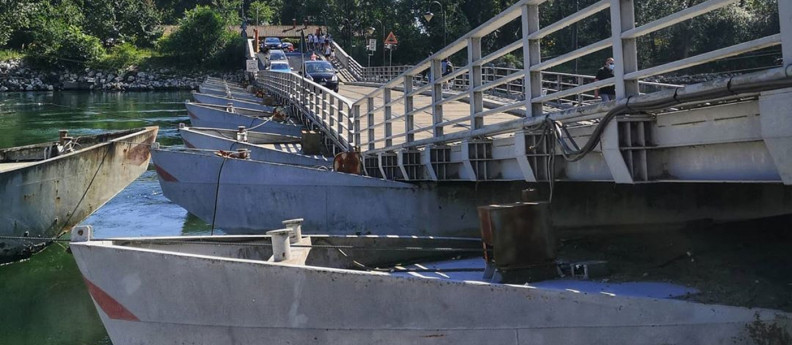
Commissioned by Duke Filippo Maria Visconti, the nearly 19-km-long Naviglio di Bereguardo was created for irrigation purposes and as a transport route for goods that were to arrive from Pavia via the Naviglio Grande to the Darsena in Milan. Among these the most usual were salt from the Adriatic, firewood from Ticino, and cereals and wines from Oltrepò.The historical peculiarity of this waterway are the basins present, among which to be mentioned is the one called the Abbey. Many consider it to be the first lock in the world that came into operation on an artificial canal. These hydraulic works, the pride of Lombard ingenuity but costly to maintain, were studied and designed by Leonardo in his codices. Again according to the vincian genius, the Lombards with this system could take boats even to the Alps.
bereguardo_pontedellebarche

Volpara

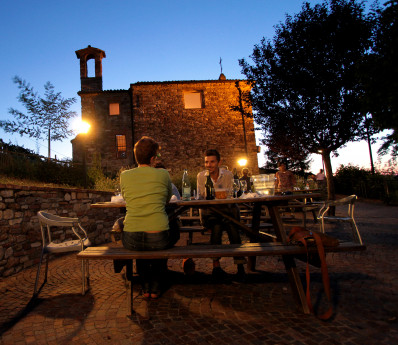
In an evocative landscape inside a 17th century oratory in the fields Tempio del Moscato welcomes its visitors with tastings of typical Oltrepò wines accompanied by platters of cured meats and cheeses.
Tempio del Moscato

Codevilla

The village of Codevilla stands near the point where the Staffora stream opens out into the plain, and its history is closely linked to that of the hamlet of Mondondone, where a defensive outpost of the fortress of Codevilla once stood — of which only a few, yet fascinating, remains survive today. Mondondone served as the municipal seat until the early 16th century and was partly owned by the Pavia Monastery of Santa Maria and Sant’Aureliano, known as “del Senatore.” The surrounding landscape is remarkably beautiful: on the hills overlooking the hamlets of Mondondone and Piana stretch dense woodlands of broad-leaved trees — oaks, robinias, and chestnuts. Also noteworthy is the Sanctuary of Pontasso, which, according to local legend, was founded by a Lombard warrior named Asso. During the siege of Pavia, he had ventured into the Oltrepò woods to hunt. Lost among the thick vegetation, he vowed to build a chapel if he managed to find his way back. At that very moment, a lady appeared and guided him safely out of the forest.
Codevilla

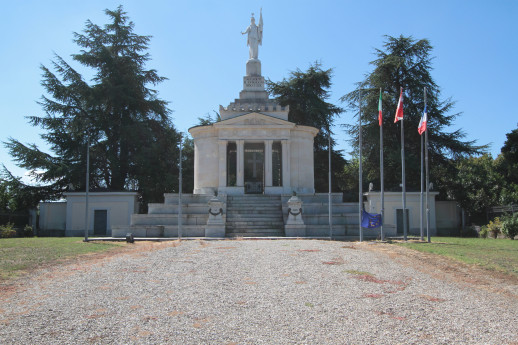
Montebello della Battaglia

The territory of Montebello della Battaglia, divided between plains and green hills, has been the setting for many historically significant events. The fertile land at the mouth of the Valle Coppa is dotted with charming rural settlements and historic farmsteads that make its landscape truly unique. On May 20, 1859, the Piedmontese cavalry and French infantry clashed between Montebello and Genestrello with the Austrian 5th Army Corps, bravely repelling their repeated attacks. The battle was so important that it soon led to the creation of the regiment of the “Lancers of Montebello.” On May 20, 1882, a small Ossuary was inaugurated on the battlefield to hold the remains of the fallen soldiers from the three armies. The battle also inspired the famous story La piccola vedetta lombarda (“The Little Lookout of Lombardy”), included in Cuore, the celebrated novel by Edmondo De Amicis. The moving tale was inspired by the true story of a young boy from the countryside near Voghera, who climbed a tree to watch the advance of the Austrian troops. Exposed to enemy fire, he stood his ground bravely and died in the arms of an Italian officer — the first victim of the battle. The Beccaria Castle of Montebello della Battaglia, a noble residence of the Oltrepò Pavese area, was built toward the end of the 15th century in Montebello, a fief of the Beccaria family — a distinguished and renowned Italian lineage — by order of Galeazzo Maria Sforza Visconti, Duke of Milan. In the following centuries, the property passed to several noble families: the Bellocchio family, who lived there for about three centuries; the De Ghislanzoni family, for over a hundred years; and finally, the Premoli family.
Ossario dei Caduti di Montebello della Battaglia

Bagnaria

A Village of Nature, History and Tradition Along the Greenway Voghera–Varzi
Bagnaria