I found 523 results for Borghi

Montesegale

A small, authentic village in the province of Pavia, dominated by a castle and with a passion for art and archery.
Castello di Montesegale

Corteolona e Genzone

In Corteolona King Liutprand (712-744) had a magnificent residence built and decorated with marbles, columns and precious mosaics which he brought in specially from Rome. The palace was located on the site of the current Castellaro farmhouse. Even after the fall of the Lombard kingdom the Carolingian kings and the Regnum Italiae continued to use Corteolona palace.

Valverde

In the midst of upper Val di Nizza and upper Val Tidone this site is still wild and uncontaminated with a typically mountainous climate. It is an ideal place for walks in the forests or mountain bike trips. It also has a wide range of agricultural and wild forest foods. The town's 13th century Chiesa Parrocchiale di Santo Stefano is also worth a visit. Built in earthenware and sandstone with a beautiful 1581 baptismal font it also has a belltower topped with a conical spire.
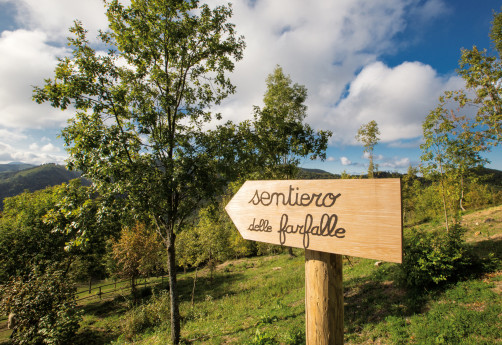
Il Sentiero delle Farfalle

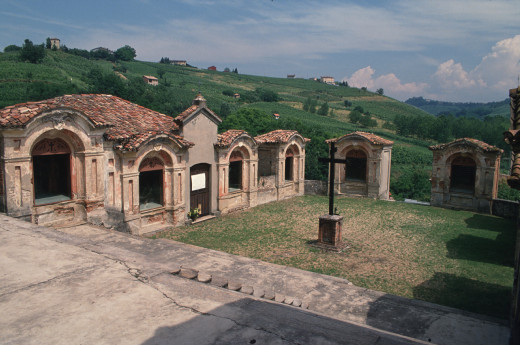
Sanctuary of the Passion of Torricella Verzate

The Sanctuary of the Passion, surrounded by the Chapels of the Stations of the Cross, is built on a volcanic rock spur.
Santuario della Passione di Torricella Verzate

Mezzana Bigli

The municipality of Mezzana Bigli is located in southern Lomellina, a short distance from the left bank of the Po River, near the confluence of the Agogna River. Amid the tranquility of the Lombard countryside lies Cascina Erbatici, a large agricultural complex now used as a conference and event center. WHAT TO SEE The parish church dedicated to Saint John the Baptist was built in the early 19th century in Neoclassical style and was renovated by Frascaroli in 1970. The restoration focused on both the architectural structure and the conservation of paintings by Raggi (in the apse area) and Gambini (in the naves). The splendid Baroque-style high altar, upon which stands a highly valuable wooden crucifix, was commissioned by Countess Anna Confalonieri and made from the finest marbles. In the presbytery, two paintings depicting the stories of Saint John and Saint Peter Martyr can be admired. In the naves, on the right side, there is a precious altar with marble inlays, housing a statue of the Virgin Mary. On the left, the baptistery features a stone cover supported by marble columns. Notable elements include the 18th-century walnut sacristy and the Lingiardi organ. The church in the hamlet of Casoni Borroni, dedicated to Saint Mary of the Assumption, was commissioned by Anastasia Biglia in the late 16th century. It was later enlarged and renovated by Fulvia Biglia in the 18th century. A large painting in the choir, depicting a majestic image of the Assumption of the Virgin, is of particular interest. It is attributed to Gaudenzio Ferrari (1475–1546). Though difficult to confirm with certainty, as Callegaris suggests, the attribution is not entirely unfounded for several reasons: first, a work by Ferrari is preserved in the church of Silvano Pietra, and it is well known that his students worked in Lomellina. Additionally, the presence of prominent Milanese families in the region may have brought valuable artworks to rural churches. The parish church in the hamlet of Balossa Bigli was commissioned by Marquis Crivelli in 1820, expanding an oratory that had existed since 1752. Originally built with a single nave, it underwent several renovations and expansions over the years. In 1895, a sacristy annex was added to the left of the presbytery; in 1905, the right nave was added and the old sacristy was enlarged. Finally, in 1922, the left nave was completed.

Rosasco

The municipality of Rosasco is located in the western Lomellina, not far from the left bank of the Sesia River. In Rosasco, rice cultivation gives its peculiar characteristics to a rural world that has written and continues to write the history of this territory. The environmental geography is therefore formed by a single morphological area, following a pattern in which the vast countryside is flat and uniform, with a dense network of ditches and canals delimiting the fields and various properties. The advantages derived from a rational distribution and use of water are accompanied by those provided by new, increasingly efficient and sophisticated machines: the farmer has reached excellent production levels thanks to the intense mechanization and modernization of his farms, acquiring entrepreneurial and technological skills that allow him to maintain a high competitive capacity. The generational turnover has seen young farmers increasingly focused on innovation and experimentation. The "Cerchiara"It is a vast swampy basin, extending over about 20 hectares in the territory of Rosasco and an equally large area in the nearby locality of Celpenchio, from which the heronry takes its name. The heronry represents a splendid and unspoiled natural park, where, alongside the lush variety of plant life, numerous species of birds and other animals can enjoy an extraordinary habitat with guaranteed hospitality. The Castle of RosascoBuilt towards the end of the 9th century, the Castle of Rosasco is one of the oldest military structures in Lomellina. It is a vast fortified system, still recognizable in its perimeter, although it suffered a severe devastation in 1630 by the French led by Crequi, followed by the complete destruction of the walls by the Savoy troops in 1643. Today, only two towers remain visible and very well preserved, thanks to careful restoration work. One tower is the impressive "Torre del Consegno" (so named for its use, during the Napoleonic period, as a place to call the young men of the area to enlist), which faces the east side of the village square, and the tall, slender Ghibelline tower, with an unusual rectangular shape, rising 25 meters in the highest part of the historic center. Both towers are open to visitors: in particular, from the top of the second, one can enjoy a stunning view of Rosasco and the surrounding territory. Within the ancient perimeter of the Castle, facing the large area of the churchyard, which gently slopes down with its cobblestone path toward the center of the village square, stands the imposing Parish Church, built in 1496 on the foundations of the original Chapel of the Court. The building, with a rectangular layout and two side chapels, incorporates one of the medieval towers connected to the Castle on the southeast side; inside, the spaces are marked by a double row of powerful cylindrical brick pillars, giving the environment a sense of strength and solemn severity. Among the numerous works of art preserved inside, a splendid oil painting on wood by Bernardino Lanino (late 16th century) stands out on the right wall; also worthy of mention is a fine wooden Crucifix from the same period and, in the sacristy, a significant fresco from an earlier time of considerable quality. The entire building was restored and secured with a series of appropriate conservation interventions between 1986 and 2005. It is dedicated to Santa Maria and the patron saint of Rosasco, Saint Valentine. The Church of San GiuseppeAlso facing the same churchyard is the Church of San Giuseppe, built during the 17th century. It is characterized by a single nave with a presbytery and a semicircular apse, and a tall bell tower. It belonged to the "Confraternity of San Giuseppe," active until 1870. Over the years, it has undergone several alterations, but these have not taken away the subtle charm that makes it so different from the nearby Parish Church.

Zenevredo

The municipality of Zenevredo is located in the hills of the Oltrepò Pavese, not far from the plains, on the right bank of the Versa stream. The village of Zenevredo is characterized by a predominantly hilly landscape, typical of the Lower Po Valley. The toponym, as Cenevretum, first appears in the list of lands of the Pavia countryside from 1250, as part of the Oltrepò. Zenevredo appears in the list of declarations of the hearth tax in the Principality of Pavia for the year 1537, as part of the rural Congregation of Oltrepò and Siccomario. The prefect of the Marengo department, according to the law of the 28th day of the rainy year VIII (February 1800), appoints the mayors and their assistants of the municipality of Zenevredo with a decree of 23 Fruttidoro year IX (September 1801). Zenevredo is included in the Marengo department and the Voghera district (Campana decree 1801). In the first pratile year X (May 1802), the prefect of the Marengo department decrees the appointment of 10 municipal councilors, who are to remain in office for three years (Campana decree 1802). In 1805, due to the restructuring of the Ligurian-Piedmontese administration desired by Napoleon Bonaparte, Zenevredo, by decree of June 13, 1805, was merged into the department of Genoa, Voghera district (decree 1805, ASC Casei Gerola). In 1859, with a population of 372 inhabitants, Zenevredo became part of the province of Pavia and was included in the IX district of Montù Beccaria, Voghera district (decree 1859). Upon the formation of the Kingdom of Italy in 1861, the municipality had a resident population of 385 inhabitants (Census 1861). According to the 1865 municipal organization law, the municipality was governed by a mayor, a council, and a board. Following the reform of the municipal organization in 1946, the municipality of Zenevredo continued to be governed by a mayor, a council, and a board. Source: https://www.visitoltrepo.com

Rovescala

The village of Rovescala lies in a hilly position in the small valley of the Bardonezza stream, on the border with the province of Piacenza, and can be reached by following a scenic road that winds through the vineyards of the Oltrepò Pavese. The origins of this locality are ancient and intertwined with the history of the Lombards: in the hamlet of Luzzano, in 1961, the Lombard tombs of four men who lived in the 7th century were discovered. They were buried with their weapons — scramasax (a type of long knife), swords, shields, and spearheads. Every Sunday in March, Rovescala celebrates the “Spring of Wines” & the “Bonarda Festival,” an unmissable event to taste the best local wine labels, accompanied by delicacies and specialties from the area. Photo: Pro Loco Rovescala  
Rovescala

Cremona: walled cities

On a visit among castles and fortified citadels in the province of Cremona. Artistic beauties and historical curiosities

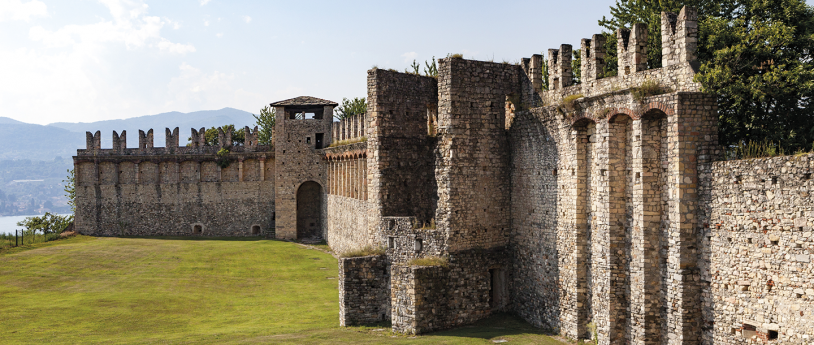
Rocca di Angera

Rocca di Angera

Redavalle

The current Redavalle is the heir of an older settlement, San Martino in Strada. In the area, there existed a Roman settlement mentioned in ancient itineraries as Cameliomagus or Comillomagus (forms resulting from the careless writing of a probable Camillomagus). The itinerary distances would suggest Broni as the location, but it is certain that numerous Roman artifacts have been found in Redavalle, which proves the Roman origin of San Martino in Strada, whether it corresponds to Camillomagus or not. Like many ancient centers that survived the barbarian invasions, it had its own parish, dependent on the diocese of Piacenza, whose name (San Martino in Strada) replaced the ancient name of the location. San Martino came under Pavia's dominion in 1164, when it was probably a dependency of Broni; it was, however, equipped with a castle, which was burned by the forces of the Lombard confederates during the wars against Frederick I Barbarossa. San Martino in Strada, located slightly to the east of Redavalle, never recovered from the disaster. It was then that Redavalle (so named in 1250), situated on the western edge of the San Martino municipality, began to grow in importance, eventually absorbing the entire population of the old center. Around 1560, the San Martino parish was abandoned, and the archpriest settled at the chapel of San Rocco in Redavalle (which took the name of San Rocco and San Martino). Redavalle was part of the Broni fief, which from the 13th century belonged to the Beccaria family and, from 1536 until the end of feudalism (1797), to the Arrigoni family of Milan. As mentioned, Redavalle stood near the western boundary of the municipality, so much so that part of the town extended into the adjacent municipality of Santa Giuletta; this anomaly was resolved in 1866 with the transfer of a section of Santa Giuletta’s territory to Redavalle (called the Rile fraction). Redavalle: a small village at the foot of the hills of Oltrepò Pavese, just a couple of minutes by car along the Via Emilia, but a place like any other only on road maps. This spot, halfway between the cities of Casteggio and Broni, now houses a population of just over 1,000 souls: it once represented the most important center on the route between Iria (Voghera) and Placentia (Piacenza). Its origins date back to the pre-Roman period; its founders and first inhabitants were the Ligurian and Celtic populations who contested dominion over the territory before the Roman conquest at the end of the 3rd century BC: Cameliomagus was its name, as reported on the Tabula Peuntiger, a kind of road map depicting Roman itineraries, major centers, and post stations. Among these, at 17 Roman miles from Iria and 25 from Placentia, the settlement of Cameliomagus is listed, stretching its boundaries up to the present-day villages of Manzo (Santa Giuletta) and Ca' del Piano (Cigognola). The center is to be located at the foot of the hills, in the territory of Redavalle and Cassino Po, scattered with inns, stables for changing horses, taverns, shops, and patrician villas, of which unfortunately no large remains remain: some inscriptions, many coins, urns, lamps, and funeral furnishings, mostly found in the Gragnolate necropolis, the Vacca d'oro and Bruciati estates, and during 19th-century excavations at the demolished Bornaghi kiln. Present in several lower hill areas of Redavalle, along which the Postumia road ran, are fragments, tiles, bricks, and other evidence of the Roman presence, which was constant and prosperous until the decline of the Empire. Due to its strategic position, ancient Cameliomagus suffered, starting at the end of the 4th century AD, a progressive impoverishment due to the barbarian invasions and the economic and political instability of those centuries. The slow Christianization of the first millennium brought significant historical, religious, and architectural changes to ancient Redavalle, but only a few remains are left, the first of which is the ruined pillar at the entrance to the town coming from Broni, near the junction with the road leading to Pietra de' Giorgi. This pillar, commissioned by Archpriest Primo Andrea Sterpi in 1724, was erected to commemorate the Pieve of San Martino in Strada, probably built in the 9th-10th century AD, which for several centuries gathered in its divine worship the parishes and populations of neighboring towns, including Cigognola, Pietra de' Giorgi, Barbianello, Mornico Losana, and Santa Giuletta. It was an important Pieve, with structures to accommodate travelers and pilgrims on the Roman Way, whose power, however, was weakened over the centuries by plagues and the neglect of its rulers, leading to the abandonment and decay of the church, replaced for services by a chapel in the town center dedicated to San Rocco, later expanded in the early 18th century by architect Veneroni into the current structure, masterfully restored in the last decade of the last century. The rule of the Franks, followed by the local feudal dominations and the power of the individual municipalities, marked a dark period in Redavalle’s history: it is unfortunately remembered for the burning of the town's castle in 1164 by the people of Piacenza and Cremona, fighting against the city of Pavia, allied with Frederick Barbarossa, an event engraved in popular tradition and depicted on the town’s coat of arms. In the following centuries, after the Renaissance dominations of the Visconti-Sforza, came that of the Spanish and, from 1713, the Austrians. The village, which gradually formed around the aforementioned chapel, was embellished in the 17th century by the construction of two chapels at the entrance to the town, now restored and dedicated to the Madonna and the memory of the Fallen. In 1743, with the Treaty of Worms, the territory of Redavalle, along with all of Oltrepò Pavese, passed under Savoy rule, later becoming part of the province of Pavia in 1861. Source: Comune di Redavalle PHOTO:  Portale www.visitoltrepo.com
Arena Po

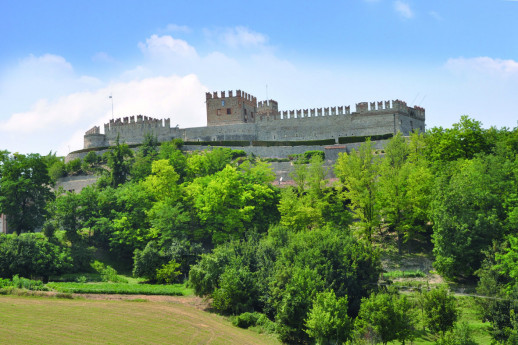
Now privately owned, Arena Po castle dominates the river. The current appearance of the building is the outcome of several modifications but many traces of the thirteenth century building have survived. A fortress of considerable value on the border between Pavia and Piacenza lands, towards the end of the thirteenth century it passed into the hands of the powerful Pavia based Beccaria family.
Castello di Arena Po