I found 548 results for valtellina

Discovering Lombardy with Va' Sentiero along the Italy Trail

If you wanted to plan a hike in Lombardy on the world's longest trek, where would you look for inspiration and where would you study your itinerary? Walk, discover and ... share. After 7 months of expedition and fieldwork, the folks at Va' Sentiero are publishing all the documentation they have collected on the new website vasentiero.org: a free digital guidebook of Lombardy along the Sentiero Italia, for a total of 35 stages, 638 km and 34,720 meters of elevation gain. A practical tool to promote conscious and sustainable tourism in the region's highlands, it takes on symbolic significance in the post-lockdown era. The guide is the fruit of the direct experience and intense work of the boys of the Va' Sentiero association, who have been engaged for about a year in walking the entire Sentiero Italia, the red thread among the Italian highlands that (with its 7,000 km) boasts the title of longest trek in the world and connects the Alps and Apennines, crossing 20 Italian regions and more than 350 small mountain villages. In particular, the boys of Va' Sentiero crossed the Lombardy section last June, during their expedition that is not a simple sporting, guinness-worthy feat; Va' Sentiero's, in fact, is a social initiative based on the idea of sharing, with the aim of enhancing the environmental, cultural and social heritage of Italy's highlands, which is often forgotten; from landscapes to cuisine, from faces to dialects, all under the banner of sustainable tourism. To give everyone the chance to discover the beauty of Lombardy step by step, the dedicated page of the new website features descriptions of no less than 35 stages of this pure and wild mountain area, where the severe Rhaetian Alps sink into the Great Lakes district.
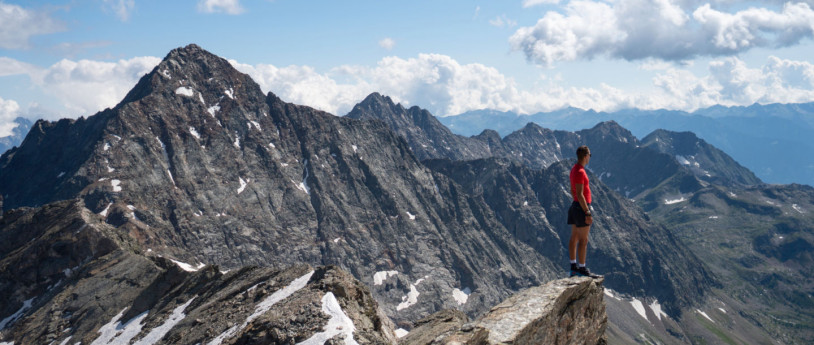
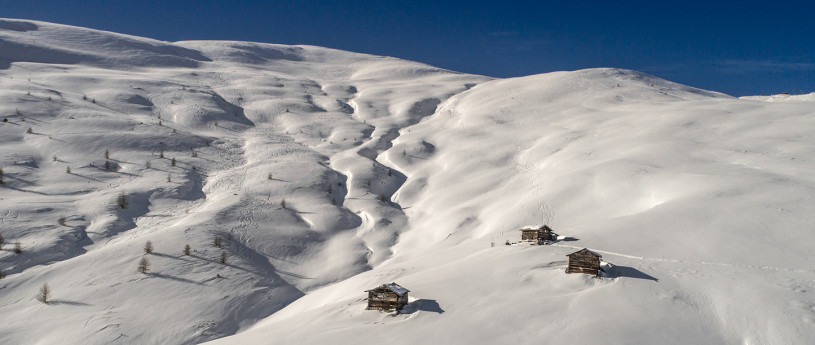
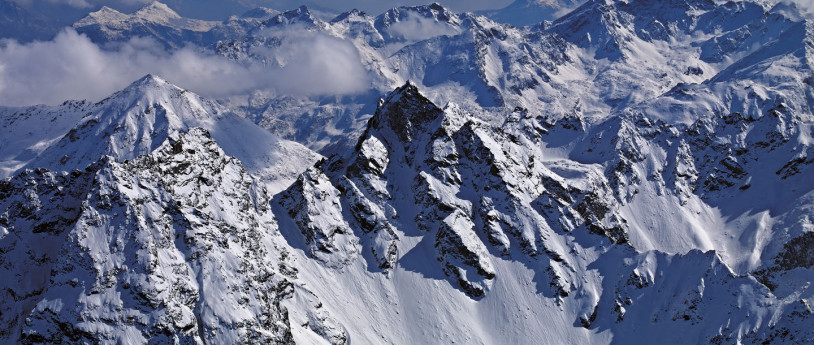
Admiring the view from Pizzo Scalino, Valtellina, Lombardy

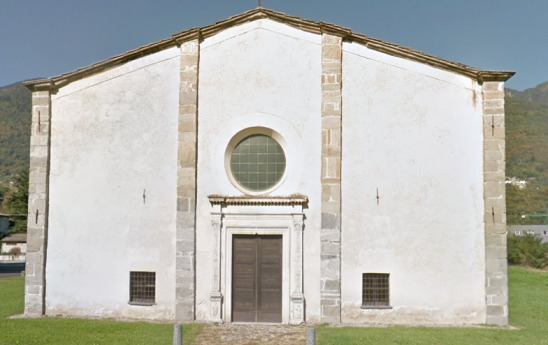
St. Peter's church

A Church of very ancient origin dating back to the end of the 10th century

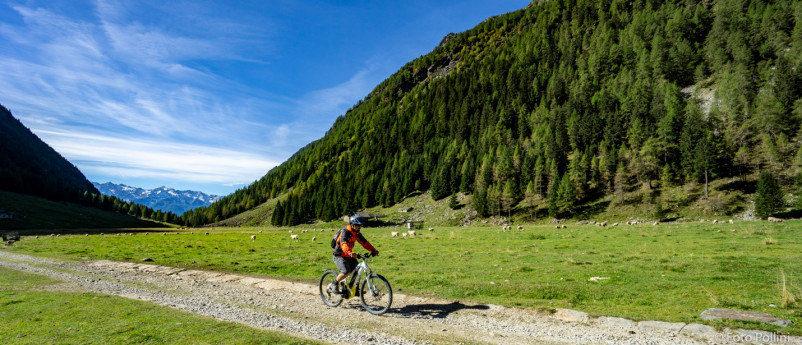
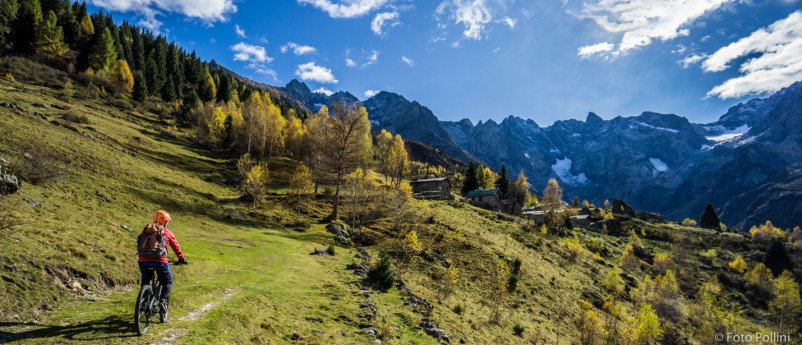
MTB-Ponte, Val Fontana

Ponte stazione, San Rocco, Sant’Antonio, Piano dei Cavalli, Alpe Campiascio - ritorno a Ponte stazione

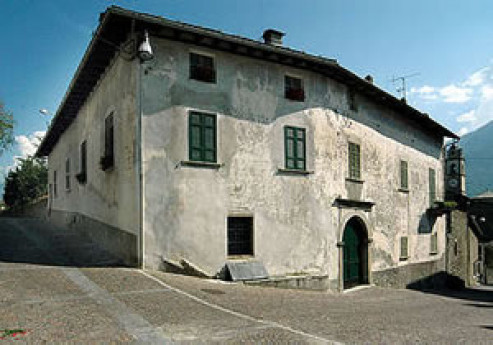
Negri House

This house, located close to the Town Hall in the old town center of Berbenno, underwent renovation works that followed the rules of the 16th century palaces, maintaing only a few features of the original bulding - a convent. The building is quite small and has a U-shape, is oriented Southwards, thanks to which it has a good sun exposure. The house is accessed from the Town Hall square. A vaulted portico leads to an inner courtyard, from which all areas can be reached: the cellars, the stairs leading to the higher floors, the garden, the barn, the stables and the bakery. The palace is thus a sort of small settlement, well organized around the courtyard, that features a cobblestone paving with a rainwater drainage system.  The aparments on the higher floors have been completely renovated and lost the original appearance and layout, but on the first floor there are still the original inlaid coffered ceilings. The building appears well preserved thanks to the renovation works that partially maintained the original architectural features. Traces of frescoes can still be found on the walls of the exterior gallery.

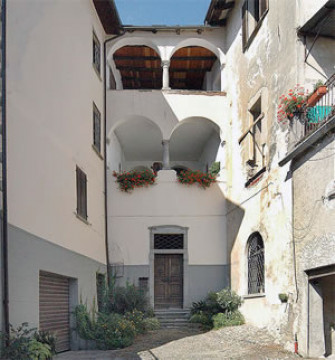
Ranzetti House

The palace was built in the 16th century by the Ranzetti family and is one of the few noble houses in the district of Polaggia, a mainly rural settlement. The building is close to the church of St. Abundius and has the typical features of the Renaissance noble house with a U-shape, even though its lines and finishings are simpler.  It features a nice portal that leads to a staircase clad in stone and with vaulted ceilings; on the first and second floor there are two porticoes with stone columns, that lead to the  entrance courtyard. The courtyard is delimited by two lateral wings, where the houses are located (now inhabited seasonally). The two lateral wings are not parallel, which allows a better sun exposure of the inner rooms. On the ground floors ther were cellars and rooms used for wine making and the production of typical products. The apartments were on the two higher floors. The first floor of the Eastern wing  housed a huge salon.  The plant of the building has been maintained, while the renovation works modified the horizontal structures (floorings and ceilings), windows and doors. The roof covering of the portico and of the Western wing is well preserved, while that of the Eastern wing needs renovation and insulation works. Outer walls are in good condition, but plaster fell off in some spots. A hanging garden used to link the Western wing to the vineyards. 

Parravicini House

The building is located on the outskirts of the district of Crotti, in the highest part of Berbenno, along the Finale creek. The palace was the home of the Parravicini family, an ancient noble Valtellinese family, as proven by the coat of arms painted on the wall overlooking the inner courtyard.  On the first floor, close the the huge fireplace in the main salon, there is another coat of arms made of carved stone. The palace has a L shape and features a small dovecote tower located in the Southern side of the building.  The building recently underwent renovation works: the roof and the floorings have been entirely rebuilt. The current owners managed to increase the value of the building, while maintaining the umbrella-vaulted and the cross-vaulted ceilings in the inner rooms. In ancient times, there was a private chapel, now used as a technical room.  The cellars, the rooms were food was preserved and service rooms are located on the ground floor and can be accessed from the street. The apartments are on the higher floors and can be reached by climbing an imperial staircaise running along the facades of the inner courtyards. The building has recently been renovated and is in good condition. 

Piccioli House

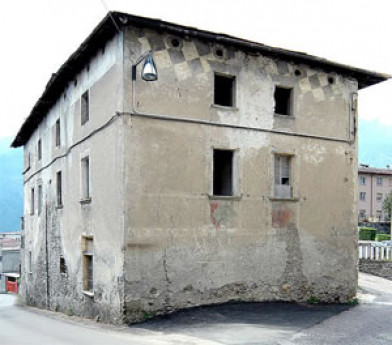
The building, with balanced proportions, is located at the entrance of the town, in the historical center of Berbenno. It features an open courtyard fenced off by high crenellated walls and, at the entrance, a stone arch portal.  In ancient times, the building was a convent and has frescoed vaulted salons and a wood covered room.  The Medieval structure underwent changes over the centuries, mainly in its higher part (16th century). The building is remarkable thanks to the decorations on its facade, made with the fresco and the graffito tecniques: window frames are embellished by flowers and geometrical patterns.  Furthermore, there are some oculi in the attic, featuring graffito decorations.  Decorations used to cover the whole facade, but are now only partially visible, for they have been washed away by atmospheric agents. The inner horizontal structures and the stairs have entirely been renovated, thus altering the original layout of the inner rooms. Luckily, the external vertical structures remained untouched.  On the Eastern side, new openings have been made, while on the Southern side enlargement works have taken place. The building needs conservation and renovation works to preserve the outer decorated walls. The interiors are compromised. 

Tower of Mancapane

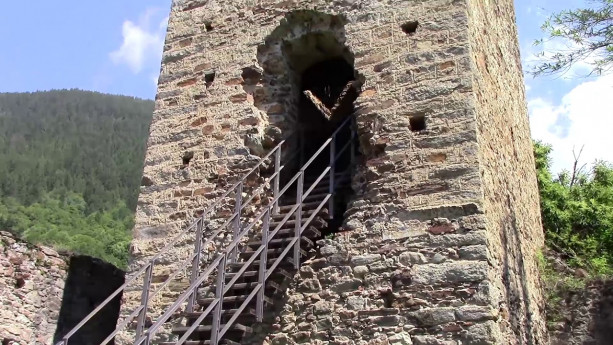
Built halfway up the mountain, it dominates the valley and the city of Sondrio, it likely had defensive and signaling purposes.

I'll tell you about Sondrio

The city is told through the uniqueness of its historic places
I'll tell you about Sondrio - Scarpatetti

Insider Valtelline and Valmalenco

Seven tips to discover the Valtelline and Valmalenco following the advice of someone who was born and lives there
Insider Valtelline and Valmalenco

Orobie: Mountains for all seasons

Visit the Orobie Park: the largest natural area in Lombardy's regional parks.
Orobie: le montagne da vivere tutto l’anno

MTB-Ponte, Val d'Arigna

Ponte stazione, Sazzo, Arigna, Centrale di Armisa, Foppe, Prataccio in Val d’Arigna - ritorno a Ponte stazione