Borgarello
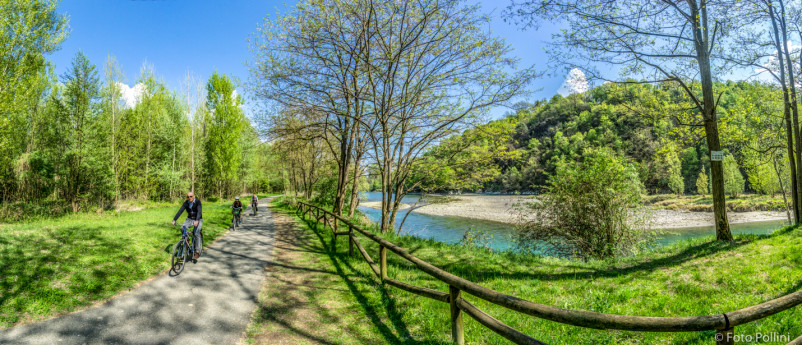
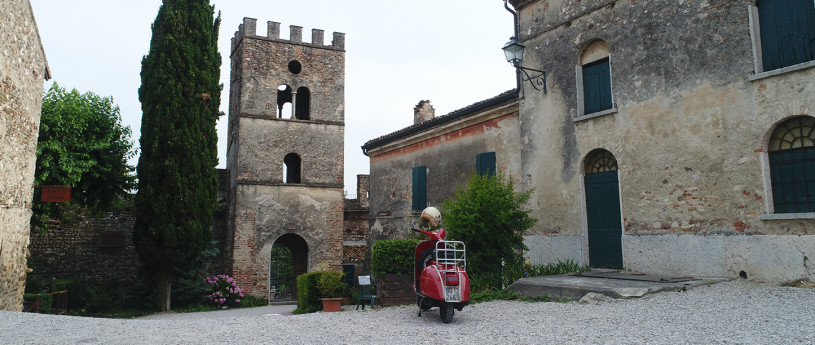
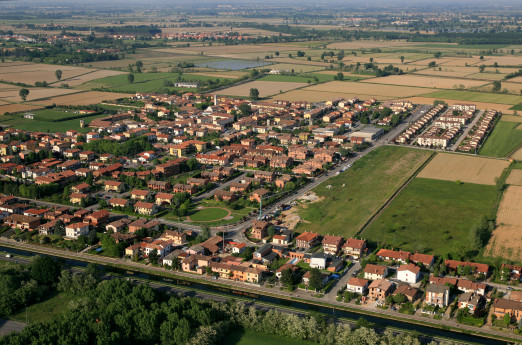
B Orgarello is located in the Pavese area, in the plain north of Pavia, along the Naviglio Pavese. During the Visconti era, it was included in the Parco Nuovo, a vast hunting estate between the Castle of Pavia and the Certosa. THE VISCONTI PARK Originally known as Barco (Barcho Vecchio) of Pavia, it covered an area of 14 km² with a perimeter of 15 km. It was created by Galeazzo II Visconti after 1360 and enclosed by a brick wall 4 braccia (approximately 2.5 meters) high. The park stretched northward from the city up to Cantone delle Tre Miglia (Borgarello), San Genesio, and Due Porte. Around thirty years later, his successor Gian Galeazzo expanded the park to 22 km², extending it from three to five miles northward. He built a new wall to enclose Torre del Mangano, Porta d’Agosto, Ponte Carate, and Porta Chiossa. By 1399, the perimeter wall was completed: nearly 25 km long, with a thickness of three brick heads (around 90 cm), foundations 2 braccia (about 1.25 meters) deep, and a total height of 5 braccia (around 3 meters), including a small roof on top. The construction and maintenance of the park required extensive hydraulic engineering, sophisticated for its time, anticipating Leonardo da Vinci’s works, much like the Milanese canals. The park was rich in forests of oaks, chestnuts, alders, and elms. It was a vast hunting garden where nature and human ingenuity were intertwined in a harmonious landscape. Many ancient place names were altered to glorify the new ruling family, with few exceptions—such as Borgarello—and the dedications of the two churches in Borgarello and Torre del Mangano to two "warrior saints": Saint Martin of Tours, linked to pilgrimages, and Saint Michael, a figure traditionally connected to the Lombards. The gates of the park still bear their historical names after more than six centuries, even though traces of older dedications have been lost. Following Ludovico il Moro’s fall in 1500, the park began its decline. After the Battle of Pavia in 1525, numerous breaches were made in the walls, and large sections were either collapsed or dismantled by local farmers for reuse, leading to the park’s eventual complete demolition. THE NAVIGLIO PAVESE Begun in the 16th century under Spanish rule but later abandoned, the canal project was revived during the Napoleonic era and completed under the Austro-Hungarian government in 1819. Until the post-World War II period, it was crucial for irrigation and navigation. Barges, pulled by horses, transported gravel from the Ticino River to Milan’s Porta Ticinese port, and occasionally even passengers willing to endure a long but pleasant journey. Navigation was facilitated by the canal’s gentle slope and the presence of locks, designed with Leonardo-inspired engineering, to manage elevation changes. The towpath along the Naviglio was historically known in 15th- and 16th-century documents as the “Duke’s Path” or the “Lord’s Path.” Until recent times, where the bridge now stands, a granite parapet marked Borgarello’s overlook onto the towpath, known as the “sasso.” This gave rise to the local saying, “d’la Rüsa al Sass,” referring to the village’s easternmost and westernmost boundaries. Today, a cycling path runs along the Naviglio Pavese, following the waterway for 30 km from Milan to the Certosa di Pavia and continuing another 6 km to Pavia’s historic center. CASCINA REPENTITA Remnants of the ancient Visconti Park can still be seen at Cascina Repentita, which was already documented with this name in a deed from 1111. The name likely derives from its historical role as a refuge for “repentant prostitutes of Pavia” during the early Middle Ages. The farmhouse is situated on the rural road connecting Cantone Tre Miglia to the villages of San Genesio and Mirabello. It features the typical square base of Lombard rural buildings, though it has undergone modifications and is now in poor condition. Nestled among rice fields and near the railway line, it became famous thanks to Francis I, King of France. This farmhouse holds significant historical importance—look for the plaque that explains why. Legend has it that Zuppa alla Pavese was invented here by a local peasant woman as an improvised dish. Do you know the recipe? The battle between the French and the Spanish began “at the break of dawn.” Close your eyes and imagine the colors and sounds of the battlefield. According to tradition, after his defeat, Francis I wandered through the countryside, exhausted and hungry. He is said to have uttered the famous words: “All is lost, save honor and my life, which is spared.” A peasant woman saved his life by offering him food. “At the fireplace, a broth of barlande (borage) was simmering, but no meat—then a rare commodity. She took a slice of homemade bread, baked the previous Sunday in the communal oven, and a fresh egg.” The king was so impressed that he later introduced this simple yet delicious soup at the French court, where it became a celebrated dish with a legacy lasting for centuries. SOURCE: Municipality of BorgarelloPHOTO: "Villa in Comune" Committee