I found 188 results for Ponte di San Michele

Path of the Charcoal Kilns

I The Charcoal Kilns Path is a circular hiking route of approximately 13.53 kilometers that starts from S. Albano, follows a stretch of the Nizza stream up to its sources, passes through the village of Oramala, Pian del Re, then descends near the Oratory of San Giulio in Poggio Ferrato, reaches the "Acqua d'Uovo" chapel in Molino Cassano, the hamlet of Cassano Superiore, and ends back at S. Albano, where it began. From the parking area, after the S. Albano cemetery, you take the dirt path that runs along the banks of the Nizza stream. At first, you will encounter a sulfur spring, and later a brief detour leads to the "Partisan Cave," a cavern that bears witness to the dramatic moments of the Resistance in Val di Nizza. Returning to the main path, after a short distance, you arrive at the "Madonna del Turista" shrine, created in the 1970s by the Pavia sculptor Vittorio Grilli. When you reach the ford of the Nizza stream, the path continues along a route bordered by badlands—rocky walls eroded by the elements, creating a spectacular landscape. Further ahead, a small sulfur spring gushes, accompanied by a stone bench for those wishing to rest. After passing the Nizza spring area, you cross the "Eagle Path" coming from the "Castello di Verde" and leading to Oramala. Here, you need to take a detour and keep right until you reach a forest clearing, created long ago by humans to make way for the "Charcoal Kiln," a technique used to turn wood into charcoal, as explained by the plaques located on-site. Returning to the main path, you continue until you pass the ruins of "Riassa," then reach the provincial road Varzi - Val di Nizza. Continuing along the asphalt without deviations, you can quickly reach the village of Oramala, with its 11th-century castle. The ancient village, once classified among the most beautiful in Italy, and the Oratory of the Nativity of the Virgin Mary, dating back to the 14th century, are also of tourist interest. Returning from Oramala on the main route, you can choose an alternative path that descends to Cassano Superiore. This section offers picturesque views of Oltrepò, including the Montalto Pavese Castle. Following the main itinerary, you reach the lower plain of Pian del Re, where you can admire various centuries-old chestnut trees of unique shapes and sizes. In the same plain, there is still a pit that was used to build the "buried charcoal kiln," another technique used by the charcoal makers to produce charcoal. Climbing to the upper clearing, you can enjoy the entire arc of the Apennines, with Mount Penice on the left, followed by Cima Colletta, Lesima, Chiappo, Pian dell'Armà, Boglelio, and Giarolo. The equipped area at Pian del Re provides an opportunity for a break. After resuming the walk, you descend until you meet the Health Path. A brief detour leads to the Oratory of San Giulio, one of the oldest in Val di Nizza. Continuing along the main direction, you reach the "Cappelletta dell'Acqua d'Uovo" in Molino Cassano, where a small sulfur spring flows, dedicated to the memory of Robertino and Valeria Schiavi. From the sulfur spring, via the "ciaplera," an ancient stone-paved path, you reach Cassano Superiore, the junction point for the previously mentioned path variant. From this small and charming hamlet, you proceed to the concrete bridge crossing the Nizza stream, then into the village of S. Albano, and after passing the church with its "voltone," you reach the starting parking area. Equipment: hiking boots, rain jacket, trekking poles, camera, binoculars, water. It is recommended not to light fires, not to pick flowers, not to leave waste, and to respect animals. Recommended period: all year round, except for hunting days. Information: Cultural Association Friends of Poggio Ferrato poggioferratoass@gmail.com www.amicidipoggioferrato.com Tel. +39 333.7318669

Around Lomellina

Around Lomellina

On a motorcycle a stone's throw from Milan

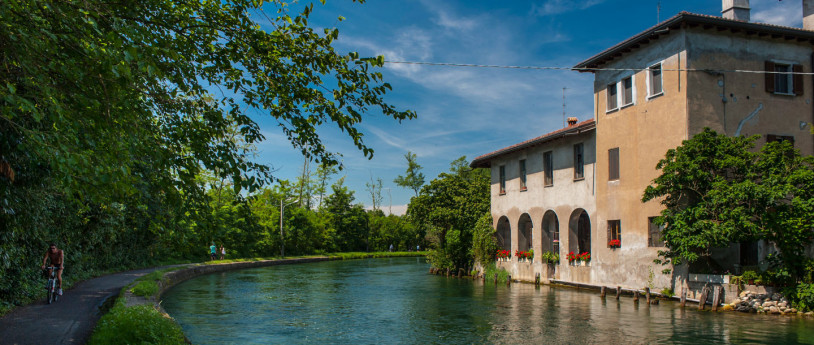
Did you wake up late? Do you still want to go out for a motorcycle ride? Great, today we are going to do a tour that starting from Milan will take us to discover the beauties of the Naviglio Grande and Bereguardo, for a total distance of about 80/90 km. Our tour starts from Milan's Darsena; this is basin located inside Milan near Porta Ticinese, in connection with the Naviglio Pavese and the Naviglio Grande, which has been used throughout the centuries for mooring, storage and loading/unloading of the characteristic barges that sailed the Milanese Navigli. For this reason it was the most important junction for commercial river traffic in the Lombard city, and even one of the most important by tonnage at the Italian level. This area of Milan is famous for the presence of numerous bars and pubs offering reasonably priced aperitifs, but there is also no shortage of restaurants, craft breweries and street food outlets, which every Friday, Saturday and Sunday are literally taken by storm by young people and families interested in the "movida" on the Navigli. After a short tour (on foot) of the Darsena, which has been completely renovated in recent years, we finally set off on our tour of the Naviglio Grande by taking Via Ludovico il Moro. Passing Corsico we reach Gaggiano, a village interesting both for its rural environment and historical monuments such as the Visconteo Castle, as well as for the low historical buildings reflected in the water and still period atmospheres between cobblestones and ancient walls. Fantastic are the two agricultural villages of San Vito di Fagnano and Barate. We continue heading now toward Abbiategrasso. At this point the advice is to take a small detour on the Naviglio di Bereguardo to visit Morimondo and its Abbey, one of the most beautiful and important places of worship in the Lombardy plain. The Abbey was founded in 1134, and even today it is one of the finest examples of Cistercian architecture combining Romanesque and Gothic styles. After the visit to the Abbey, very pleasant walk in the surroundings. We retrace our steps toward Abbiategrasso and now head toward Cassinetta di Lugagnano. Just as the Venetian patricians vacationed on the Brenta, so the noble Milanese families spent their summers in the cool along the Naviglio, in the 18th-century villas that make up the great heritage of Cassinetta di Lugagnano, a place out of time, nestled along the Naviglio Grande just 25 km from Milan. The noble families of the Trivulzio, the Visconti, the Mantegazza, the Castiglioni: these are just a few of the illustrious lineages that periodically frequented these places, even to oversee the management of the agricultural funds they owned. Still riding up the Naviglio Grande until we reach Robecco sul Naviglio. Starting in the 16th century, Robecco experienced a real period of splendor, coinciding with the fact that some of the most prominent Milanese noble families chose this and other adjoining areas to buy land where they could build their country residences, investing considerable sums in vast estates and very profitable latifundia.Villa Gaia in Robecco, so named in the second half of the 15th century because of the festivities held there, is one of the oldest buildings on the Navigli, and indeed is among the earliest with Villa features in Lombardy and among the richest in historical memories. Part of the construction is even earlier, however, as evidenced by traces of arched windows found under plaster, but it was Count Vitaliano Borromeo who made it so majestic. We continue up the Naviglio Grande until we pass Pontevecchio di Magenta and arrive in Boffalora Sopra Ticino, which lives around its 17th-century bridge, the landing stage for tourist navigations along the oldest of Milan's canals, the dwellings, cafes and taverns near the banks and finally the pedestrian-cycle paths that lead into the heart of the Ticino Park. Ahead to Bernate Ticino, a village first mentioned as a "castrum" in late Roman times, around the year 1000 it was a fief of the Crivelli family. When in 1186 a member of the lineage became pope with the name of Urban III, he initiated the establishment of the splendid Augustinian Rectory, of which we admire the loggia that opens like a parlor toward the Naviglio Grande. Our tour today finally concludes in Castelletto di Cuggiono, a picturesque hamlet in the municipality of Cuggiono characterized by the oldest stone bridge over the Naviglio Grande and the scenic staircase of Villa Clerici, home of the family of the same name, once used as a landing stage for noblemen. The location has also lent itself for the setting of several films including Ermanno Olmi's "L'albero degli zoccoli." Today's tour is not very long, especially for those coming directly from Milan. However, it passes through the most typical and preserved areas of the Milanese countryside, where we can find authentic inns and typical taverns, those where we can easily find tables at which scopa, briscola or tresette are still played. Typical cuisine is represented by hors d'oeuvres of cured meats, fine risottos, game, frogs and snails, perhaps the most typical dish, to be eaten if possible in lively company. Also for today our motorcycle tour ends here, it is time to return home by taking the MI-TO highway at Boffalora Sopra Ticino to return home.

In Valtellina, in the Gigiàt forest.

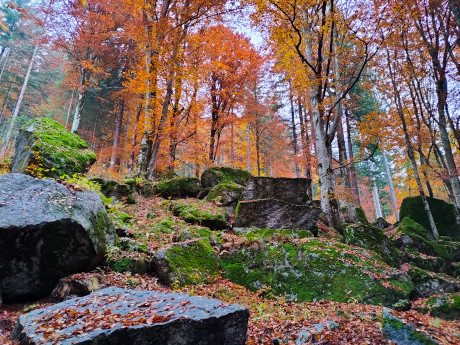
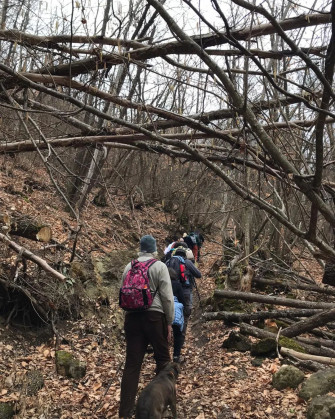
Autumn in Valtellina is a magical time. This proposal is among the easiest walks in the area, but is still able to fully capture the beauty of the colors of this season. It is a path for everyone that starts from the village of San Martino, enters the Forest of Bagni di Masino until it reaches the old thermal structure.Walking in the silence of the small forest area, it is possible to admire tall colorful beech trees, huge erratic boulders covered with green moss, birch trees with yellow tones and immense expanses of red leaves. The forest, within which you immerse yourself, is included in the Foreste di Lombardia circuit and consists of both the area around the Bagni di Masino municipality and the nearby Val di Mello. To reach the starting point of the hike, you have to take the SP9 and cross the entire Masino Valley until you reach San Martino. Once in the village it is possible to find several pay parking lots (7€ per day), the most convenient is definitely the one located next to the tourist office.Once you have parked your car you go to the info point and pass it, reaching the dirt parking lots located behind it. Going up the parking area you will easily spot a sign indicating "Bagni di Masino". You then take the only path present (CAI 455) immediately plunging into the woods and walking on a wonderful colored carpet of leaves and moss. The autumn colors are already clearly visible, but what is most striking are the huge granite boulders entirely covered with green moss and scatteredly arranged among the large beech and fir trees. In certain parts of the trail these rocks bend in on themselves, going on to create striking caves and small tunnels that are often crossed by the trail. After a 30-minute walk, near the campsite, you reach the first parking area in the valley. In this area the forest widens a bit, opening up the view of the mountain ranges that surround the valley. The mountains are not particularly high, but all their walls are literally covered with small patches of color: the trees manage to grow on the slopes, and at this time their golden foliage creates a truly unique spectacle. The light fog I found during my hike only made it even more impressive. The trail now continues level on a wide dirt road and then enters an area full of gravel and rocks. However, the trail is always clearly visible and very easy to follow. It continues on a slight incline, back into the woods, until it reaches the paved road. Almost the entire route is to be walked on a normal mountain trail, but there are a couple of sections where it is necessary to walk a few meters even on asphalt. Since the end point is also directly accessible from the road, it is possible to decide to exit the trail to walk along the roadway. After passing a narrow hairpin bend in the road, before taking the path again that cuts right into a meadow, you can veer to the right to reach one of the most spectacular points of the entire walk. In this area the forest becomes practically flat, and the small streams flowing between the rocks generate shallow pools of clear water. Looking up you can see a myriad of huge boulders almost entirely covered by a cloak of wet moss, and just beyond, small shrubs, beeches and huge firs go to cover the sky with their foliage creating a magnificent explosion of bright greens, oranges and deep reds. The advice, therefore, is to leave the proposed trail briefly and wander through this fairy-tale-toned grove to go for new vistas and different colors. After a long break you can resume the walk, the trail in this section begins to cut through the drawn hairpin bends of the road, allowing you to arrive much more quickly at an elevation of 1,150 m. With each new step it seems that the colors want to light up more and more, but it is when you reach the asphalt road again that the most beautiful spectacle of the Bagni di Masino Forest is shown. Here the asphalt is literally swallowed up by a fiery red forest, the fallen leaves completely cover the side of the road and the immense trees close in on themselves going to create a huge natural tunnel. It seems as if we have entered a painting that is too good to be true, and one cannot help but admire with open mouth what nature is giving us. While walking along the roadway is really inviting (you will do it on the way back), the trail now involves veering to the left and climbing up the steep forest. This is probably the most complex part of the entire hike, but it requires only a few minutes of effort, as the trail almost immediately stops climbing and returns to level ground. The forest is particularly dense, and the foliage of the trees will easily keep you out of the sun or light rain. What is most astonishing, however, is that an endless carpet of red leaves completely covers the entire area, going almost entirely to hide the ground. This kind of situation obviously cannot last for many days, and one must be lucky enough to be there towards the end of autumn, before the first snowfall. Walking on level ground one remains in this fairy-tale setting for several minutes, until one reaches the end of the forest. Here begins a short tourist trail, called the "sensory trail," which is very wide and stretches alongside the old spa complex. The trail is divided into nine stages with special notice boards, which display information about the local flora and fauna. Leaving the woods, take the wide path that turns immediately left and leads close to the creek. The section is very well maintained: there are several benches where you can stop, a wooden handrail separates the path from the creek, and the bottom is free of potholes or roots. After a few steps, you can already see a notice board that has some useful information about the roe deer, alpine chamois, brown bear, fox, marten, and gigiàt. The first 5 are animals that inhabit these mountains and that you can see if you are lucky enough; the last on the list, on the other hand, is a mythological creature considered the symbol of the valley. It is reportedly a huge and frightening animal, a cross between a billy goat and a chamois, however, the evidence is not very clear. A depiction of it can be seen on the wall of a house at the beginning of Ezio Vanoni Street in San Martino. The painting is accompanied by the following phrase : "El Gigiat, nume tutelare de esta splendida valle. Good to the man who nature respects, bad luck to those who find him disrespectful. Honors and glory to those who would see el and news of it." Continuing on we come to a large clearing bordered on the right by the Masino stream and filled with the ever-present erratic boulders. There are several small tables with cooking areas, so this is the perfect place to stop for something to eat. At the edge of the meadow is the tourist office and a curious construction consisting of 4 monoliths, formed by the 4 main minerals of the valley. When I was there a light drizzle and cold wind did not make the break too relaxing, in summer however this place is absolutely perfect to stay a little cool and breathe mountain air. Before heading back, it is possible to pay a quick visit to the small waterfall that generates the stream. To reach it, simply pass the picnic area by turning right. Here a sign will indicate that the waterfall is only a 5-minute walk away. You will then continue through a wide meadow surrounded by golden yellow-leafed birch trees and, after a very short climb, you will begin to hear the roar of the water on the right. The waterfall is not huge, but the context within which it is set is truly splendid: colorful trees and dark rock blend to create a beautiful play of contrasts, further enhanced by the blue reflections of the water that accumulates in small pools. The waterfall is the upper limit of the hike and now all that remains is to return to the parking lot. On the way back, however, it is possible to take a couple of detours to see two other really interesting spots. Returning from the waterfall one turns left with the goal of bypassing the spa building from the opposite side. After a few steps you come to an ancient little rock bridge invaded by the ubiquitous moss, which also climbs here. Crossing the bridge, one begins to skirt the structure of the former baths until reaching a small cave where from a small fountain, spring water at 38 °C flows out. Legend has it that this spring was discovered by a shepherd who, determined to investigate why one of his cows was making much more milk than the others, followed her to this area until he discovered that the animal was drinking from this spring. If the story were true, however, this would be a very old fact; in fact, the thermal waters in the valley had been known since the 1400s and over the centuries had attracted nobles from various Italian and Swiss cities. The Bagni di Masino spa that can be seen today was in operation for several years. Since 2015 the facility has been closed due to geological hazards in the area. After warming up at the spring, one can continue until reaching a bulletin board marked "Val Masino." The following section allows you to rejoin the path taken on the outward journey; however, the advice is to turn right to enter the spa garden until you reach the small parking area at the end of the paved road. This detour from the dirt path serves to return to the beautiful red forest admired earlier. Walking on the roadway rejoins the path taken on the way out much more quickly, and you also get to visit this part of the forest in its entirety, which is probably also the most characteristic. So take time to admire the immense trees, the beautiful undergrowth, the red carpet of leaves, and the rain-soaked rocks invaded by moss. Although there is no precise path, it is still possible to get off the road and into the flatter areas of this fantastic color-laden picture. After a long break to take photographs you return to the beginning of the wooded area and, turning left, take the outward path again. In about 1 hour you reach the parking lot again. - Ph: Stefano Poma
In Valtellina, in the Gigiàt forest.

Museo Gallaratese per gli Studi Patri

Museo riguardante lo studio e la valorizzazione del territorio
Museo Gallaratese per gli Studi Patri

In the Alpisella Valley where the Adda River has its source

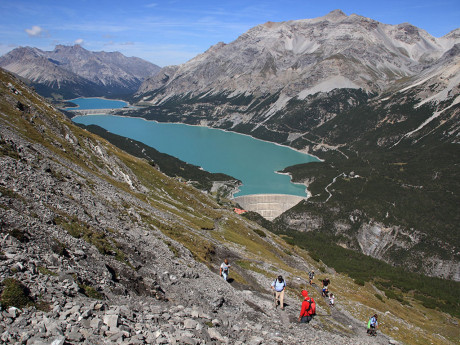
Our 23-kilometer loop route starts at the lakes of Cancano and San Giacomo di Fraéle. They are reached by following the signs along the road from Bormio up to Livigno. However, it is necessary to deviate to the right at the height of the built-up area of Premadio and drive along a series of tornan that lead, after 13 kilometers, to the Fraéle Pass. We continue by car and skirt the reservoirs on the left using the dirt track to the parking lot at the entrance to the Pettini valley. Our ride begins here, going right up the Pettini valley, with Stelvio National Park signs to guide us. After about half an hour we find ourselves in the gorges of the Val Corta, which, as the name implies, we pass in a short time. Almost suddenly and with some surprise at the environment we encounter, we enter the beautiful plain of the Trela pastures. Behind the alpine hut we head right on the most challenging section of the trail, which through a single track allows us to gain the Trela Pass. From here we face a pleasant descent along the desolate Pila valley towards Trepalle (trail mark 136). We then head right and, following the sunken Torto valley, in a short time we lose altitude towards the Livigno dam. We take, turning right again, a nice dirt road (trail marker 138) in the direction of the Capre bridge. Near the Alpisella refuge, in a panoramic position over the Livigno reservoir, we follow the signs to the Alpisella pass, climbing for about an hour up the well-maintained military road. Once over the pass we meet the headwaters of the Adda River. After a scenic and pleasant descent here we are again on the banks of the San Giacomo and Cancano reservoirs.We skirt them on the right for a couple of kilometers to the parking lot where we left the car. Read reviews, comment on the route and download the GPX track at orobie.it
In the Alpisella Valley where the Adda River has its source.

From the water of Lake Iseo toward the Franciacorta

From the water of Lake Iseo toward the Franciacorta

Church of St. Charles

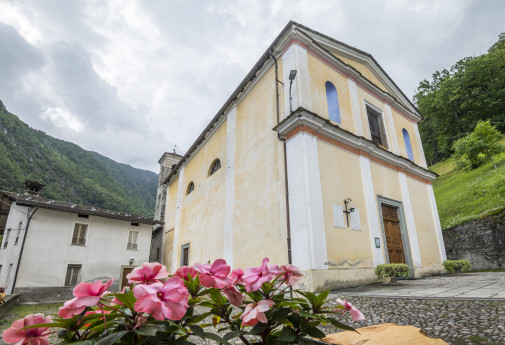
Following a vow of the population afflicted by a disease that was decimating it, the church was erected in 1623 in Fontaniva. On a first visit it appears parva, testudinata, ex caemento pavimentata, perhumida; unica capella septa cancellis ferreis, parva sacristia, semiconfessionarium; supra tectum campanile (small, vaulted, paved with concrete, very humid; has a single chapel closed by iron gates, a small sacristy and a semiconfessional; on the roof [sic] the bell tower [lm actually the bell tower rises from the base of the church]). Visited by Mugiasca during the 1700s, the church showed "three altars, the Major the first dedicated to St. Charles, the second to the glorious Patriarch St. Ignatius, and the third to St. Cross." It was equipped with a fair amount of furnishings, vestments, linen. It was later enlarged in 1867; it became, by decree Nov. 17, 1886, of Bishop Pietro Carsana, the parish church of Arigna, replacing the older church of St. Matthew. It was consecrated in 1893, the year in which it was also decorated by a hand to date unknown. Entering through the portal that opens into the sober façade marked by pilasters, we are greeted by the single hall. On the high altar rises a carved, painted and gilded wooden altarpiece. Two paintings of interest are kept in the building; the first attributed to Cesare Ligari depicting an angel holding a cross with saints; the second attributed to Giovanni Battista Macolino depicting Our Lady of the Rosary with St. Dominic and St. Catherine. Valuable furnishings and vestments still make up the church's furnishings today. Also facing the square in front of the church is a small oratory on which we read D.O.M. ac S. JOANNI BAPTISTAE A D 1699. Source: Parish of Ponte in Valtellina.

Lago d'Idro Clear cool water

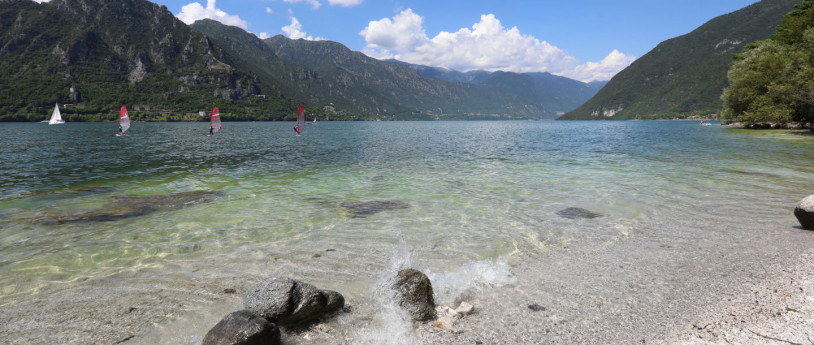
At the foot of the Piccole Dolomiti mountains, and surrounded by their wooded slopes, this is almost a mountain lagoon.
Lago d'Idro Fresche e dolci acque

Lake Idro

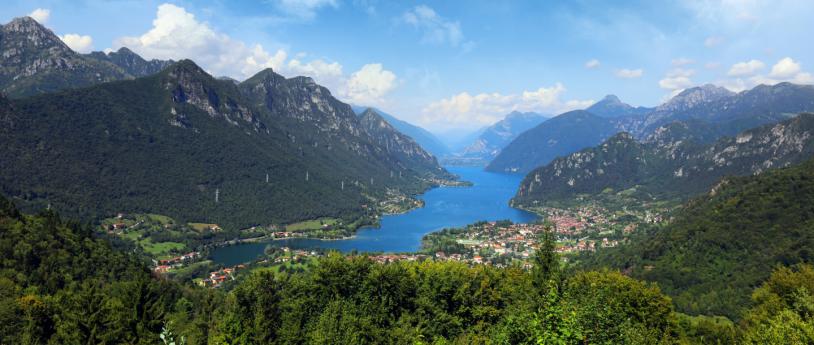
At the foot of the Little Dolomites, Lake Idro is lapped by wooded slopes. Perfect for sports, it is the scene of an incredible carnival
Idro lake

Civico Museo Parisi Valle

Civico Museo Parisi Valle

Mirabello Castle

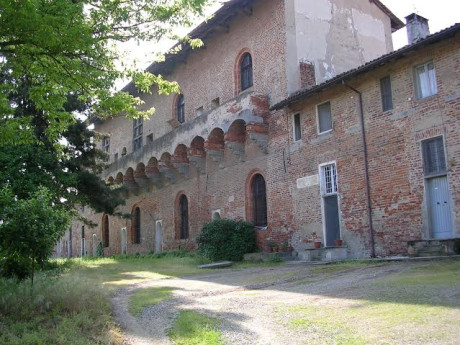
Mirabello Castle: A Must-See Landmark for History and Architecture Enthusiasts Just a few kilometers from the city center, Mirabello Castle is a fascinating site rich in history and architectural beauty. This ancient manor, deeply rooted in the Middle Ages, offers a glimpse into the past and remains a significant landmark in the region. Origins and History Built in the 14th century by the Visconti, rulers of Milan, the castle was originally intended as a hunting lodge and a strategic stronghold for controlling the surrounding countryside. Its history is closely tied to the Battle of Pavia (1525), one of the most crucial events in European history. During the clash between Emperor Charles V’s imperial troops and the French army of Francis I, Mirabello Castle played a key role—historical accounts suggest that the imperial headquarters were located nearby. Mirabello Castle is a fine example of medieval noble architecture. Although some parts have been altered over the centuries, the structure still preserves details that evoke its past, such as red brick walls and large Gothic windows. Its location within the Vernavola Park, once a Visconti hunting reserve, enhances its picturesque charm. The Castle is Currently Not Open to the Public From the "Lombardia Beni Culturali" Website: It is likely that the original layout of the castle was quadrangular, featuring an inner courtyard, an external moat, and a drawbridge at the entrance. However, many significant parts have been lost over time. The remaining structure consists of a two-story brick building, now used as a residence. One of its most distinctive features is a hanging balcony on the north-facing façade, supported by stone corbels, reminiscent of the courtyard of the Rocchetta in Milan’s Sforza Castle and similar to the perimeter balcony of the tower in Vigevano Castle. The original defensive walls, which once enclosed and protected a vast park spanning about 25 kilometers, have almost entirely disappeared. However, two of the nine fortified gates that provided access to the park still partially survive: Pescarina Gate, in the municipality of San Genesio, along the Vigentina road Torre del Mangano Gate, in the municipality of Certosa di Pavia Historical Notes Originally, Mirabello Castle was a small fortress probably built by the Visconti in the 14th century and later modified during the Sforza period. Most of the structure was demolished in 1857, leaving only one wing intact. The castle was directly connected to the Castello Visconteo in Pavia via a straight road, still recognizable today as the main route leading from the city to Mirabello. Situated within the vast "Parco Visconteo", which stretched from Pavia’s castle to the Certosa di Pavia, Mirabello was part of a grand Visconti complex that included the park, the Certosa, and urban developments. It served primarily as a leisure and hunting retreat as well as the residence of the park's captain. Today, the castle is undergoing restoration and is occasionally used for cultural events, but it remains an important historical landmark for the city of Pavia. The surrounding Vernavola Park is a favorite destination for families, sports enthusiasts, and nature lovers, offering ideal spots for walking and picnicking. Location and Accessibility Mirabello Castle is located in Località Mirabello, in the northern district of Pavia, and can be easily reached by car or bicycle from the city center. Photo: FAI Fondo Ambiente Italiano