I found 200 results for Nei borghi dell’Oltrepò

A green week in Valtellina

Escape to the mountains just a two-hour drive from Milan for a rural retreat with trekking, typical pizzoccheri pasta and towns that are absolute hidden gems
A green week in Valtellina

Monumental trees in Lombardy: 12 incredible specimens

Among the scenic and cultural riches of Lombardy, one can discover outstanding green monuments.

25th April Weekend in Lombardy

Why not get out and explore? You can organise some unforgettable days out with a wide range of interesting activities.

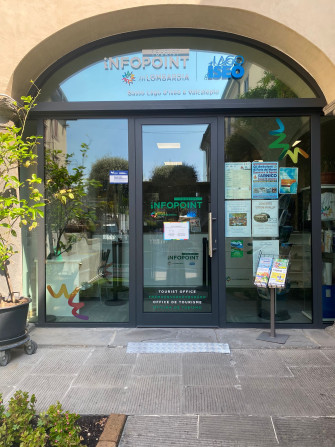
Infopoint Basso Lago d'Iseo and Valcalepio

The Basso Lago d'Iseo and Valcalepio Infopoint is managed by the Pro Loco Sarnico-APS.The qualified staff is available for any information regarding the Basso Sebino area and the Province in general.   Our task is to provide tourists and citizens with all the information they need to fully experience the area in which we operate. Services offered:- tourist reception;- tourist information regarding the major tourist attractions of Lake Iseo and more generally of the entire province;- information on accommodation facilities in the area;- information on events and shows;- publication and distribution of tourist materials, pamphlets, brochures and maps, transportation schedules, calendars of events organized in the Lower Sebino area. Other services:- Ticket office for Lake Iseo Navigation;- Public Desk and Nautical Records Office for The Lake Basin Authority of Lakes Iseo, Endine and Moro. The territory of Basso Sebino includes the southern part of the Bergamo side of Lake Iseo and the immediate hinterland, almost all of which is occupied by steep hills and mountains rising from an altitude of 197 m above sea level at Sarnico to 753 m above sea level at Parzanica to the summit of Mount Bronzone, 1,334 m above sea level. The villages included are: Adrara San Martino, Adrara San Rocco, Castelli Calepio, Chiuduno, Credaro, Foresto Sparso, Gandosso, Grumello del Monte, Parzanica, Predore, Sarnico, Tavernola Bergamasca, Viadanica, and Vigolo, for a total territory of about 123 km2 and a total of about 53,000 inhabitants.The small settlements, linked by common historical events, are united by a precise environmental identity: Lake Iseo (or Sebino). The beauty of the places, happily defined as "between the mountains and the lake," is also reflected in the historic villages with elements of fortress structures, sanctuaries and extraordinary art treasures. The communities facing the lake combine architectural elements of ancient nobility, traces of industrial archaeology and modern tourist facilities, while the hinterland allows the happy discovery of a rural and mountain civilization in many respects still intact.The Lower Sebino is, moreover, all to be discovered for its food and wine, typical products (cheese, salami, honey, wine, olive oil...), trekking along hilly paths, water sports, cultural and folkloric events.

Infopoint Franciacorta Outlet Village

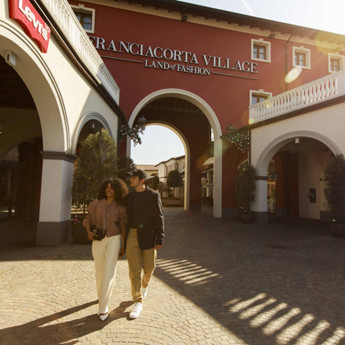
Treat yourself to a unique experience in Franciacorta Village, just outside Brescia. Stroll the streets to check out our 190 stores and boutiques, stop for a well-deserved break in our inviting bars and restaurants. Choose from all the valuable amenities that will help make your shopping experience truly unforgettable.
Franciacorta Village

Vestino Valley Infopoint

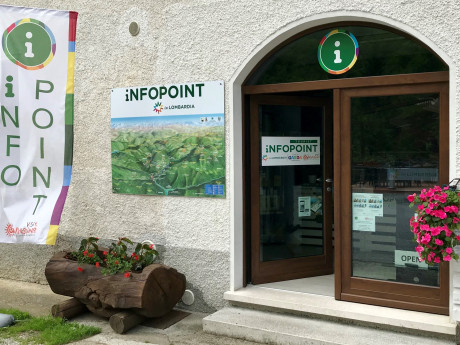
In the locality of Molino di Bollone you will find the Tourist Office - Infopoint inLombardia Val Vestino, where you will be provided with all the directions and useful advice to enable you to discover the beauty of the area according to your needs and curiosity.   Present bookshop with trail maps, publications on the Valvestino territory and sale of local souvenir products of the area such as beans and honey from Valvestino. E-bike recharge point (follows office opening). A trip to Val Vestino can become an extraordinary itinerary of taste thanks to small accommodations spread throughout the various villages, where you can taste typical dishes of traditional cuisine and more.Possibility of staying in typical family-run establishments or in picturesque thatched-roof barns.From each hamlet there is a network of routes that hiking enthusiasts can choose to discover the wonderful landscapes of the Valley.The Vestino Valley area is, in fact, able to offer tourists a wide range of opportunities to practice sports in contact with nature.It is ideal for hiking and mountain biking.The forests, mule tracks, trails, stream waters and caves are the favorite scenery for energetic immersion in a natural setting of immense value. Visit Val Vestino Website CLOSED FROM OGNISSANTI, REFER TO THE FOREST CONSORTIUM TERRA TRA I DUE LAGHI - ECOMUSEO DELLA VALVESTINO Loc. Cluse - Valvestino Turano (BS) 0365745060 - 0365745007 info@visitvalvestino.it - info@consorzioforestaleterratraiduelaghi.com How to reach us.From Idro (km. 14) => Capovalle => Valvestino => Lake GardaFrom Gargnano (km. 19) => Valvestino => Capovalle => Lake Idro
Vestino Valley

Valtellina Nascosta: third installment

Continuing our journey to discover the Hidden Valtellina, we present five more must-see destinations.

Livigno: winter magic among snow, history and traditions

Visit Livigno to savor its magic

Valtellina Nascosta: second installment

Valtellina continues to surprise with its hidden corners and wonders.

On a motorcycle a stone's throw from Milan

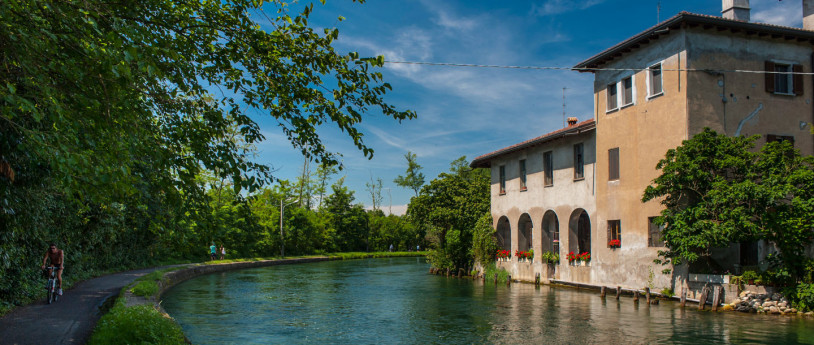
Did you wake up late? Do you still want to go out for a motorcycle ride? Great, today we are going to do a tour that starting from Milan will take us to discover the beauties of the Naviglio Grande and Bereguardo, for a total distance of about 80/90 km. Our tour starts from Milan's Darsena; this is basin located inside Milan near Porta Ticinese, in connection with the Naviglio Pavese and the Naviglio Grande, which has been used throughout the centuries for mooring, storage and loading/unloading of the characteristic barges that sailed the Milanese Navigli. For this reason it was the most important junction for commercial river traffic in the Lombard city, and even one of the most important by tonnage at the Italian level. This area of Milan is famous for the presence of numerous bars and pubs offering reasonably priced aperitifs, but there is also no shortage of restaurants, craft breweries and street food outlets, which every Friday, Saturday and Sunday are literally taken by storm by young people and families interested in the "movida" on the Navigli. After a short tour (on foot) of the Darsena, which has been completely renovated in recent years, we finally set off on our tour of the Naviglio Grande by taking Via Ludovico il Moro. Passing Corsico we reach Gaggiano, a village interesting both for its rural environment and historical monuments such as the Visconteo Castle, as well as for the low historical buildings reflected in the water and still period atmospheres between cobblestones and ancient walls. Fantastic are the two agricultural villages of San Vito di Fagnano and Barate. We continue heading now toward Abbiategrasso. At this point the advice is to take a small detour on the Naviglio di Bereguardo to visit Morimondo and its Abbey, one of the most beautiful and important places of worship in the Lombardy plain. The Abbey was founded in 1134, and even today it is one of the finest examples of Cistercian architecture combining Romanesque and Gothic styles. After the visit to the Abbey, very pleasant walk in the surroundings. We retrace our steps toward Abbiategrasso and now head toward Cassinetta di Lugagnano. Just as the Venetian patricians vacationed on the Brenta, so the noble Milanese families spent their summers in the cool along the Naviglio, in the 18th-century villas that make up the great heritage of Cassinetta di Lugagnano, a place out of time, nestled along the Naviglio Grande just 25 km from Milan. The noble families of the Trivulzio, the Visconti, the Mantegazza, the Castiglioni: these are just a few of the illustrious lineages that periodically frequented these places, even to oversee the management of the agricultural funds they owned. Still riding up the Naviglio Grande until we reach Robecco sul Naviglio. Starting in the 16th century, Robecco experienced a real period of splendor, coinciding with the fact that some of the most prominent Milanese noble families chose this and other adjoining areas to buy land where they could build their country residences, investing considerable sums in vast estates and very profitable latifundia.Villa Gaia in Robecco, so named in the second half of the 15th century because of the festivities held there, is one of the oldest buildings on the Navigli, and indeed is among the earliest with Villa features in Lombardy and among the richest in historical memories. Part of the construction is even earlier, however, as evidenced by traces of arched windows found under plaster, but it was Count Vitaliano Borromeo who made it so majestic. We continue up the Naviglio Grande until we pass Pontevecchio di Magenta and arrive in Boffalora Sopra Ticino, which lives around its 17th-century bridge, the landing stage for tourist navigations along the oldest of Milan's canals, the dwellings, cafes and taverns near the banks and finally the pedestrian-cycle paths that lead into the heart of the Ticino Park. Ahead to Bernate Ticino, a village first mentioned as a "castrum" in late Roman times, around the year 1000 it was a fief of the Crivelli family. When in 1186 a member of the lineage became pope with the name of Urban III, he initiated the establishment of the splendid Augustinian Rectory, of which we admire the loggia that opens like a parlor toward the Naviglio Grande. Our tour today finally concludes in Castelletto di Cuggiono, a picturesque hamlet in the municipality of Cuggiono characterized by the oldest stone bridge over the Naviglio Grande and the scenic staircase of Villa Clerici, home of the family of the same name, once used as a landing stage for noblemen. The location has also lent itself for the setting of several films including Ermanno Olmi's "L'albero degli zoccoli." Today's tour is not very long, especially for those coming directly from Milan. However, it passes through the most typical and preserved areas of the Milanese countryside, where we can find authentic inns and typical taverns, those where we can easily find tables at which scopa, briscola or tresette are still played. Typical cuisine is represented by hors d'oeuvres of cured meats, fine risottos, game, frogs and snails, perhaps the most typical dish, to be eaten if possible in lively company. Also for today our motorcycle tour ends here, it is time to return home by taking the MI-TO highway at Boffalora Sopra Ticino to return home.
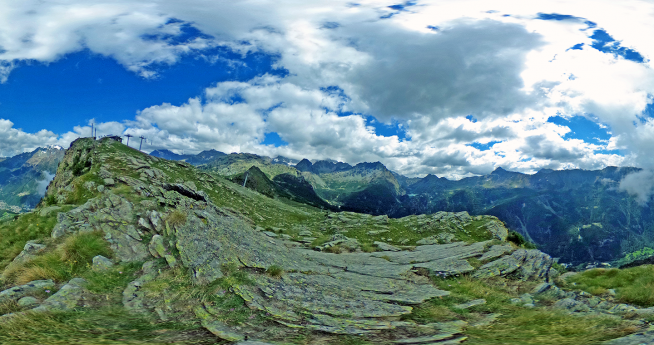
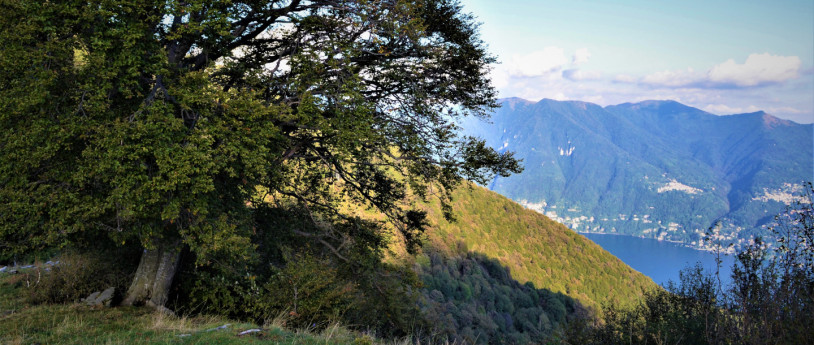
La Strada Cluniacense della Franciacorta

Walking among vineyards and hamlets Discovering the Cluniac Abbeys
La Strada Cluniacense della Franciacorta

Tasting in Lombardy: Five flavoursome experiences

Mete Golose_Franciacorta