- Food & Wine
For Wine Cellars in Lombardy
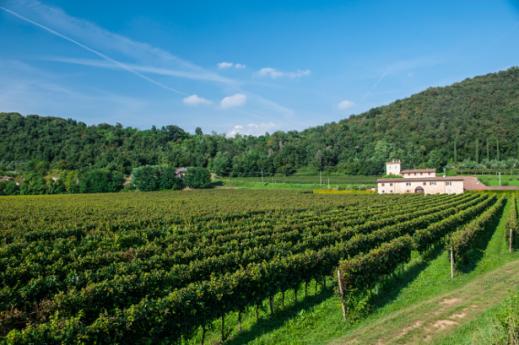
Rows of vineyards line the countryside, producing some of the finest wines in the world. Exploring Wine Cellars in Lombardy
An itinerary designed to discover the vineyards and wineries of Lombardy would have to encompass the whole region.
Side and to the hills of Mantua and the Valtenesi on the other, up to the shores of Lake Garda. The over 30 000 hectares of vineyards and wineries are located all over the region following the irregular lines of the hills and mountains.
First stop is Valtellina, amongst castles, historical villas and cultural landmarks – two of the most noteworthy: Grumello Castle, in Montagna in Valtellina, and Palazzo Besta, in Teglio. Here the vineyards grow on steep terraces on the south side of the Adda valley, between Ardenno and Tirano, where the sunlight ripens the Nebbiolo grapes known locally as Chiavennasca. This is where the Inferno, Grumello, and Sassella – austere red wines from the DOCG Valtellina Superiore – and the Sforzato, also known as Sfursàt, a potent, velvety passito, are produced.
On the rolling hills of Valcalepio, in the province of Bergamo, on the shores of Lake Iseo where the panoramic Conti Calepio Castle is located, various wines are produced mostly from imported strains of vines but also with some native strains cultivated near Scanzorosciate and used to make Moscato di Scanzo, the smallest DOCG production in Italy.
Brescia is also home to the biggest urban vineyard in Europe, over four hectares of native Invernenga vines, overlooking the city from the Cidneo Hill at the foot of the Brescia Castle, used to produce Pusterla whites and passiti. Small production areas are dotted throughout the countryside surrounding the city in the hilly areas of Capriano del Colle, Botticino and Rezzato, between Cellatica and Rodengo Saiano.
But it’s in Franciacorta, that the region’s best-known wineries (most of which offer tours) are located, scattered around the moraine amphitheatre that crowns the southern shores of Lake Iseo. These wineries produce some of the most famous sparkling wines in the country, such as Franciacorta DOCG, made with Chardonnay, Pinot Blanc, and Pinot Noir grapes, a delicate, zesty, well-orchestrated wine, the standard bearer for the excellent DOC Curtefranca (the Cabernet and Merlot are especially noteworthy) produced in the same area.
Just outside the town of Brescia, on Lake Garda’s coastline, where the blue of the waters meets the green of the vineyards that grow in the Valtènesi region, visitors can tour the wineries, taste and buy the DOC Garda Classico (in all its variations: Bianco, Chiaretto, Novello, Groppello, Rosso and Rosso superiore) and DOC Valtènesi (either Chiaretto or Rosso) and visit the castles in Moniga del Garda, Polpenazze del Garda, Desenzano and Sirmione.
On the gentle rolling hills of the southern shores of Lake Garda, near Mantua, between Castiglione delle Stiviere, Volta Mantovana and Pozzolengo, various grapes are used to produce the whites, reds and rosés of the Garda Colli Mantovani. The smaller vineyards of the Lugana Doc are located closer to the lake and produce a piquant, firm white with Trebbiano grapes, and San Martino della Battaglia, made with Tocai grapes from Friuli, which also offer a fortified version.
In the Oltrepò Mantovano, near Suzzara with its tower and battlements, where the river Oglio flows into the river Po, the production of sparkling lambrusco red gives way to the countryside of Emilia Romagna. The DOC San Colombano wine (the only DOC in the province of Milan) is what remains of the vast vineyards which used to extend from Milan to the pre-alpine lakes.
Over half of Lombardy’s wineries are located in the Oltrepò Pavese, a charming area known for its castles and vineyards. The three most noteworthy are Oramala, Cigognola and Dal Verme Castle in Zavattarello. The local grapes of Barbera, Croatina (also known as Bonarda), Uva Rara, Ughetta, and the international Pinot Noir are used for reds, whereas Riesling, Moscato, Malvasia and others produce strong, tangy whites, some of them naturally sparkling. The combination of Pinot Noir and the classic champagne method produce a proper spumante DOCG. Luigi Veronelli and Gianni Brera both loved Barbacarlo, a rare wine with a distinct country finesse which is only produced by a single winery in the Broni hills.