I found 253 results for monte san giorgio

Lago di Iseo: history, nature and…

From the recently rediscovered Roman spa in Predore to the Liberty architecture of Sarnico, via the enchanting town of Lovere and surprising natural phenomena
Lago di Iseo cultura, natura e...

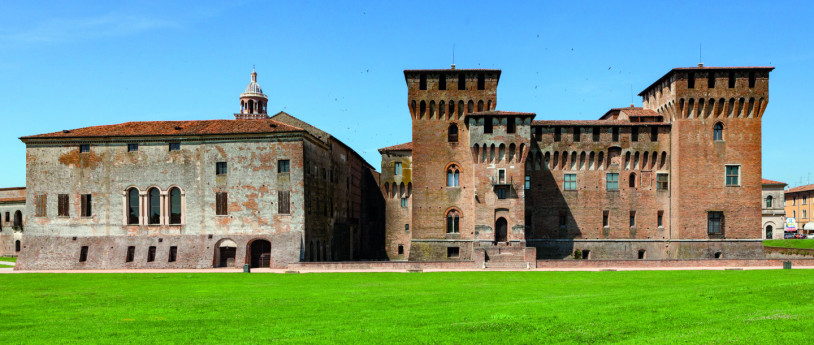
Saint George Castle

Isabella d’Este, one of the most influential women of the Italian Renaissance, lived here for a long time.
Castello di San Giorgio

ST MICHAEL HERMITAGE

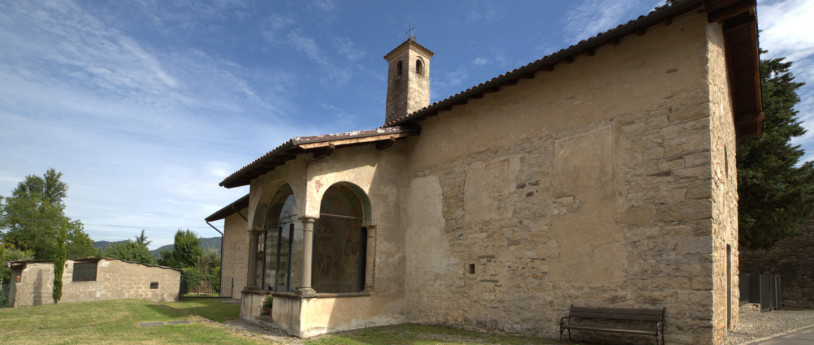
Churches at Tremosine sul Garda
http://www.gardalombardia.it/ImmaginiProdottiP/eremo-di-san-michele_126_420x1000...

MUSEI CIVICI DI MONZA

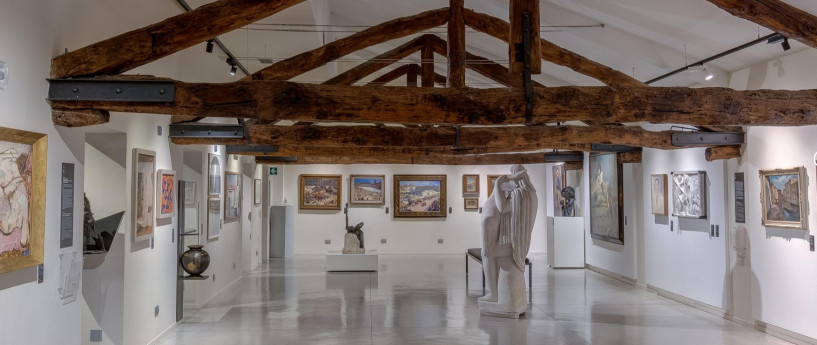
After 30 years of closure, the Musei Civici monzesi reopened to the public in 2014, housed in the medieval complex known as the Casa degli Umiliati. A building that was once the meeting and prayer place of the Umiliati, a powerful religious order born in the 13th century from pauperistic assumptions and suppressed in 1571 at the initiative of St. Charles Borromeo. The museum's exhibition itinerary is spread over two floors in about 900 square meters of space and allows visitors to admire paintings and sculptures that represent the history of the city: archaeological finds, medieval vestiges, paintings and sculptures from the 16th to the 21st century. The first two sections on the ground floor contain the oldest finds: tombstones, funerary monuments, votive are and parts of monumental buildings dating from the 1st century AD to the 4th century AD, including an epigraph, carved in the granite of a votive altar in which the ancient name of the people of Monza, Modiciates, is handed down; there is also a small but significant collection of medieval artifacts that tell of aspects and customs of Monza reality in the Middle Ages. The third section is devoted to contemporary art works from the Biennale Giovani. On the second floor, ten exhibition rooms instead display the great masterpieces of the Monza collection, with outstanding works from the 19th and 20th centuries. The Ancient Art Section opens the exhibition with works dating from the 16th to the 17th centuries that make up the original nucleus of the civic collection, arranged according to an order that follows the major Renaissance and Baroque thematic areas: sacred painting, mythology and still life. In the next section, ample space is devoted to works of nineteenth-century Monza with the splendid rural landscapes by Eugenio Spreafico, the views of old Monza by Emilio Borsa, the evocative views of Pompeo Mariani to the works of the famous Monza painter, Mosè Bianchi to whom the next section is dedicated with the exhibition of two graphic works related to the practice of fresco painting, an ancient technique practiced by Bianchi in the central years of his work. In section seven, illustrious Italian and foreign figures stand out, arranged according to an arrangement that re-proposes a veritable "Gallery of Portraits." In chronological order, starting from the 16th century, princes, prelates, high officials, young women, poets, men of letters and famous captains of industry, authors of a fundamental contribution to the economic and social wealth of Monza, are depicted. Still the Italian nineteenth century in the eighth section where canvases by Mosè Bianchi, Pompeo Mariani, Eugenio Cecconi, Guido Cinotti and sculptures by Giuseppe Grandi and Ernesto Bazzaro can again be admired. Contemporary art, on the other hand, is the protagonist from the ninth to the twelfth section through the exhibition of works from the early twentieth century to the 1950s, with works by the winners of the Biennales of the 1920s and works by the distinguished teachers of Isia -  the Istituto Superiore per le Industrie Artistiche - among which are the plaster sculpture by the famous Arturo Martini, the Leda with the Swan, and Marino Marini's bas-relief, St. George the Dragon. Also of great value is the section dedicated to ceramics with works by the Sardinian Salvatore Fancello. A section dedicated to the face of the city of Monza concludes the museum itinerary, with the intention of presenting through the works on display some great moments in the city's history. One of the absolute most famous and beloved paintings is the great Veduta della contrada Nuova in Monza by Angelo Inganni.
Musei Civici

Montu beccaria

It stands on a mountain, the village that boasts an historical winemaking tradition
Montù Beccaria

Thematic trails

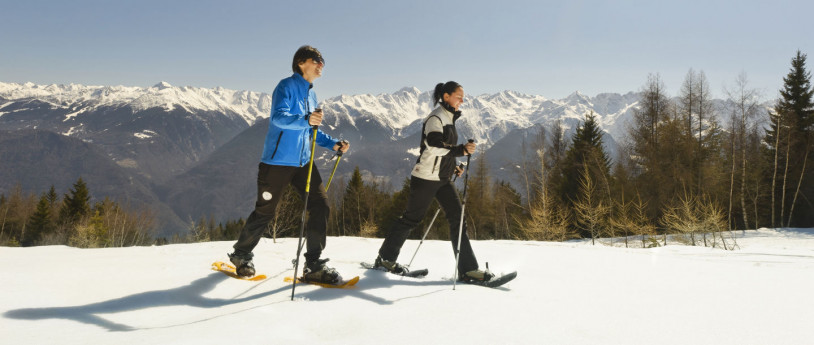
Several thematic trails can be reached fromAprica. Each with its own rennomated characteristics, they represent unparalleled naturalistic excellences. The combination of care for the land and historical and cultural memory, gives rise to experiences to be lived with the whole family or alone, in contact with themselves... Historical-military trail "Mount of the Cross" The easy trail, suitable for everyone, that starts from the lay-by in front of the "Quercia Antica" refreshment stand in Pian di Gembro is a path dating back to World War I, accompanied by clear descriptive panels. It was part of the Cadorna Line, for the defense of national borders in the event of an Austrian attack. Tunnels for ammunition storage and a targeting gallery facing Tirano are preserved. From a naturalistic point of view, the prevailing plant species are fir, lodgepole pine, larch, birch and, in the undergrowth, bilberry. At the end of the trail, you can admire the peat bog from a lookout. "Blessed P.G. Frassati" religious trail It is thanks to the Italian Alpine Club, which embraced the initiative called "The Frassati Trails of Italy" in order to create a trail dedicated to the famous mountaineer in every Italian region, that Aprica along with Corteno Golgi boast the privilege of owning the one in Lombardy. From the village of Sant'Antonio, it climbs to Savrone, along an ancient path, leads to Premalt, then reaches the orographic disc (2000m), near Zappello dell'Asino, a magnificent viewpoint over Valtellina and part of Valle Camonica, finally reaching the chapel dedicated to S. Carlo, built next to the CAI Valtellina Refuge (1900m). Nature trail "Wood is life" From the Malga Magnolta to the CAI Valtellina Refuge, Trail 341 has been named the "Wood is Life" Thematic Trail, and along its route several bulletin boards have been placed with descriptive panels illustrating the importance of wood and lots of interesting facts about its functions. Inaugurated in August 2004, the trail in 2016 was adopted by Aprica elementary school children for the "School adopts a monument" project. The trail is very comfortable and easy to walk on without major differences in height, and in the central part there are beautiful views of the Rhaetian Alps. Historical trail "Nobel Prize winner C. Golgi" This is an easy trail, immersed mostly in the woods that runs between Aprica and Corteno Golgi. It is dedicated to Camillo Golgi, a distinguished researcher who received the Nobel Prize in Medicine and Surgery in 1906, the first Italian Nobel. He was originally from Corteno (locality named in his honor Corteno Golgi) and then, for decades was a guest in Aprica during summer vacations. Numerous descriptive panels regarding the biographical-scientific history of the luminary and the historical-environmental peculiarities of the place have been placed along the path. Along the way, it is possible to admire a fine example of a Venetian-style sawmill and in the immediate vicinity, the small church of S. Martino Franco (11th cent.), located on a rise.
panorama

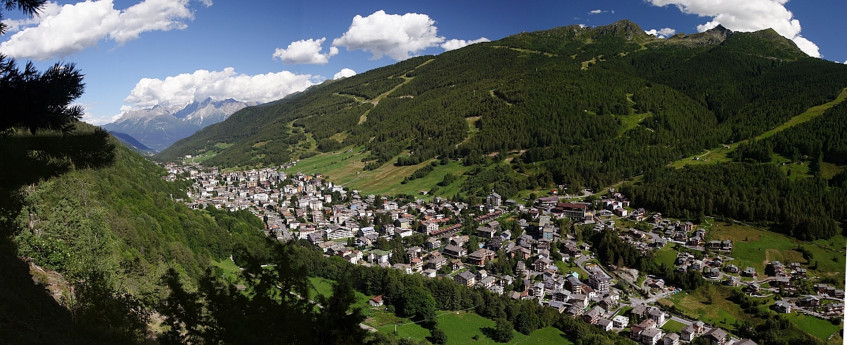
Teglio

Teglio in Valtellina è la casa del pizzocchero, piatto tipico della tradizione valtellinese, ma non solo. Borgo di rilevanza storica e terra abitata fin dai tempi preistorici, vanta un ampio patrimonio culturale e artistico, contornato dalle bellezze naturali.
Teglio

Huts at Alpe Mara- Alpe Cavallina

Montagna in Valtellina

Maniva in the heart of the valley

http://www.bresciatourism.it/content/uploads/2013/01/maniva-ski-1200x625.jpg

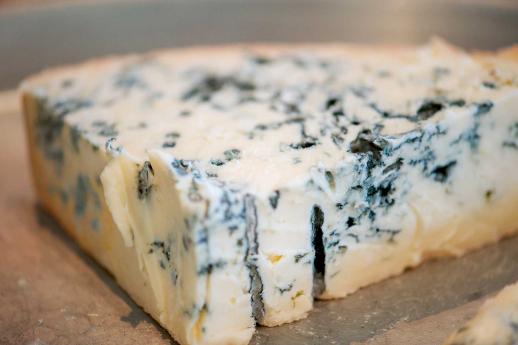
Traditional cheeses of lombardy

It is from Lombardy that some of the most famous Italian cheeses come from all over the world
Traditional cheeses of Lombardy

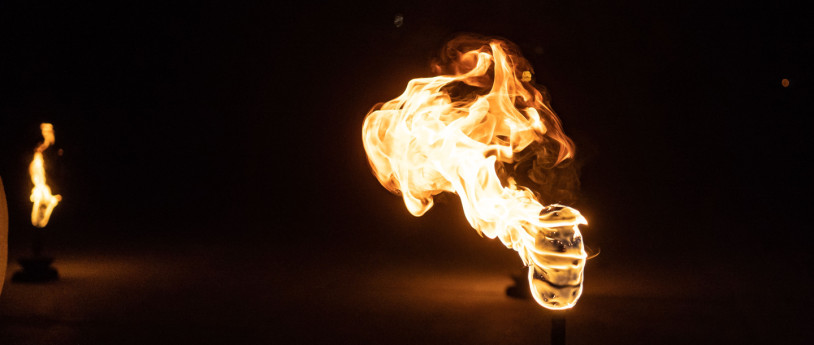
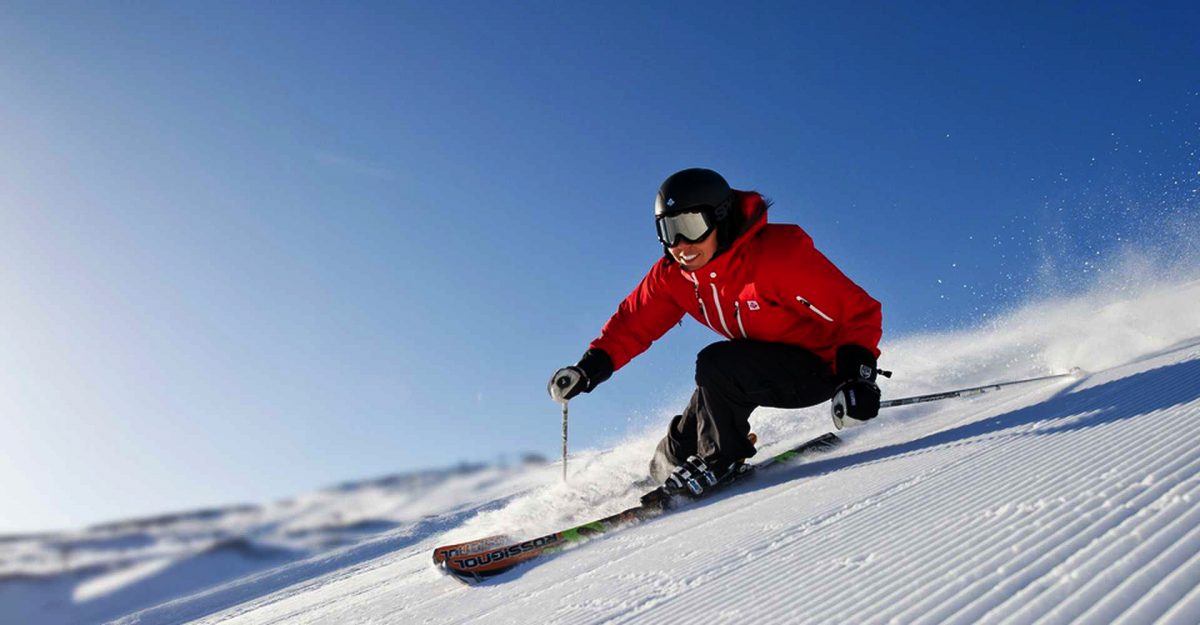
New Year’s Eve Torchlight parade in Colere

The night of New Year’s Eve comes alight with atmosphere and tradition in Colere. The village, located on the slopes of Presolana and Mount Ferrante, celebrates the arrival of the new year with a beautiful torchlight parade, with its stunning procession of lights at the foot of the mountains.   On 31 December, as well as the torchlight parade, the nearby Schilpario, comes to life in the late afternoon, with snacks, distribution of torches, and a walk up to Paradiso, followed by the torchlight parade on skis, then a firework display. Colere still has an atmosphere all its own: although it has experienced a recent boom in tourism, it still preserves all the authentic heart of a mountain village, with its meadows, traditions, and panoramic views, all waiting to be discovered.  Its mountains are a point of reference for winter sports: the great exposure and snow covering make it a great place for alpine skiing, cross-country skiing and snow activities for a large part of the season. The atmosphere of the village creates the perfect setting for end of year activities and winter thrills at altitude. 
(Ph: in-lombardia I Mille)

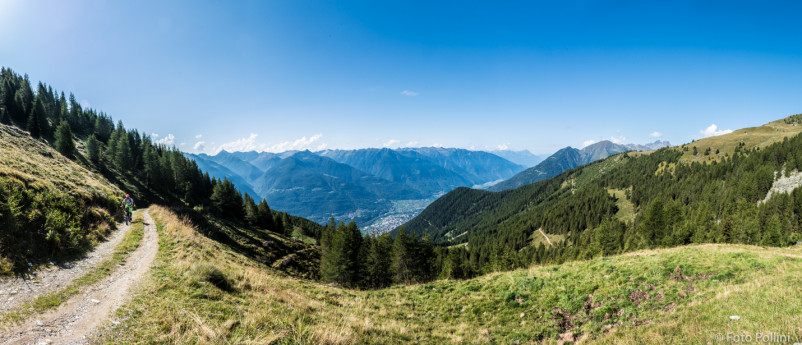
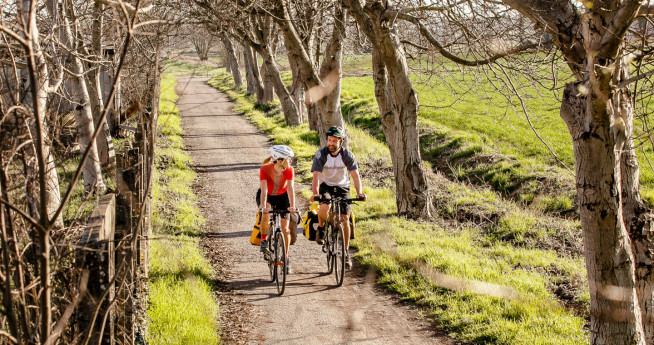
It's September, so let's get pedalling!

Autumn is the best season for exploring Lombardy properly, on two wheels
It's September, so let's get pedalling!