I found 25 results for crespi d'adda

From Lecco to Cassano d'Adda

From Lecco to Cassano d'Adda

West Adda cycle route

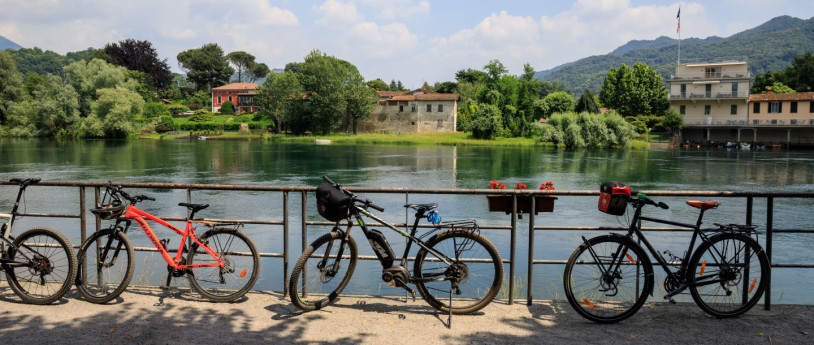
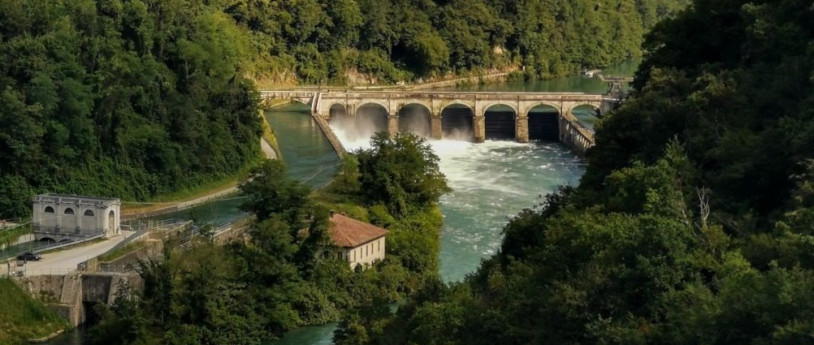
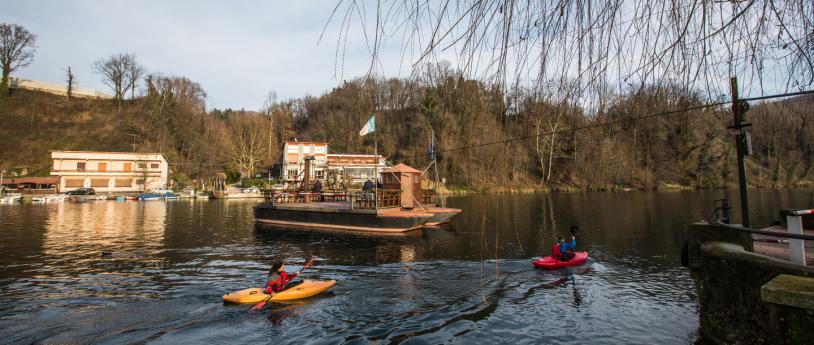
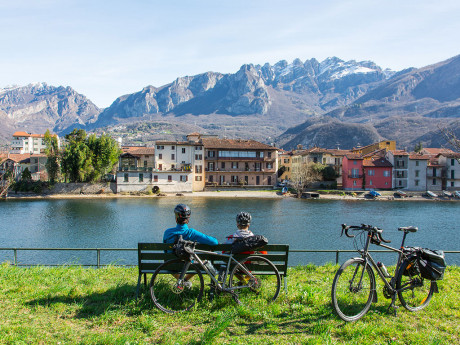
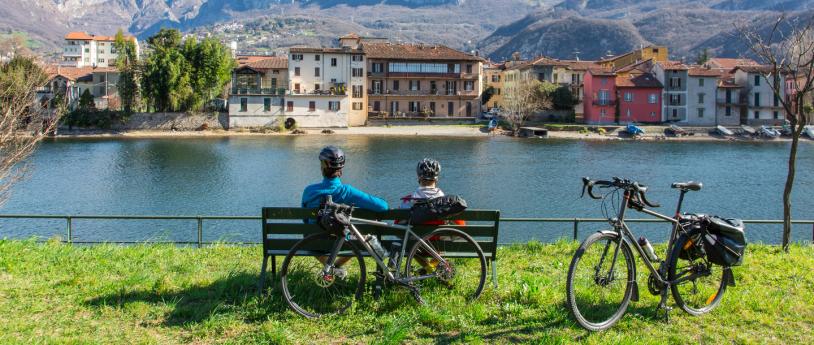
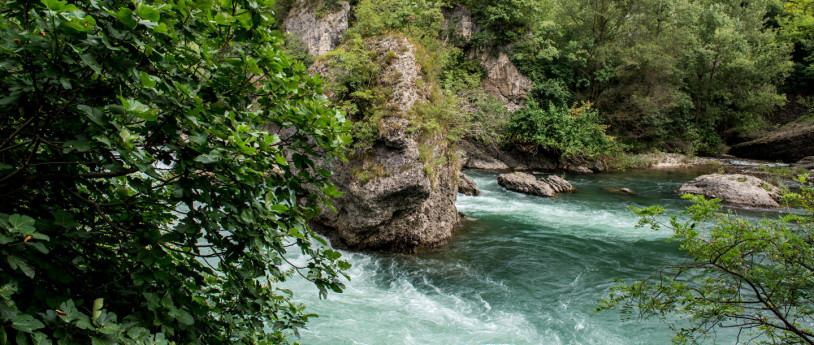
A fascinating route that combines nature, history and human ingenuity, the West Adda cycle route winds its way along the river between Lecco and Trezzo sull’Adda for about 50 kilometres. The recommended starting point is Pescate, where the river leaves Lake Como and flows southwards. In the first few kilometres, the route flanks Lake Garlate, with the Monte Barro Natural Park in the background, along with Lake Olginate. Most of the route is flat, with surfaced sections and dirt trails, passing through areas of natural interest. Herons, coots and kingfishers can all be spotted among the trees on the lake’s shores. The route also offers several points of historic and cultural interest, such as Leonardo da Vinci’s ferry in Imbersago, the Iron bridge at Paderno d’Adda, and the Sanctuary of Santa Maria della Rocchetta. To the south, the cycle route passes near several hydroelectric power stations, while near Tresso, is the Workers’ Village of Crespi d’Adda, a UNESCO world heritage site. The itinerary ends in Trezzo sull’Adda, dominated by a Visconti Castle, although anyone wishing to continue the route can follow the trail from Martesana to Cassano d’Adda and Milan. This is a route for anyone in any season, even if spring and autumn offer the most colourful, charming scenery.
West Adda cycle route

Brunate a view on the Belle Époque

Visit the "Balcony on the Alps".
Outdoor trip to Brunate

Six things to do with children in Lombardy

Museums, Indiana Jones-style adventures and school farms. Discover Lombardy for children
Vista di Grosio

The Church of St. Alexander: a Baroque jewel

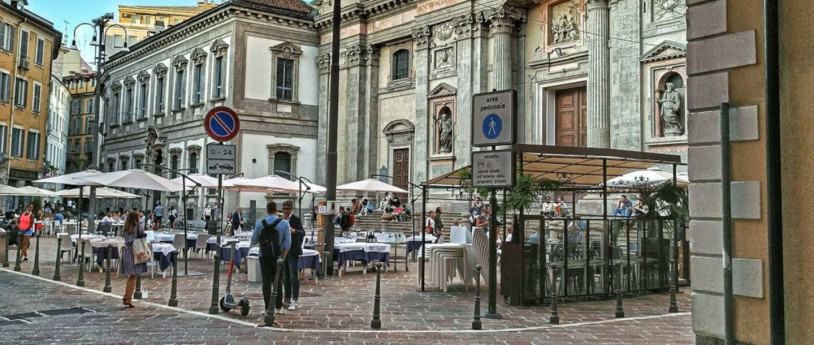
A few steps away  from the Duomo, somewhat hidden, reached from some of the cross streets of Via Mazzini or Via Torino, or still at the exit of the Missori subway station, is the charming Piazza di Sant'Alessandro with its 17th-century church of the same name.   It is a corner of extraordinary beauty, magically striking and forcing the passerby or tourist to stop and enjoy this totally unexpected Milanese glimpse. It does not feel like being in Milan, it feels like going back in time or being in some other location. In the morning there is a lively bustle of university students and professionals, at sunset the square quiets down becoming even more beautiful! On fine evenings you may happen to find a pianist in the center of the square. It is a lovely place and ideal for stopping for an aperitif. The name of the square is the same as the imposing church of the same name located there, Sant'Alessandro in Zebedei. The Basilica di Sant'Alessandro has ancient origins dating back to 1590 at the behest of the Barnabites, and in 1602 Cardinal Federigo Borromeo laid the foundation stone. The project, entrusted to Lorenzo Binago, led to the construction of the present church in Baroque style. Interesting is the particular name given to the church: Zebedia, was in fact the name of the judge of the Roman prisons that stood on the site of the present church. The Baroque-style church has many frescoes inside that embellish it.Already from the outside one notices the size of the church, but as soon as one enters, its vastness stands out; this is also given by the darkness that reigns inside, given the few and small windows. Among the different paintings of interest inside are G.B. Ossona's Martyrdom of St. Pancrazio and a series of works by Camillo Procaccini, scattered in every corner of the church, such as the Assumption of Mary or the Nativity, and more works by Daniele Crespi such as the Adoration of the Magi. The hours to visit it, on weekdays, are 7 a.m. to noon and 4 p.m. to 7 p.m., while on holidays you can enter it from 9:30 a.m. to noon and 4:15 p.m. to 7 p.m.This unusual glimpse of Milan with the church and its small square are definitely worth a visit. (Ph Ig: @decocinaelaprendiz)

Park North Adda

Adda con Leonardo

This path borders the western bank of Adda river going south, and then yp along the eastern bank.   The ride starts from Imbersago direction south, going through Robbiate and direction south, going through Robbiate and arriving at Paderno d'Adda.Following the villages along the western bank of the river, it goes toward Colnago and it crosses SP2, taking it in direction for Trezzo D'Adda. From here, it you want you can even try a diversion to Vaprio d'Adda, where Leonardo da Vinci spent for 7 years, and then fo go back up foward Crespi. From here. you have to take SP 170, riding your two-wheel racer for around 20 Km, until you arrive in Brivio, the end ot your path.  Places to visit: Imbersago: Surrounded by hills and chestnut woods, with a view of Grigne and Resegone. Here you can find the famous ferry created by Leonardo da Vinci working thanks to the drift only. Paderno d'Adda: Settled in the middle of Northern Adda Park, where you can find the Da Vinci ecomuseum, too. Here you can find the Paderno bridge, dating back to 1887/89, where nowadays there's the railway Seregno-Bergamo, renowned as an engineering wonder. Moreover, you can even visit the tamous waterway. Trezzo d'Adda: here is the millennia-long tower where died Barnabò Visconti, in addiction to the Visconti castle of 1300. Vaprio d'Adda: Leonardo lived here trom 1507 until 1513, it is betteto underline the traces and the signs left by the artist, In addiction to this,this village is settled in the Northern Adda Park, the pertect place for verdant walks and rides. Brivio: this is an old town center with a small Jewish suburb on the river bank and where you can find anamazing 3,5 Km long bicycle and pedestrian lane. 

Palazzo Marliani Cicogna

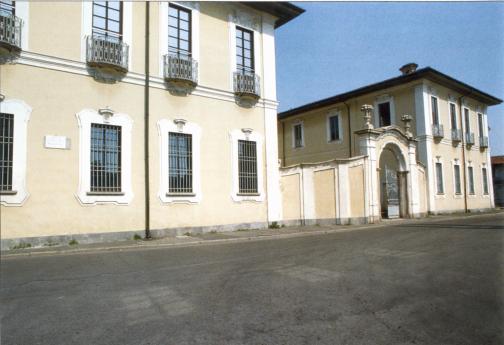
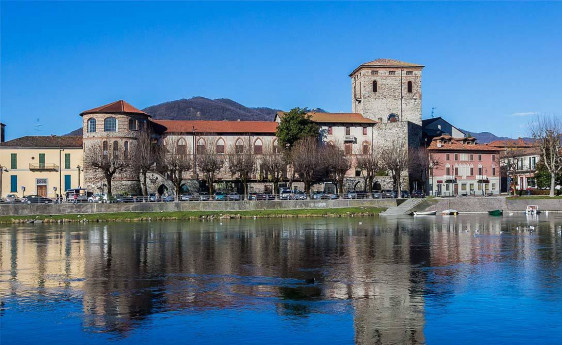
The civic museum of Palazzo Marliani-Cicogna houses a vast collection of artworks owned by the city, and was opened to the public in 1990. The structure's restoration, which began in the 1980s and was completed in the year 2002, brought to light a number of the building's historical aspects, including the wine cellar and stables, which date back to the sixteenth century, as well as a series of eighteenth-century ceiling paintings and decorations. The collection's works, which consist in some 200 paintings, frescoes, sculptures, drawings and prints, are grouped according to thematic, stylistic or historical criteria. They range from local religious works, to a few significant works of Lombard Mannerism, even including paintings by important artists from the town of Busto Arsizio itself: such as Biagio Bellotti (1714-1789) and Giuseppe Bossi (1777-1815). The bulk of the work documents the period of late Lombard Romanticism, featuring local artists who mainly worked out of Milan, such as Enrico Crespi and Emilio Magistretti. There are a large number of works by Arturo Tosi, also a native of the city, along with a rich selection of pieces by artists who were, or have been, active in the area from the early twentieth century up until to the present. Others include: Claudio Olivieri, Tino Repetto, Enrico Della Torre, Claudio Rotta Loria, Giorgio Albertini, Attilio Forgioli, Gianfranco Pardi, Sergio Sarri, Giancarlo Ossola, Alberto Venditti, and more. Many of the contemporary artworks come from the various editions of the Premio di Pittura Città di Busto Arsizio (The "City of Busto Arsizio Painting Award"), which was held biannually from 1996 until 2004. Since the time of its opening, the museum has hosted numerous temporary exhibitions of figurative art and historical documentary works, as well as various educational initiatives. The museum's educational services include workshops and interactive guided tours of the permanent collection in both English and French, as well as themed activities in honour of the temporary exhibits.
Palazzo Marliani Cicogna

From Lecco to Milan following the Adda

From Lecco to Milan following the Adda

Bergamo: włoskie arcydzieło

To miasto, które ma podwójną wartość a jego terytorium jest bogate w przyrodę, sztukę i kulturę
Bergamo: włoskie arcydzieło

From Lecco to the Martesana Canal

Woods and canals studied by the Renaissance Genius. Inspiring mountains. Ferries that operate with the current.
Borgo di Pescarenico on the Adda river

Il sentiero di Leonardo

Un percorso a piedi di 540 Km sui luoghi leonardeschi
Il sentiero di Leonardo