- Art & Culture
- Lifestyle
Milan, a novel city
Discovering the writers of the past, between the places and the atmospheres of Milan that have inspired great masterpieces of literature

Every Italian child learns in school that Alessandro Manzoni’s The Betrothed was the first Italian novel. Is it purely coincidental that an author from Milan who wrote a story set in the heart of Lombardy achieved this titanic feat?
Probably not, given that in over 200 years countless novels have been set under Lombardy’s famous sky “so beautiful when it’s beautiful”. It all began with “That branch of the Lake of Como, which turns towards the south.” We can still retrace the footsteps of Renzo and Lucia, Don Rodrigo and his thugs, the nun of Monza, Fra’ Cristoforo and the Unnamed by following one of the many itineraries dedicated to Manzoni and his work: in Lecco and the surrounding areas visitors can tour Villa Manzoni and its museum, Lucia’s house in Acquate, Don Rodrigo’s villa, Don Abbondio’s church in Olate, the Unnamed’s castle, near Vercurago, a tall, menacing building overlooking Lake Garlate, and the Capuchin monastery in Pescarenico where Fra’ Cristoforo lived.
Not to mention Milan: what is left of the Lazaret, for example, in the street that bears its name and in Via S. Gregorio; or the bakery Forno delle Grucce in Corso Vittorio Emanuele at numbers 3-5. Then there are all the places related to Manzoni the author, his former home, now a museum, in Via del Morone, his statue in Piazza San Fedele and his grave at the Famedio, the memorial chapel of the Monumental Cemetery.
Milan, crossroads of people and cultures, has provided inspiration for many writers. While Manzoni was busy outlining, writing and rewriting The Betrothed, the great French writer Stendhal, who arrived on the Navigli canals with Napoleon’s army, declared Milan his ideal city and requested the inscription on his gravestone to say, in Italian: “Arrigo Beyle [Stendhal was Henry Beyle’s pen name], Milanese”.
Carlo Porta, was friend with both Manzoni and Stendhal and despite not being a novelist, his poems, written in the local dialect, are true romances; his characters’ stories, from the cowardly, tragic-comical Giovannin Bongee to Ninetta, prostitute and proto-feminist, from Marchionn di Gamb-Avert, the melancholic and crippled tavern musician to the feeble and pompous marchioness Donna Fabia Fabron de’ Fabrian, all take place on the stage of some of Milan’s most recognisable landmarks such as Piazza Vetra and the Verziere – the herb market, which is today home to Carlo Porta’s statue –, Via della Commenda and the parvise of Santa Maria presso San Celso church.
Stendhal was not the only foreigner to fall under Milan’s literary spell: Mark Twain, visiting at the end of the 19th century was amazed at the Duomo’s majestic facade, and greatly admired the Arena Civica, which some malicious tongues claimed he believed to be a Roman ruin. Years later his fellow countryman, Ernest Hemingway, working as a war reporter with the Red Cross, was wounded in the region of Veneto in 1918 and transported to a Milanese hospital in Via Armorari, where he met, and subsequently fell in love with, the nurse Agnes von Kurowksy. In his letters and his novel Farewell to Arms, Hemingway remembers snippets of his time in Milan, especially the shops in the city centre and at the Galleria Vittorio Emanuele II, and the afternoons spent at the San Siro Hippodrome.
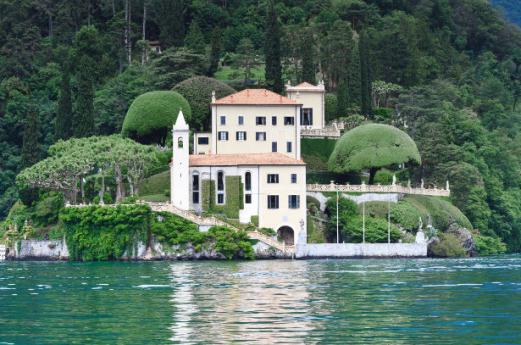
But there are also many traces of famous novels on the shores of the lakes. From Lake Maggiore, Luino, the surrounding valleys – Valcuvia, Val Germanasca – jetties, piazzas, villas and pathways amongst the vegetable gardens where Piero Chiara set the scene for the epic tale of his small universe; to the theatre set on the shores of Lake Como, in the town of Bellano, by a more recent imitation of Chiara, Andrea Vitali, or the shores of Lake Lugano, near Como where Antonio Fogazzaro’s Piccolo Mondo Antico is set.
The Vittoriale, in Gardone Riviera on the western shores of Lake Garda, where the poet D’Annunzio retired and spent his final years (1921-1938), is another must on any literary buff’s bucket list.
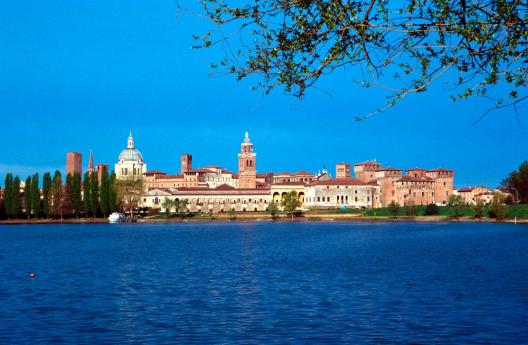
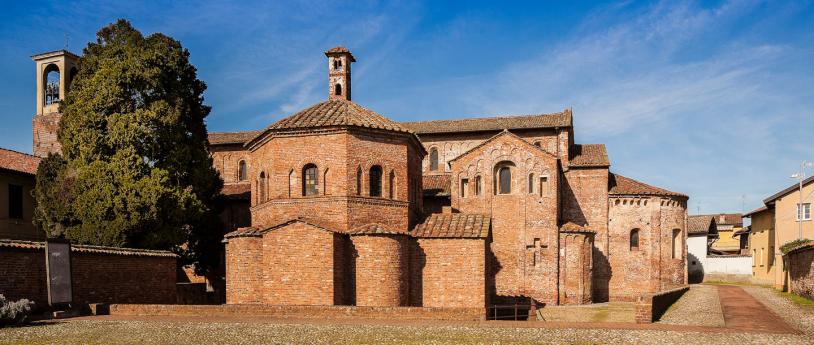
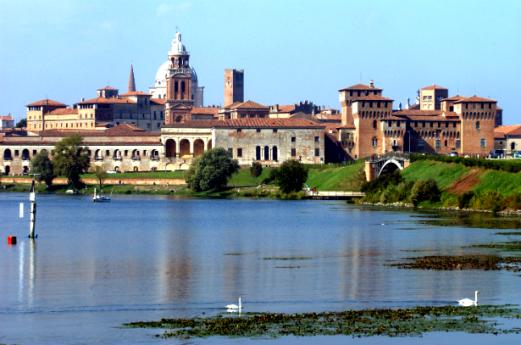
Two of Maria Bellonci’s historical short stories take place in the majestic setting of the Palazzo Ducale in Mantua. Lucio Mastronardi sets his stories of teachers, shoemakers, and southern immigrants in the town of Vigevano in his vivid novels. Alberto Arbasino portrays the years of the economic boom in the city of Lodi, amidst brash new-found opulence, Alfa Romeo sports cars and agricultural wealth in his novel Bella di Lodi. Last, but not least, comes the low-lying area between the city of Pavia, the Ticino and the Po rivers, where Gianni Brera’s novels are set amid hunting parties and the area’s familiar fog.