I found 45 results for foliage

Discover Bienno in autumn

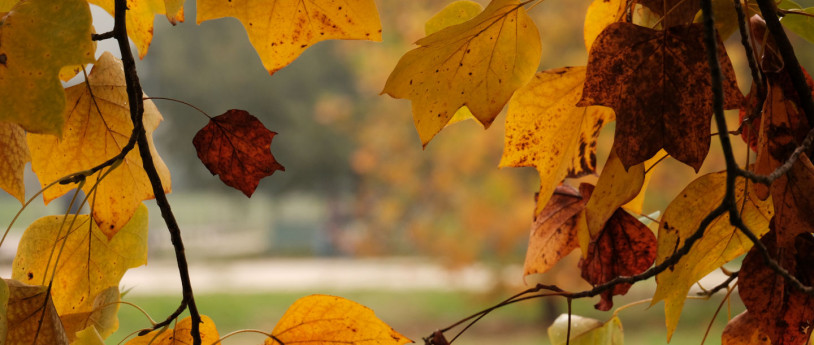
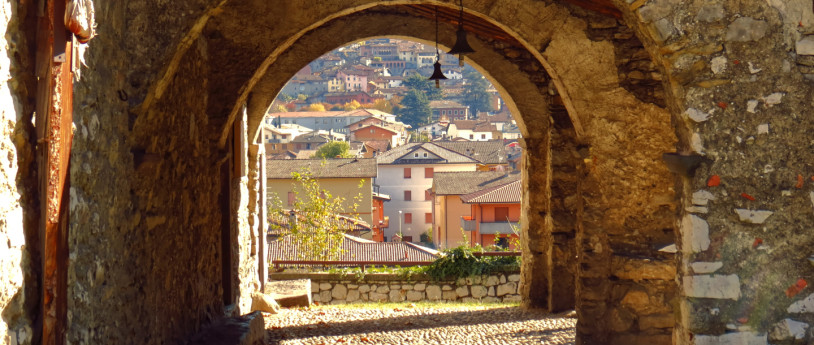
Bienno, in the heart of the Valle Camonica, is a village that seems to be suspended in time. The stone houses, hidden courtyards, and cobbled streets tell us of centuries of daily living and the work of the craftsman. Wrought iron work is still the main activity here. The sound of the anvil being struck is still heard in the streets, the mark of a tradition that has never been interrupted.    Strolling through the streets means entering a village that has preserved its identity intact, and for which it has received two important awards: the Orange Flag from the Italian Touring Club, and inclusion in the list of Italy’s most beautiful villages. These awards are reflected in the warm welcome offered by the inhabitants and the authentic atmosphere that you breathe in with every step. The centre of the village offers elegant palazzos and spaces dedicated to art:  Palazzo Simoni Fè, now home to an art gallery, Palazzo Francesconi Rebajoli, and Casa Valiga, or Casa degli Artisti with its exhibitions and workshops that showcase contemporary creativity. The Parish Church of Santi Faustino e Giovita, with its frescos, and the Hermitage of Santissimi Pietro e Paolo, immersed in the countryside just outside the village, are also well worth a visit and offer splendid panoramic views. The woods around the village light up with red and gold in autumn, while the scent of wood and chestnuts will accompany your walks. The trails setting out from the centre offer views of the valley’s foliage, with routes that will take you to the chestnut grove, Castagneto di Prestine, ideal for walking on the crisp leaves, in a unique atmosphere. Trails and woods lead to refuges and valley passes that are perfect for lovers of quiet walks in a peaceful autumnal setting. And to conclude your visit, the local cuisine, with its casoncelli filled pasta, polenta, local cheeses, and spongada, a typical cake made in the valley, star dishes, to be savoured with a glass of red wine or accompanied by tea made with mountain herbs. Bienno in autumn is an all-round experience: history, nature, and crafts all come together in a village that invites you to stay, breathe in the atmosphere, and savour the slow rhythm of the valley.  
(Ph: in-lombardia IMille)

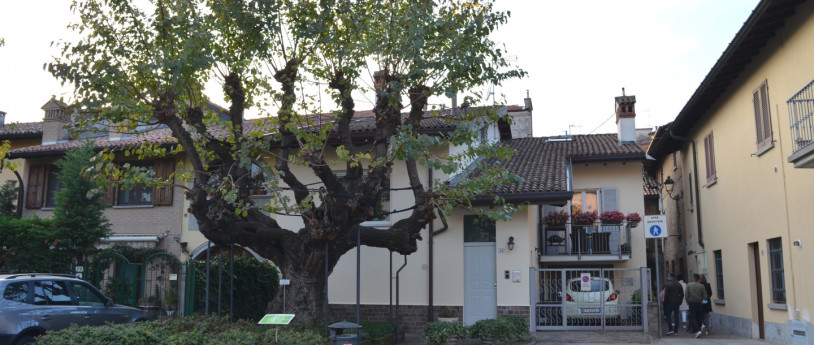
The Mulberry Tree of Cassano d'Adda

The history that distinguishes the white mulberry of Cassano d'Adda is long, as is that of the place that hosts it.

Weddings in the woods of Lombardy, immersed in a magical world of green

Lombardy is the perfect place to get married in nature: magical views and fairy-tale settings make for an idyllic wedding in the woods
Weddings in the woods of Lombardy, immersed in a magical world of green

From Desenzano del Garda to Mantua

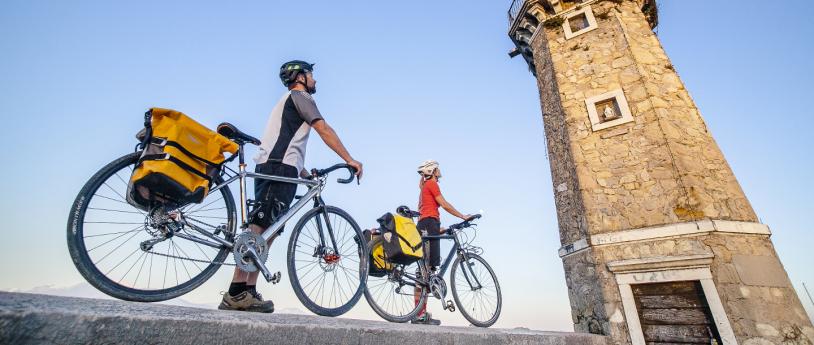
Featuring mills, lotus flowers and strips of riverine forest, the Mincio cycleway is the birthplace of cycling tourism in Lombardy
Il faro di Desenzano del Garda

In Valtellina, in the Gigiàt forest.

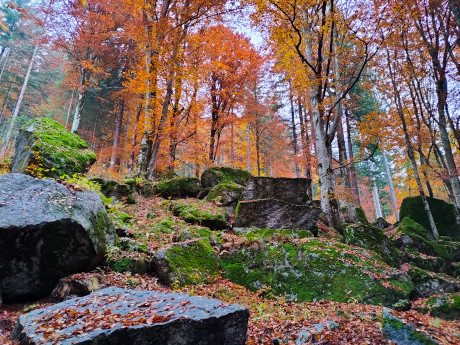
Autumn in Valtellina is a magical time. This proposal is among the easiest walks in the area, but is still able to fully capture the beauty of the colors of this season. It is a path for everyone that starts from the village of San Martino, enters the Forest of Bagni di Masino until it reaches the old thermal structure.Walking in the silence of the small forest area, it is possible to admire tall colorful beech trees, huge erratic boulders covered with green moss, birch trees with yellow tones and immense expanses of red leaves. The forest, within which you immerse yourself, is included in the Foreste di Lombardia circuit and consists of both the area around the Bagni di Masino municipality and the nearby Val di Mello. To reach the starting point of the hike, you have to take the SP9 and cross the entire Masino Valley until you reach San Martino. Once in the village it is possible to find several pay parking lots (7€ per day), the most convenient is definitely the one located next to the tourist office.Once you have parked your car you go to the info point and pass it, reaching the dirt parking lots located behind it. Going up the parking area you will easily spot a sign indicating "Bagni di Masino". You then take the only path present (CAI 455) immediately plunging into the woods and walking on a wonderful colored carpet of leaves and moss. The autumn colors are already clearly visible, but what is most striking are the huge granite boulders entirely covered with green moss and scatteredly arranged among the large beech and fir trees. In certain parts of the trail these rocks bend in on themselves, going on to create striking caves and small tunnels that are often crossed by the trail. After a 30-minute walk, near the campsite, you reach the first parking area in the valley. In this area the forest widens a bit, opening up the view of the mountain ranges that surround the valley. The mountains are not particularly high, but all their walls are literally covered with small patches of color: the trees manage to grow on the slopes, and at this time their golden foliage creates a truly unique spectacle. The light fog I found during my hike only made it even more impressive. The trail now continues level on a wide dirt road and then enters an area full of gravel and rocks. However, the trail is always clearly visible and very easy to follow. It continues on a slight incline, back into the woods, until it reaches the paved road. Almost the entire route is to be walked on a normal mountain trail, but there are a couple of sections where it is necessary to walk a few meters even on asphalt. Since the end point is also directly accessible from the road, it is possible to decide to exit the trail to walk along the roadway. After passing a narrow hairpin bend in the road, before taking the path again that cuts right into a meadow, you can veer to the right to reach one of the most spectacular points of the entire walk. In this area the forest becomes practically flat, and the small streams flowing between the rocks generate shallow pools of clear water. Looking up you can see a myriad of huge boulders almost entirely covered by a cloak of wet moss, and just beyond, small shrubs, beeches and huge firs go to cover the sky with their foliage creating a magnificent explosion of bright greens, oranges and deep reds. The advice, therefore, is to leave the proposed trail briefly and wander through this fairy-tale-toned grove to go for new vistas and different colors. After a long break you can resume the walk, the trail in this section begins to cut through the drawn hairpin bends of the road, allowing you to arrive much more quickly at an elevation of 1,150 m. With each new step it seems that the colors want to light up more and more, but it is when you reach the asphalt road again that the most beautiful spectacle of the Bagni di Masino Forest is shown. Here the asphalt is literally swallowed up by a fiery red forest, the fallen leaves completely cover the side of the road and the immense trees close in on themselves going to create a huge natural tunnel. It seems as if we have entered a painting that is too good to be true, and one cannot help but admire with open mouth what nature is giving us. While walking along the roadway is really inviting (you will do it on the way back), the trail now involves veering to the left and climbing up the steep forest. This is probably the most complex part of the entire hike, but it requires only a few minutes of effort, as the trail almost immediately stops climbing and returns to level ground. The forest is particularly dense, and the foliage of the trees will easily keep you out of the sun or light rain. What is most astonishing, however, is that an endless carpet of red leaves completely covers the entire area, going almost entirely to hide the ground. This kind of situation obviously cannot last for many days, and one must be lucky enough to be there towards the end of autumn, before the first snowfall. Walking on level ground one remains in this fairy-tale setting for several minutes, until one reaches the end of the forest. Here begins a short tourist trail, called the "sensory trail," which is very wide and stretches alongside the old spa complex. The trail is divided into nine stages with special notice boards, which display information about the local flora and fauna. Leaving the woods, take the wide path that turns immediately left and leads close to the creek. The section is very well maintained: there are several benches where you can stop, a wooden handrail separates the path from the creek, and the bottom is free of potholes or roots. After a few steps, you can already see a notice board that has some useful information about the roe deer, alpine chamois, brown bear, fox, marten, and gigiàt. The first 5 are animals that inhabit these mountains and that you can see if you are lucky enough; the last on the list, on the other hand, is a mythological creature considered the symbol of the valley. It is reportedly a huge and frightening animal, a cross between a billy goat and a chamois, however, the evidence is not very clear. A depiction of it can be seen on the wall of a house at the beginning of Ezio Vanoni Street in San Martino. The painting is accompanied by the following phrase : "El Gigiat, nume tutelare de esta splendida valle. Good to the man who nature respects, bad luck to those who find him disrespectful. Honors and glory to those who would see el and news of it." Continuing on we come to a large clearing bordered on the right by the Masino stream and filled with the ever-present erratic boulders. There are several small tables with cooking areas, so this is the perfect place to stop for something to eat. At the edge of the meadow is the tourist office and a curious construction consisting of 4 monoliths, formed by the 4 main minerals of the valley. When I was there a light drizzle and cold wind did not make the break too relaxing, in summer however this place is absolutely perfect to stay a little cool and breathe mountain air. Before heading back, it is possible to pay a quick visit to the small waterfall that generates the stream. To reach it, simply pass the picnic area by turning right. Here a sign will indicate that the waterfall is only a 5-minute walk away. You will then continue through a wide meadow surrounded by golden yellow-leafed birch trees and, after a very short climb, you will begin to hear the roar of the water on the right. The waterfall is not huge, but the context within which it is set is truly splendid: colorful trees and dark rock blend to create a beautiful play of contrasts, further enhanced by the blue reflections of the water that accumulates in small pools. The waterfall is the upper limit of the hike and now all that remains is to return to the parking lot. On the way back, however, it is possible to take a couple of detours to see two other really interesting spots. Returning from the waterfall one turns left with the goal of bypassing the spa building from the opposite side. After a few steps you come to an ancient little rock bridge invaded by the ubiquitous moss, which also climbs here. Crossing the bridge, one begins to skirt the structure of the former baths until reaching a small cave where from a small fountain, spring water at 38 °C flows out. Legend has it that this spring was discovered by a shepherd who, determined to investigate why one of his cows was making much more milk than the others, followed her to this area until he discovered that the animal was drinking from this spring. If the story were true, however, this would be a very old fact; in fact, the thermal waters in the valley had been known since the 1400s and over the centuries had attracted nobles from various Italian and Swiss cities. The Bagni di Masino spa that can be seen today was in operation for several years. Since 2015 the facility has been closed due to geological hazards in the area. After warming up at the spring, one can continue until reaching a bulletin board marked "Val Masino." The following section allows you to rejoin the path taken on the outward journey; however, the advice is to turn right to enter the spa garden until you reach the small parking area at the end of the paved road. This detour from the dirt path serves to return to the beautiful red forest admired earlier. Walking on the roadway rejoins the path taken on the way out much more quickly, and you also get to visit this part of the forest in its entirety, which is probably also the most characteristic. So take time to admire the immense trees, the beautiful undergrowth, the red carpet of leaves, and the rain-soaked rocks invaded by moss. Although there is no precise path, it is still possible to get off the road and into the flatter areas of this fantastic color-laden picture. After a long break to take photographs you return to the beginning of the wooded area and, turning left, take the outward path again. In about 1 hour you reach the parking lot again. - Ph: Stefano Poma
In Valtellina, in the Gigiàt forest.

Boat trips on Lombardy's rivers

The waterways of Lombardy are perfect to discover the unspoilt green heart of the region
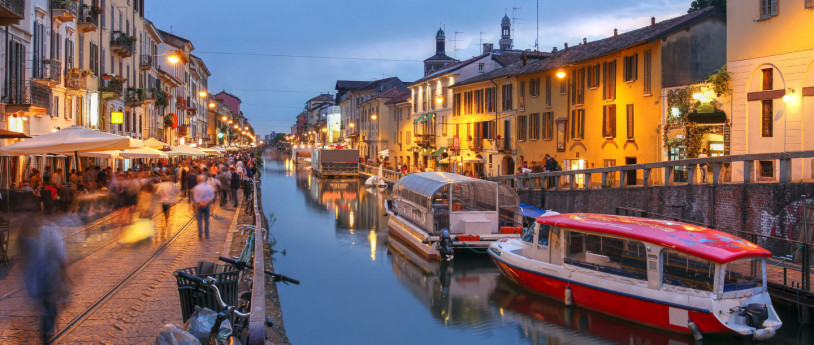
Boat trips on Lombardy's rivers - Navigli Milano

Valsassina and the Grigne

From one-day trips that anyone can enjoy, to climbing on the vertical walls of the Grigne, through to splendid hikes leading up to the mountain refuges
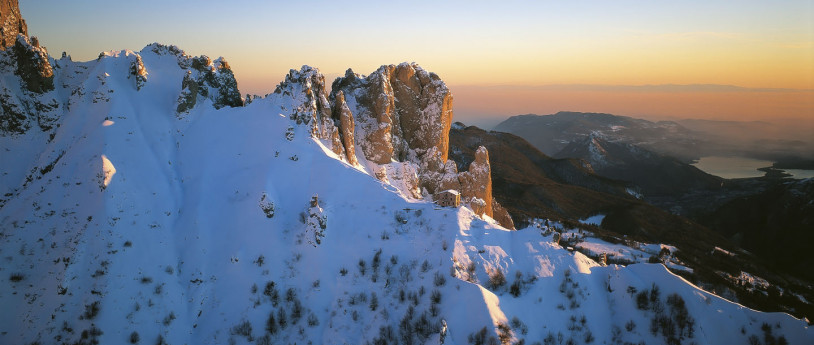
Valsassina and the Grigne

The glacial Forni Valley

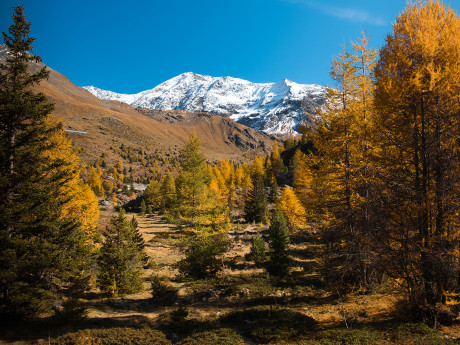
The loop walk proposed here, allows to walk through the entire Forni valley, located in the center of the Ortles - Cevedale group, a valley of glacial origin crossed by the impetuous Frodolfo stream fed by the glacier, whose slopes are carpeted with sparse groves of larches. The spectacle of this place is especially given by the incredible view of the imposing Forni glacier, the largest valley glacier in Italy, which becomes clearly visible already within a few minutes' walk from the parking lot and which makes this place absolutely unique in all the Central Alps. The trail is well marked with several colorful markings on the rocks and plenty of signs placed at the main junctions. Although it is classified as a hiking trail, there are very few complicated sections and, with a little care, it can be hiked by everyone. Although in autumn you may encounter some completely icy sections. For this reason, it is absolutely recommended to check for snow and bring crampons if you plan to tackle the trek from early October onward. After the first substantial snowfall, however, it is recommended to avoid this route, in favor of other easier proposals that have as their starting point the Forni parking lot or directly the village of Santa Caterina. From the village of Santa Caterina in Valfurva, taking the Forni communal road gives access to the Forni valley. The route tackles the ascent along the right slope, then reaches the base of the glacier and the Tibetan bridges placed right where the stream originates. The descent, on the other hand, is along the opposite slope, with the possibility of a stop at the Branca Refuge. The Glaciological Trail is probably the best route to be able to fully experience a hike in such an evocative place. Indeed, in spring the valley is famous for its beautiful blooms and herds of grazing animals; it will also not be rare to see marmots, chamois and stoats. In autumn, on the other hand, the explosion of colors is to be found in the foliage of the many larches scattered at the beginning of the valley. Whichever period you choose, however, the beauty of the glacier and the majesty of the Thirteen Peaks above it will remain the same. To get to the parking lot you have to reach the village of Santa Caterina, where you must purchase a ticket costing 5 euros at the tourist office. In low season and during some working days, however, the rules may change, and at certain times the road may be closed; for this reason it is recommended to contact the village tourist office in advance. From Santa Caterina you take the approximately 4-km-long Forni municipal road, which, although it has some somewhat narrow sections, is nevertheless always paved and well-maintained.At the end of the road you come to a very large dirt parking lot. There are plenty of parking spaces, but in the middle of summer there is always a high influx of people, resulting in the risk of not finding a free space. As soon as you get out of the car you immediately notice the Rifugio Forni, located in an elevated position just a few steps from the highest parking area. It is amazing to think how once upon a time in winter the glacier extended as far as here, actually going to cover the entire valley. Over the past 150 years the gradual retreat of the ice mass has been steady, and since the early 1900s the area has shrunk by 36 percent. As the hike continues, the traces of this sad phenomenon will become increasingly evident. To take the trail, one must reach a large bulletin board located at the end of the parking lot, then turn right and cross the creek; here a sign marks the beginning of the Lower Glaciological Trail (524) and the Upper Glaciological Trail (520), which coincide in the first part. The section now continues along a unique staircase made entirely of rocks and, after a short climb, enters a small grove of larches.In autumn this first part of the trail is quite a sight because of the yellow and orange colors of the grass and tree crowns. Unfortunately, from here it is not yet possible to admire the intense white of the Forni glacier, but even so it is definitely worth stopping for a few shots. The trail continues with a steady but not too challenging ascent to the detour with the High Glaciological Trail. Given the fall season, the proposed section is the Lower Glaciological Trail, both to be able to stay at a lower elevation and to have a better view of the larches, which are completely absent in the higher section. In summer, on the other hand, the choice depends on the time available and the altitude difference you plan to cover. Both paths, however, rejoin after a few kilometers, at the last stretch before reaching the glacier. Turning left you then remain on CAI path 524, which continues at half altitude with several never challenging ups and downs. For long stretches the trail becomes almost flat, allowing you to fully enjoy the walk through the forest. At about 2,250 m the trees begin to give way to classic high mountain vegetation, and it is in this part that the view can finally open up to the incredible beauty of the glacier and the snow-capped peak of Mount Peio. Many small crystalline streams, a sprinkling of snow on the few remaining shrubs and in the distance a huge mass of white ice: these are the glimpses that Valle dei Forni offers. As we continue, the trail moves further and further into the center of the valley until we reach the turnoff for Rifugio Branca (located on the opposite side of the stream). For those who are out of breath there is then the option of ending the ascent to the glacier here and continuing along a much gentler path that leads to the refuge in 30 minutes. For everyone else, my advice is to ignore the sign pointing to the hut and continue going straight ahead, not forgetting, however, a small detour to visit the two small wooden bridges in the middle of the valley that allow you to cross the stream and reach the hut. What begins now is probably the most complex stretch: from an altitude of 2,300 m you have to reach 2,500, along a path that becomes increasingly narrow and with a very rocky and uneven bottom. In autumn several sections unfortunately become covered with ice because of the many streams that run through them. If the ice sheets are not too extensive, it is possible to detour briefly off the trail remaining on drier sections, otherwise it is absolutely necessary to use crampons. To inquire about the status of the trail you can contact the tourist office in Santa Caterina or Bormio. Alternatively, it is possible to access the Branca hut website to view images from the webcam installed on the roof, which frames this very part of the trail. You then continue on a fairly steep section and after a couple of switchbacks you will see the sign indicating the Glaciologico Alto trail.Just after rejoining the High Trail begins what is probably one of the most spectacularly scenic areas of the entire hike. The huge snow-covered rocky peaks are now very close, and around the trail is a landscape rich in moraine debris deposited by the slow action of the glacier. Walking on a stony bottom and overcoming a small landslide, we come to a huge reddish rock formation characterized by a smooth surface full of small concavities where water is deposited; at one time the glacier front reached here and over the years has completely worked the rock face. A little more effort and finally the last stretch of ascent is made. The view now opens to the vast rocky plain at the base of the glacier. Here debris, dark earth and huge iron boulders mingle, creating a messy, almost melancholy, but nevertheless very fascinating landscape. Descending among small cairns of stone, always paying attention to the icy sections, one can now also turn back to the starting point to observe the entire section traversed along the lower part of the Forni Valley. The landscape from here is dominated by the Gran Zebrù massif (3,856 m). From this position the valley appears to be quite anonymous because of the dull colors of the grass, but looking into the distance one can see orange tips: the small forest next to the parking lot. Continuing along the trail, in 5 minutes you reach the first Tibetan bridge that allows you to cross a small stream. The first bridge is only a few meters long and is well secured, while the second bridge is much higher and crosses right over a particularly rushing section of the stream. If you have never walked across a Tibetan bridge walking over it will certainly be quite an experience. The small bridge is entirely enclosed by metal ropes, with which you can hold on to, so there is absolutely no danger. Just before the second bridge, you are right in the middle of the huge depression in the ground created by the action of the glacier; this is probably the best spot to admire it in its entirety. Before this beauty, it is truly impossible to remain indifferent, although astonishment can only soon give way to a certain sense of bitterness: the ice mass has broken shapes, several collapses are evident in the distance, and the nearest front is dirty and covered with debris. Unfortunately, climate change is leaving no escape for this spectacle of nature, and today the Forni glacier no longer exists as a unified mass, but has split into three distinct flows (eastern, western and central) clearly visible from this location, The trail continues straight to the Branca Shelter, but it is still possible to try to get closer to the lower ice tongue. Turning right then, it is possible to walk along an almost level path until reaching a small pond generated by melting ice.Walking along the shoreline of the small body of water, one is fortunate enough to admire the Forni glacier from a truly privileged position, while going around the lake on the right allows one to get even closer. The gradual melting is causing continuous changes in the surface of the glacier: the height of the wall is gradually decreasing, and small caves are constantly being formed and destroyed within it.Therefore, it is absolutely not recommended to try to enter or try to walk over the glacier area unless you are experienced or accompanied by a guide.In general, this entire alternative section should be walked very carefully by carefully assessing the dangers. If you don't feel up to it there is no problem, because the view is still magnificent even from the main trail. After crossing the second bridge, you reach yet another extremely scenic spot on this hike: a small lake that perfectly reflects Mount Gran Zebrù.After a few shots, we resume the descent to Rifugio Branca, where trail 520, after a wide left-hand bend, faces the descent inside a gully. This very short section is quite steep and quite slippery due to the presence of a small river that pours over the rocks. There are no lanyards or chains with which to hold on, so one must proceed with a steady step and be very careful.Once past this somewhat technical section, the trail begins to cut back into the middle of the meadows of the Forni valley and in a very few minutes leads us to the base of Rifugio Branca.The hut is closed in the fall, so it is convenient to consult their website for opening times.In the grassy clearing below the refuge the view is not comparable to that visible from the bridges, but it is still difficult not to stop and admire the view. The trail described now involves descending along trail number 524.This section is actually a wide dirt road used to reach Rifugio Branca by jeep directly from the Rifugio Forni parking lot. The descent then proceeds very expeditiously and without any particular glimpses that are different from the outward journey. Because it is so wide and well-trodden, the road can also be safely traveled at night with a flashlight, perhaps after spending the sunset right at the base of the glacier. In a little more than half an hour in this way the parking lot is reached again. In the summer period it is possible to break the hike in two by stopping for lunch at Rifugio Branca. From September/October, however, the hut is closed, so you will need to bring a packed lunch or decide to eat at the end of the hike right at Rifugio Forni or Rifugio Stella Alpina, located a few kilometers further down the valley along the road from Santa Caterina to the parking lot. - Ph: Stefano Poma
The glacial Forni Valley

Autumn aromas and flavours

A journey through the authentic local flavours and products that reflect the traditions of Lombardy - from land to table