I found 390 results for e-bike

5 Thing-to-do in Domaso

An amazing place for your active holiday on Lake Como
domaso cose fare

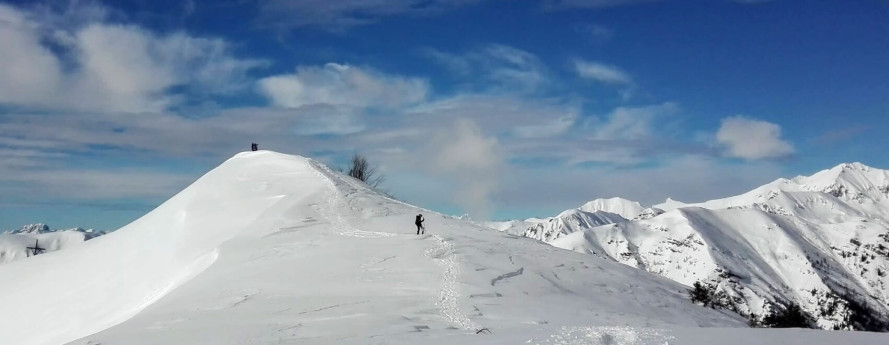
Brescia Nature, taste and traditions: Val Sabbia

From multiple-day treks with night-breaks at mountain huts, to shorter walks open to all: a charming valley for all tastes set against the background of the little lake Idro

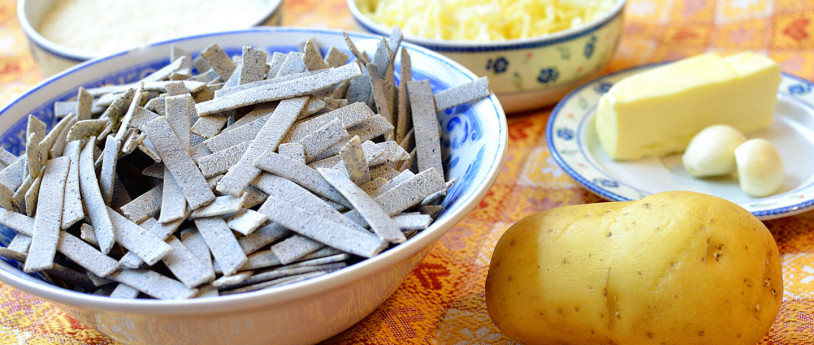
Typical Lombardy mountain dishes

Discover Lombardy's typical high-altitude dishes. Dive into traditional Alpine cuisine and its authentic flavours
Typical Lombardy mountain dishes - Pizzoccheri Valtellina

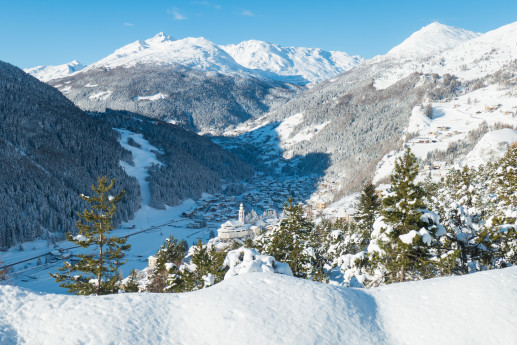
Infopoint Valdidentro

Welcome to Valdidentro, a short distance from Bormio and Livigno: the ideal destination for a wellness holiday surrounded by nature.

5 Thing-to-do in Gravedona

Visit Gravedona ed Uniti, a cozy town in North Lake Como
gravedona

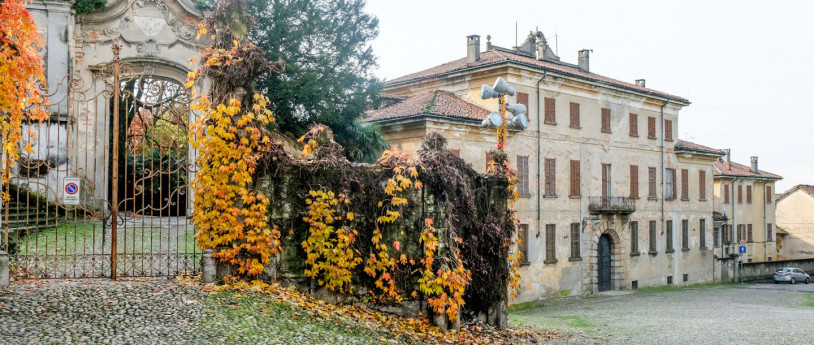
Meda

Brianza’s very own Sistine Chapel? The church of San Vittore. Find out what to see in Meda, the furniture capital of Monza e Brianza.
Meda

From Maiano Sant'Angelo Lodigiano to Ca' de Mazzi

An alternative route for the Fourth Stage of the Monk’s Trail
From Maiano Sant'Angelo Lodigiano to Ca' de Mazzi

5 Thing To Do in Mandello

The town of Moto Guzzi welcomes you!
borgo mandello lario

Way of St. Peter Martyr

Fourth stage of the Via Francigena Renana
Way of St. Peter

From the Abbey of Chiaravalle M.se to the Basilica of Santa Maria in Calvenzano

The second stage of the Cammino dei Monaci (Monks' Path) runs along the route of the Vettabbia, in the direction of Melegnano and Vizzolo Predabissi. The route, mostly on a mixed-use road, with some stretches of bicycle/pedestrian path, leads, after passing through the village of Chiaravalle and the industrial area of Sesto Ulteriano, to Civesio. From here, a short walk through the fields leads to Viboldone Abbey. This one, founded by the Humiliati in the 12th century and now animated by a community of Benedictine women, preserves, in its simple and rigorous architecture, a rich frescoed decoration from the second half of the 14th century, attributed to Giusto de' Menabuoi and Michelino da Besozzo. The next stop is in Mezzano, with the Ossuary dedicated to the Battle of the Giants and the small church of Santa Maria della Neve, then Pedriano and, finally, the center of Melegnano. The town has ancient origins-it is mentioned, in 333 A.D., by the Itinerarium Burdigalense because it is located at the ninth mile from Milan-and is situated on high ground near the Lambro River. The Mediceo castle is the architecture that strongly characterizes Melegnano: founded by Matteo I Visconti, it passed to the Brivio family in 1513, but was ceded to Gian Giacomo Medici known as the Medeghino in 1532, to whom we owe the rich interior decoration that celebrates its splendor. The minor basilica of St. John the Baptist is another small jewel of Melegnano: the earliest date for its presence is 1398, and inside it preserves part of the altarpiece whose execution, in 1506, was entrusted to Bergognone. Crossing Via Emilia, toward S.P.138 Pandina, we go to admire the basilica of Santa Maria in Calvenzano, completed in the late 11th century by Cluniac monks. Fascinating for its architecture, the stone portal at the entrance and the 14th-century apse frescoes (with the Coronation of the Virgin), it is also remembered because chronicles tell that the philosopher Boethius was killed here. STAGE 2 OF THE MONKS' WALK Technical information Starting point: Abbey of Chiaravalle M.se, Milan, Italy Point of arrival: Basilica of Santa Maria in Calvenzano, Vizzolo Predabissi Length 14.6 (km) Difficulty: easy Means of travel: on foot, by bike Route mapFrom the Abbey of Chiaravalle M.se to the Basilica of Santa Maria in Calvenzano, Vizzolo Predabissi - 14.6 km (14.6 mi) DISCOVER THE PATH OF THE MONKS AND ALL ITS STAGES
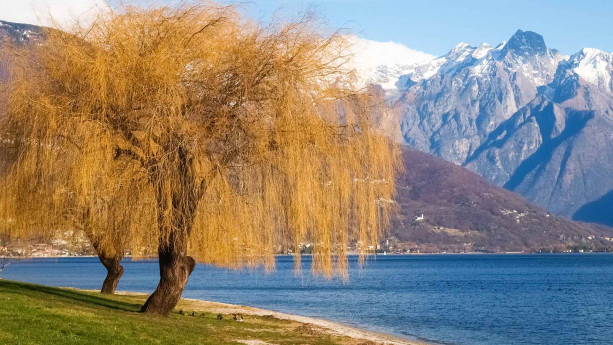
From the Abbey of Chiaravalle M.se to the Basilica of Santa Maria in Calvenzano

The oratory of San Biagio at Rossate farmstead.

Along the Muzza Canal, hidden in the fields, is a charming little oratory, with classical-Renaissance proportions, some believe designed by a young Bramante together with Bartolomeo Suardi, also known as Bramantino. The fine architecture is singular in its location because it is in the context of a rural nucleus almost lost in this upper Lodi countryside. The itinerary proposed here follows the Muzza Canal, one of the oldest in the Po Valley; in fact, one of its sections dates back to Roman times. The flowing of its waters will accompany the ride until reaching the village of Lavagna, an ancient feud of the Visconti family, and ending at the oratory of San Biagio. It should be kept in mind that the latter remains open on Saturdays, Sundays and holidays from 1 to 4:30 pm. The car is to be left in the municipality of Paullo, near the water house near Tarcisio Park. We immediately jump into the saddle and follow Via Martiri Villa Pompeiana and, just past the curious church of San Tarcisio, turn left along Via A. Manzoni. Shortly afterwards we reach the crossroads with via Alcide de Gasperi, on the left, and via Santa Maria Mazzarello, on the right, here the ride seems to have to stop for works but instead it is possible to pass through the construction site and, reach the crossroads with the Paullese. Here one must wait for the green light at a particularly slow traffic light to cross the provincial road and reach the hamlet of Conterico.From Conterico take the dirt bike path along the canal and follow it to the village of Lavagna. The views along the canal offer enchanting glimpses of the Orobie and Lario mountains. In particular, at the height of one esse of the watercourse, one can make out Resegone, which seen from here is almost unrecognizable. The waters of the canal are clear and it is not uncommon to see some swans. We get back on the road and pass under the ring road. You still continue on the dirt road when, almost suddenly, theoratory of San Biagio appears among the trees and remains on the opposite side of the canal. We continue and, in a short time, reach the bridge that allows us to gain the opposite bank of the Muzza. Here there is the silent hamlet of Lavagna, a village suspended in time. We pass the town's parish and take the Rossate street that accompanies us along several fields to our destination.The Oratory of San Biagio stands humbly in the green surroundings of the Rossate farmstead, small but with a subdued beauty that fascinates and excites. The rustic air of exposed brick matches the complex structure in a pleasantly unexpected way. Seeing the time-faded fresco on the facade, one is left to wonder what it looked like five hundred years ago.Poking around a bit in the surroundings one realizes that one can go around the surrounding fields and go to see the opposite side. When the exploration is over, one can return to the car by following the same route as on the way out. Shortly after leaving the oratory the view opens up with the Orobie Mountains as a backdrop to the four houses of Rossate-a breathtaking sight. - Cover image: @mattiabedetti
The oratory of St. Blaise in the green surroundings of the Rossate farmstead

The via Francigena

A road travelled for centuries by pilgrims, who headed South and made enormous sacrifices to reach the goal of the longed-for eternal city.