- Religious Tourism
Il Cammino di Santa Giulia
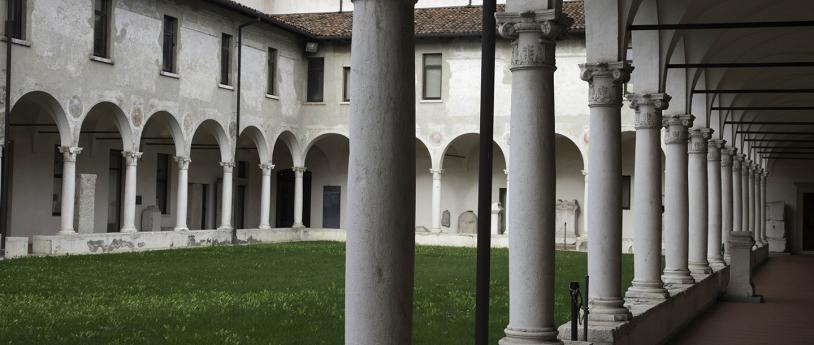
A treasure among treasures of this route: the monastery complex of Santa Giulia
The “Way” of Santa Giulia covers the route followed when the martyr’s remains were transported in the Lombard era from Porto Pisano (Livorno) to Brescia in the year 763 A.D.
It was the Lombard king, Desiderius, together with his wife Ansa, who ordered the relics of Santa Giulia to be preserved in the Benedictine convent of San Salvatore in Brescia, founded by them in 753 A.D. Very probably, the transportation was supported by the monasteries and the strongholds most firmly controlled by Lombard power.
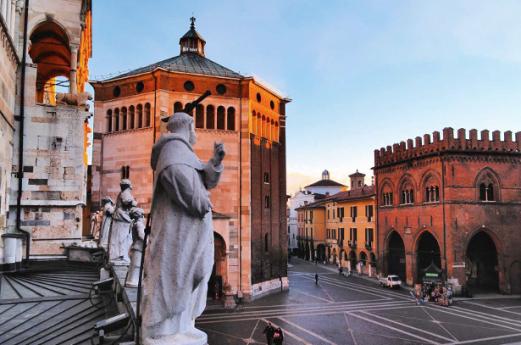
For this reason, the way crosses the transit districts most commonly used in the high Middle Ages, following stretches of the Via Francigena branch along the Via da Livorno, through Lucca, Garfagnana, the Apennines, Parma, Fontanellato, Busseto and Cremona
to the ancient Benedictine convent of Santa Giulia in Brescia.
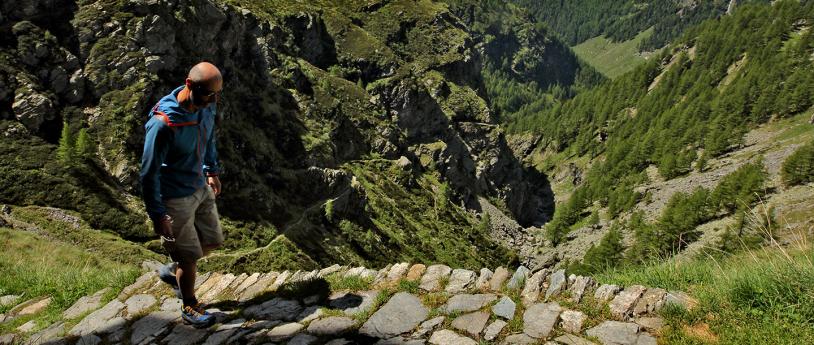
The route crosses Italian countryside neglected by the major routes, the Tuscan valleys, the woods of the Apennines and the Po Valley; a way to discover the nature and countryside of lands rich in art and history.
In Brescia, you will be enchanted by the Monastery of Santa Giulia, with the Basilica of San Salvatore and its beautiful frescoes and stuccoes from the Longobard era as well as the archaeological area of the Roman forum, another UNESCO Site. The exhibition design and location make the City Museum, housed in the monastery, unique of its kind.
Evidence of the history, art and spirituality of Brescia from the prehistoric era until modern times cover an exhibition area of 14,000 square metres. The strong link between the objects you will see on display and the walls that accommodate them is what makes the Museum so very special. The current collection of Santa Giulia numbers around 11,000 pieces, including Celtic findings such as helmets and phalerae, Roman portraits and bronzes, Lombard remains, grave goods, mosaics and frescos.
The symbol of the city is the Vittoria Alata, the large bronze Winged Victory dating back to the second quarter of the 1st century A.D. Discovered in 1826, it has recently undergone investigations and is the source of new clues for the analysis of the history of the ancient art and life of Brixia.
5 REASONS TO COVER THE ROUTE
1. Begin at Piazza Paolo VI, where there are two cathedrals: the Duomo Vecchio and the Duomo Nuovo, side by side but in two completely different styles. The first is Romanesque, the second is a mix of the Baroque and neoclassical, and both are worth
a visit.
2. You will visit the traditional sites that Alessandro Manzoni mentions in one of his most famous works, the Adelchi, set during the fall of Lombard rule.
3. If there are those among you who love engines, visit the Museo Mille Miglia, dedicated to the legendary motor racing circuit of historic cars, designed to recreate the stages of the race. You can admire some of the star motor cars!
4. As soon as you are ready for some tranquillity, head for one of the nearby lakes, framed by mountains and the hills of the Franciacorta vineyard. At Lake Iseo, you can walk along the shore and discover fishermen’s villages among the olive groves, while at Garda, you can enjoy the relaxation offered by the Terme di Sirmione.
5. Starting from the old city and climbing to the summit of Colle Cidneo and Brescia Castle, you will find two historic museums but, above all, a splendid view of the provincial capital from above and, on clear days, the surrounding countryside.