- Art & Culture
THE ISLAND OF THE MONASTERIES
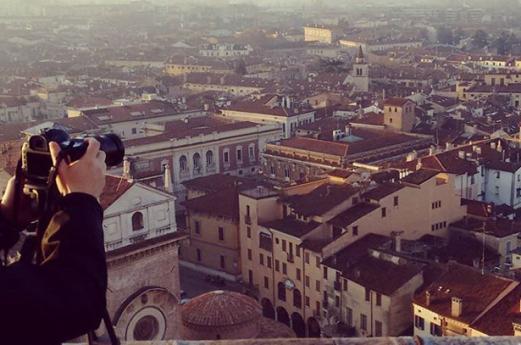
Cremona re-discovered a part of itself which has been forgotten and underestimated for a long time A place that is almost secret, nowadays.
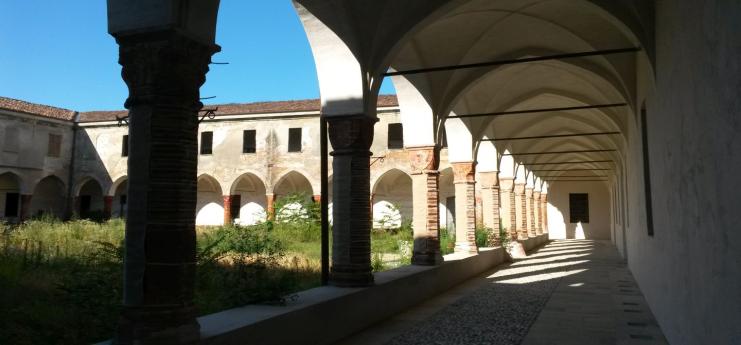
It is the area of the Ancient Monasteries, next to the town’s walls and near the river, just outside the town.
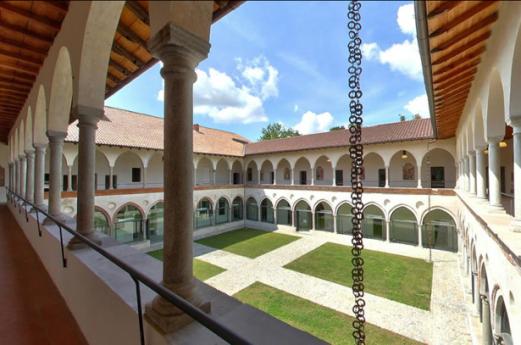
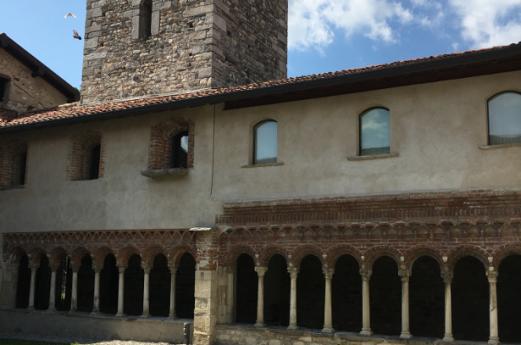
This area is extremely interesting from the artistic, historical and architectonic point of view: five monasteries San Benedetto, Santa Chiara, Corpus Domini, Santa Monica e dell’Annunziata, which have been abandoned for a long time.
This cultural heritage was saved by the Ministry of Public Education in 1971, with a specific decree. This history of these buildings is not very popular but it is very interesting. These buildings were all occupied by female religious orders.
Their existence and changes are the results of some precise historic facts: the elimination of the religious orders at the end of the 18th Century and the transformation of these places in barracks. This change could seem inappropriate but, in reality, it ensured their survival till nowadays. However, several changes were introduced: the rooms became big dormitories or warehouses and stables.
The entire area of the monasteries became, in the 19th Century, a military area.
The use of it on behalf of the soldiers completely changed some of their elements from the architectonic point of view and it also allowed them to survive. Then, from the Second World War, their conservation became more and more difficult.
The re-discovery of this area spurred the Historical Cremona Club to implement an ambitious project – coordinated by Beatrice Del Bo, Milan University, and don Andrea Foglia, expert of the history of the church – in order to stop of the architectonic decline of these buildings.
The project will focus on the history and on the meaning of the presence in Cremona of 5 female religious communities starting from the 12th Century. The first monastery (San Benedetto) was built in the 12th Century and the Annunziata Monastery at the end of the 15th Century.
The development of an area of female nunneries was influence by the religious reform wanted by the bishops Offredo and Sicardo who supported, already at the end of the 12th Century, the birth of female cenobi.
San Benedetto monastery was founded by the monks of Nonantola and then it was followed by the Santa Chiara Nunnery (1429) and in 1455 by the Corpus Domini Monastery, by a Clarisse group. The Corpus Domini Monastery was founded in a building owned by Bianca Maria Visconti, Lady of the town and wife of Francesco Sforza, Lord of Milan.
Bianca Maria, few years later, promoted and supported the foundation of the Monastery Santa Monica, destined to substitute a previous cenobio of Benedictine nuns.
Built in 1471, Santa Monica hosted girls coming from the best Cremona families, like the sister of Ludovico il Moro, Bianca Francesca. The Annunziata Monastery was founded in 1494 and it was destined to host some nuns coming from Piacenza.
By Angela Bellardi
Historical Cremona Club and ex-director of Cremona’s Historical Archive